Answering your question about the best nitrate options for reef tanks, this guide highlights products that help manage nitrogen and overall nutrient balance in ULNS (ultra-low nutrient systems) and standard reef setups. These selections are best for hobbyists aiming to prevent nitrate spikes, support coral and invertebrate health, or optimize microbial biomass cycling. The top picks include a balanced nitrogen approach, phosphorus pairing, and carbon-based strategies for nutrient control. The buyer can choose based on system type, size, and compatibility with other supplements.
Summary table of selected products
| Product | Brand | Best For | Notes |
|---|---|---|---|
| NeoNitro Balanced Nitrogen Supplement (17 fl oz) | Brightwell Aquatics | Nitrogen-limited reef tanks seeking balanced carbon:nitrogen:phosphorus | Supports microbial biomass and natural nutrient uptake |
| NeoNitro Balanced Nitrogen Supplement (67.6 fl oz) | Brightwell Aquatics | Larger ULNS or heavily stocked systems | Bulk size for steady provisioning |
| NeoNitro Balanced Nitrogen Supplement (8.45 fl oz) | Brightwell Aquatics | Smaller reef tanks needing controlled nitrogen input | Compact option |
| NeoPhos – Balanced Phosphorus Source (8.5 fl oz) | Brightwell Aquatics | Phosphorus-limited systems needing phosphorus balance | Pairs with nitrogen products for balanced uptake |
| Reef BioFuel – Organic Carbon Supplement (250 ml) | Brightwell Aquatics | Biological filtration and nitrate/phosphate reduction via bacterioplankton | Carbon-driven nutrient control |
NeoNitro Balanced Nitrogen Supplement, 17 fl oz

What it is: A nitrogen source designed for nitrogen-limited, low-nutrient saltwater tanks. It is intended to work in concert with other Brightwell products like Microbacter7, Reef Biofuel, Katalyst, and NeoPhos to achieve a balanced nutrient profile without adding excess organic material.
Best for: Small to medium ULNS setups where hobbyists want predictable nitrogen input to support microbial biomass generation and coral health. This option is ideal for tanks that aim to maintain low nitrate levels while ensuring enough nitrogen for symbiotic organisms and microfauna.
Why selected: It helps balance carbon, nitrogen, and phosphorus, promoting cleaner nutrient uptake and microbial processing. The approach reduces organic load while providing a steady nitrogen source for corals and inhabitants.
Limitations to note: Best used as part of an integrated nutrient management plan; avoid relying on it alone without monitoring multiple nutrient parameters. Its performance depends on proper dosing alongside compatible Brightwell products.
NeoNitro Balanced Nitrogen Supplement, 67.6 fl oz

What it is: A larger-volume nitrogen source for nitrogen-limited systems. It integrates with other Brightwell nutrients to achieve target nutrient content in reef aquariums.
Best for: Hobbyists running larger tanks or more demanding ULNS setups that require a stable, longer-lasting nitrate source, reducing the need for frequent dosing.
Why selected: The bigger bottle reduces dosing frequency and supports microbial biomass formation over extended periods, aiding in waste recycling and coral feeding processes.
Limitations to note: Requires careful monitoring to prevent over- or under-dosing in mixed communities and in conjunction with phosphorus and carbon sources.
NeoNitro Balanced Nitrogen Supplement, 8.45 fl oz
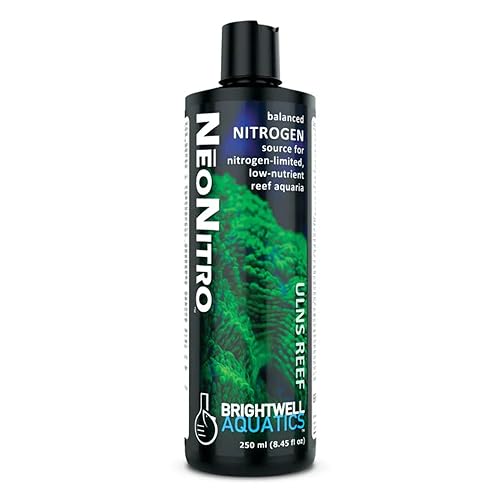
What it is: A compact nitrogen source tailored for smaller systems needing controlled nitrogen input while maintaining ULNS balance.
Best for: Nano or small frag tanks where precise nutrient management is crucial to avoid undesired algae blooms or instability.
Why selected: Its smaller size makes it easier to calibrate dosing for limited volumes, reducing risk in sensitive setups.
Limitations to note: Requires diligent dosing schedules and frequent testing to ensure the tank remains within target nutrient ranges.
NeoPhos – Balanced Phosphorus Source for Phosphorus-Limited, Low-Nutrient Reef Aquaria (8.5 fl oz)

What it is: A phosphorus source designed for low-nutrient reef aquariums to balance carbon, nitrogen, and phosphorus, supporting microbial activity and nutrient cycling.
Best for: Advanced reef keepers maintaining ULNS or ultra-lean systems where phosphorus management is critical to prevent imbalances.
Why selected: NeoPhos helps balance nutrient uptake and microbial biomass, providing a controlled phosphorus input that complements nitrogen strategies.
Limitations to note: Use in conjunction with nitrogen sources and carbon supplements to maintain a harmonious nutrient balance; isolated phosphorus dosing may lead to unintended shifts if not coordinated with other additives.
NeoPhos – Balanced Phosphorus Source, 16.9 fl oz

What it is: A phosphorus source intended for low-nutrient reef aquariums to balance carbon, nitrogen, and phosphorus in tandem with other products.
Best for: Larger ULNS setups or systems needing stronger phosphorus management to support microbial processes and coral health.
Why selected: Its design targets advanced reef care, enabling microbes to recycle organic matter while corals metaphorically “recycle” nutrients through feeding.
Limitations to note: As with NeoNitro, use as part of a comprehensive nutrient plan; monitor both nitrate and phosphate to avoid imbalance.
MICROBE-LIFT All-in-One Master Reef Supplement (16 Fl Oz)

What it is: A comprehensive supplement combining essential minerals, trace elements, vitamins, and more to support reef environments and fish tanks.
Best for: Hobbyists seeking an all-in-one approach to replenishing several essential components in a single dosing regime.
Why selected: Its breadth supports overall reef health, including microbial balance, which can influence nitrate dynamics indirectly through waste processing.
Limitations to note: It does not isolate nitrate alone; use as part of a broader nutrient management plan with carbon and phosphorus strategies.
BioFuel CWM – Carbon Source for Nitrate & Phosphate Reduction (500 ml)

What it is: A multi-carbon formula that fuels beneficial microbial processes to reduce nitrate and phosphate naturally in temperate marine aquariums.
Best for: Systems seeking a carbon-based approach to nutrient control without relying on volatile dosing strategies like vodka or ethanol methods.
Why selected: It promotes stable biological filtration and supports coral and invertebrate feeding through enhanced microbial activity.
Limitations to note: Results depend on stable dosing and compatible nutrient balance with other Brightwell products.
Reef BioFuel – Organic Carbon Supplement (250 ml)

What it is: An organic carbon supplement designed to fuel bacterioplankton growth for nutrient reduction in reef tanks.
Best for: Systems that want to leverage microbial pathways to lower nitrate and phosphate while supporting coral health with microbial plankton food.
Why selected: A carbon-based approach is a key option when traditional nitrate sources alone are insufficient for maintaining ULNS stability.
Limitations to note: Requires careful calibration with other nitrogen and phosphorus sources to avoid unintended shifts in nutrient balance.
Buying Guide: Key Considerations for Nitrate Management in Reef Tanks
What type of reef system are you running?
ULNS tanks require tighter nutrient control and precise dosing of nitrogen, phosphorus, and carbon sources. Standard mixed systems may tolerate broader dosing but still benefit from structured plans.
Should you pair nitrogen with phosphorus or carbon?
Yes. In most reef setups, balancing carbon (via Reef BioFuel or BioFuel CWM), nitrogen (NeoNitro), and phosphorus (NeoPhos) creates a stable environment and supports microbial biomass cycling.
How to dose safely?
Follow product guidelines and start with conservative dosing. Use regular water testing to track nitrate, phosphate, and carbon—adjust gradually to avoid rapid shifts that stress corals.
What about tank size and dosing frequency?
Smaller tanks benefit from smaller bottle options, while larger systems may require larger volumes. Dosing frequency should align with tank bioload and routine maintenance schedules.
What tests should you run?
Regular testing for nitrate, phosphate, ammonia, alkalinity, calcium, and magnesium helps ensure a balanced ecosystem. Microbial activity can influence nutrient levels beyond simple readings.
Frequently Asked Questions
- What nitrate level is safe for reef tanks? Most reef tanks aim for low nitrate levels, typically in the range suitable for corals and photosynthetic organisms, adjusted to the specific system.
- Can I use multiple nitrate products at once? Yes, but implement them as part of a unified nutrient management plan. Avoid overlapping dosing that could raise nitrate too quickly.
- Do these products affect phosphates? Some products influence overall nutrient balance; pairing nitrogen and phosphorus sources with carbon strategies helps maintain equilibrium.
- Is carbon dosing necessary? Not for every system, but carbon dosing can aid nitrate and phosphate reduction in many reef tanks when used with care.
- How should I test after adding supplements? Re-test after dosing intervals to verify that nitrate, phosphate, and carbon levels remain within target ranges.
- Which product should I start with? For ULNS beginners, starting with a nitrogen source like NeoNitro alongside a carbon source (BioFuel) and a phosphorus source (NeoPhos) can establish a balanced baseline.