Answering the question “which natural stones are best for aquariums?” this guide highlights stone choices that are safe for aquatic life, visually appealing, and easy to use in fish tank aquascapes. The top picks below are suitable for a range of tank sizes and styles, from small betta setups to mid-sized community tanks. Each option is chosen for durability, inert composition, and ease of placement. The top five products are ideal for hobbyists who want natural texture without compromising water quality.
Summary of selected products:
| Product | Brand | Best For | Approx. Size |
|---|---|---|---|
| AWXZOM Natural Dragon Rock | AWXZOM | Small to medium tanks, natural aquascapes | 4.4 lb set; 6–8 inch piece as reference |
| ChaoLeHo Seiryu Stones | ChaoLeHo | Stylish hardscape, long-term decor | 5 lb; 2–6 inch |
| VOKOY Dragon Stones | VOKOY | Creative landscape builds, caves and mountains | 2.5 lb; 2–4 inch stones |
| YISZM Slate Rock | YISZM | Natural slate accents, safe for reefs and plants | 3–5 inch; 5 lb |
| YISZM River Rocks | YISZM | Ground cover, borders, plant drainage accents | 2 lb; assorted sizes |
AWXZOM Natural Dragon Rock Set

Features: Natural stones with varied shapes; includes 4.4 lb set with stones around 6–8 inches in one piece. The stones are suitable for 2 to 10 gallon tanks and help create a natural aquascape. The variety in size supports layered layouts and cave formations. Best for small to medium aquariums where a dragon-rock appearance enhances the landscape.
Who it’s best for: Beginners building a simple hillside or cave structure in smaller tanks; hobbyists seeking a natural dragon-rock aesthetic without complex setup.
Why selected: Quick visual impact with a natural look and easy setup for limited spaces. A caution: natural stones vary in size; consider arranging carefully to avoid unstable placements.
ChaoLeHo Seiryu Stones

Features: Natural texture with unique patterns; 5 lb set of 2–6 inch stones. Seiryu stones are noted for not altering water quality and for durable, weather-resistant properties. Use them to craft vertical walls, archways, or dramatic focal points in larger tanks.
Who it’s best for: Aquarists seeking a premium, durable hardscape that remains stable over time without affecting water chemistry.
Why selected: Durable, water-safe stone that enhances aquarium aesthetics. Limitation: color and pattern vary by piece, so layouts may require experimentation.
VOKOY 2.5lb Dragon Stones

Features: Natural, honeycomb-like holes and varied shapes; includes roughly 2–4 stones totaling 2.5 lb. Stones are suitable for creating mountains, caves, and underwater gardens. Easy to clean and place, and they do not affect water chemistry when prepared properly.
Who it’s best for: Hobbyists designing intricate labyrinths or multi-level landscapes in small to mid-sized tanks.
Why selected: Distinctive texture adds depth to aquascapes; caution: natural variation means exact stone sizes differ between sets.
ChaoLeHo 3lb Natural Rocks

Features: 3 lb collection, 2–5 inch stones; natural appearance with textures ideal for aquascapes and terrariums. Eco-friendly, naturally formed, and porous surfaces support plant roots and harmless for aquatic life. Lightweight and stackable for flexible arrangements.
Who it’s best for: Aquarists wanting a lightweight option to build layered rock structures without heavy lifting.
Why selected: Combines natural look with plant-friendly surfaces; limitation: size range is modest, so large formations may require additional pieces for scale.
YISZM Slate Rock

Features: Polished natural slate stones, 3–5 inches; safe for freshwater and saltwater tanks. Each edge is polished for smooth handling. Offers two sizes (3–5 and 5–7 inches) for versatile layouts, including mountains and caves. Ideal for aquascapes and terrariums requiring stable, inert decor.
Who it’s best for: Those wanting a rugged, natural slate texture with safe water chemistry and smoother edges for quick setups.
Why selected: Safe, inert, and polished for gentle contact with aquatic life; caution: polished edges are smooth but stones may still be heavy to place in larger tanks.
Virekm River Rocks
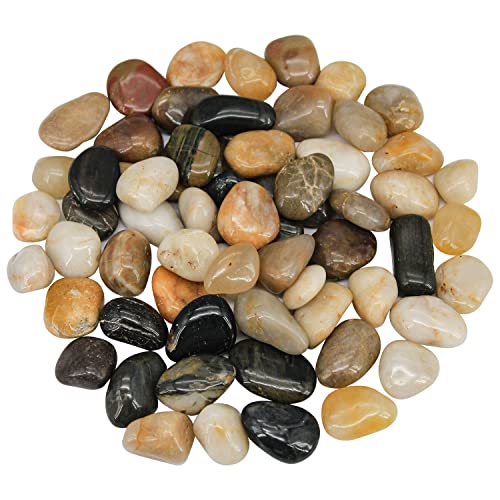
Features: Natural decorative stones with a smooth finish; mixed colors in brown, white, and black; versatile for indoor and outdoor use. Suitable as gravel filler in aquariums or decorative accents in plant displays. Sturdy and fade-resistant for long-lasting appeal.
Who it’s best for: Aquarists seeking a broad color palette and general-purpose ground cover for larger tanks or display features.
Why selected: Flexible decorative option; caution: color variation means the overall look may vary by batch, so plan layout accordingly.
Buying Guide
What size should I choose?
Size should match your tank dimensions and the aquascape you want. Smaller tanks benefit from modest stones to avoid crowding, while larger tanks can support multi-layered rock structures and caves.
Is the stone safe for fish and plants?
Look for inert materials that do not alter water chemistry. Natural slate and Seiryu-style stones are typically safe when thoroughly cleaned before introduction.
How should I prepare stones before adding them?
Rinse stones under running water, scrub if needed, and sink them in the tank’s water for a day to check for any unexpected changes. Some hobbyists also soak stones in a separate container to release any debris.
Which textures and colors work best?
Textures like honeycomb (dragon stone) or rugged slate create visual depth. Neutral tones blend with most plant colors, while lighter stones can brighten darker aquascapes.
Are there any maintenance considerations?
Natural stones generally require little maintenance beyond placement checks. Avoid stacking stones too tightly, which can create unstable structures or restrict fish movement.
FAQ
- Q: Do natural stones affect water chemistry?
- A: Most inert stones do not alter water chemistry, but it’s best to rinse and test water after initial setup.
- Q: Can I use any stone in a saltwater tank?
- A: Yes, provided the stone is inert and won’t leach minerals. Confirm compatibility for reef or high-salinity environments.
- Q: How many stones should I use?
- A: This depends on tank size and design. Start with a few stones to create focal points, then add gradually to avoid overcrowding.
- Q: Are these stones suitable for terrariums too?
- A: Some options are suitable for terrariums; ensure they are clean and inert for the chosen habitat.