Finding the right nano reef tank filtration solution means balancing effective mechanical, biological, and chemical filtration with compact size and quiet operation. The top picks below target small, 2.5–7.5 gallon setups and are suitable for delicate reef inhabitants when cautious flow is required. Ideal buyers include beginner reef keepers building a desktop or nano system, experienced hobbyists refining a compact refugium, and those seeking adjustable flow for sensitive corals and shrimp. The table below highlights five well-suited options with key strengths and limitations.
| Product | Best For | Why Pick It | Limitation |
|---|---|---|---|
| Slim Aquarium Filter 42 GPH | Small Betta/Nano setups | High efficiency, adjustable flow, pre-filter sponge for tiny invertebrates | Low max GPH for larger nano systems |
| FZONE Hang On Back Filter | Space-saving nano tanks | 4-stage filtration, quiet brushless motor, multiple outlets | External installation may affect aesthetics |
| Finnex PF-7 Nano Filter | Ultra-compact desktops | 3-stage filtration, reliable performance for up to 7.5 gal | Limited to smaller aquariums |
| DaToo Hang On Filter | Budget, quiet operation | Powerful yet whisper-quiet, extra bio-foam protection | Basic design; may require monitoring cartridge |
| Aquatic Life RO Buddie 4-Stage | Water quality-first reef setups | RO/DI filtration for zero TDS water and high purity | Water treatment unit, not a traditional tank filter |
Slim Aquarium Filter 42 GPH

The Slim Aquarium Filter delivers a compact 42 GPH flow suitable for 2.5–5 gallon tanks, making it a practical nano reef option where space is at a premium. It cycles a 2.5-gallon tank over 15 times per hour, supporting stable water clarity without overwhelming small corals or invertebrates. Its adjustable flow helps tailor current to delicate reef inhabitants. A pre-filter sponge reduces risk of fry or invertebrates entering the pump and enhances mechanical filtration. Best for tiny reef systems, shrimp, and betta-tusion setups that require gentle flow.
Best for: ultra-compact nano tanks, shrimp-inhabited setups, delicate reef microhabitats. Choose this if you need reliable filtration in a 2.5–5 gallon space and want adjustable flow to protect sensitive organisms.
Caution: The filter’s maximum flow is modest; avoid using it as the sole filter in larger nano reefs over 5 gallons without supplementing with additional filtration or circulation.
FZONE Aquarium Hang On Back Filter
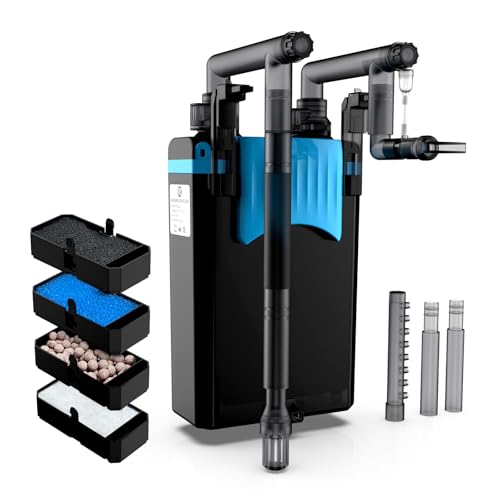
The FZONE HOB filter offers a four-stage filtration system that combines mechanical and biological filtration with high-porosity media. Its external design saves tank space, making it ideal for deskside nano setups. A brushless motor keeps noise under 30 dB, and three replaceable outlets—Rainfall, Duckbill, and Direct-Flow—provide flexible water movement for varied aquascapes. An optional Venturi aeration mode helps increase dissolved oxygen. Best for: compact nano reefs requiring customizable water circulation without bulk equipment. Better for: users who want multiple outlet choices and quiet operation.
Caution: External plumbing can demand careful placement to avoid catching on cabinet edges or causing visual clutter in very small tanks.
Finnex PF-7 Nano Filter
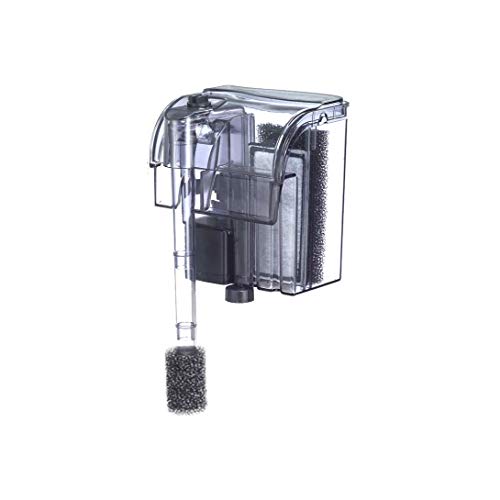
The Finnex PF-7 Nano Aquarium HOB Power Filter provides a compact 52 GPH flow suitable for nano aquariums up to 7.5 gallons. It employs a 3-stage filtration approach—mechanical, chemical, and biological—helping maintain clear water and a healthy micro-ecosystem. Its Taiwanese craftsmanship is noted for durability. Best for: small desktop or countertop reefs that benefit from reliable, steady filtration. Choose this if you want a proven, compact HOB option with a robust three-stage setup.
Limitation: While suitable for up to 7.5 gallons, performance can taper in densely planted or heavily stocked nano reefs requiring higher turnover.
Sukh Ceramic Bio Balls

Sukh Ceramic Bio Balls are inert quartz media designed to boost mechanical filtration while supporting biofiltration activity. The open-flow design increases water circulation and enhances oxygen exchange, contributing to system stability over time. They are compatible with freshwater and saltwater setups, ensuring versatility in nano reef configurations. Best for: adding a simple, scalable filtration boost to nano tanks, sumps, or canister systems without altering chemistry. Limitations: ceramic media may require adequate rinsing before use to remove fines.
DaToo Hang On Filter
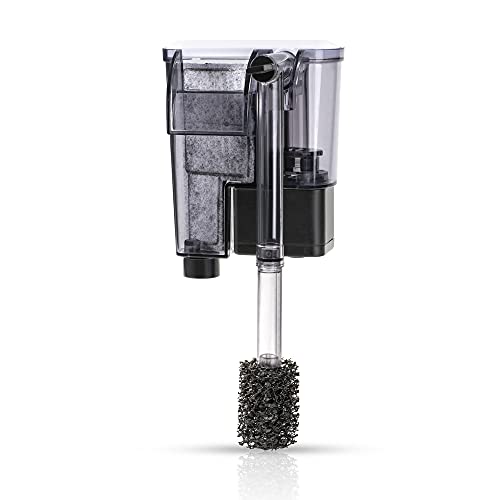
The DaToo Hang-On Filter combines a powerful 42 GPH flow with a whisper-quiet operation. It uses 100% activated carbon for odor and discoloration removal and includes an extra bio-foam at the inlet to help prevent small fish from being sucked in. Best for: budget-conscious nano reefers who want effective filtration without heavy equipment. Better for: systems where reduced noise and added safety features matter. Limitation: may require attention to cartridge replacement to maintain performance.
Buying Guide: Filtration For Nano Reefs
- Flow Rate And Tank Size: For 2.5–5 gallon tanks, aim for 40–60 GPH total turnover. In slightly larger 6–7.5 gallon nano reefs, consider up to 80 GPH while watching for excessive flow that can stress corals.
- Filtration Stages: Prefer multi-stage filtration (mechanical, chemical, biological) to maintain clarity and water quality, especially in reef systems with corals and invertebrates.
- Outlets And Flow Control: Multiple outlets and adjustable flow help tailor circulation to varied corals and substrates. Venturi or aeration options increase oxygen levels for high-energy reef tanks.
- Noise And Space: HOB units save space but can be visually conspicuous. Look for brushless motors and low decibel ratings for quiet operation in living or office spaces.
- Media Compatibility: Ceramic bio-media and activated carbon are common; confirm compatibility with your tank’s substrate and inhabitants to avoid unintended parameter shifts.
Frequently Asked Questions
- What is the ideal filtration setup for a nano reef? A compact hang-on-back or inline filter with 2–3 filter media stages, plus optional media like bio-balls or ceramic rings, provides solid mechanical, biological, and chemical filtration in small volumes.
- How important is adjustable flow in a nano reef? Very important. Delicate corals and invertebrates benefit from gentle, variable flow to avoid tissue damage while still maintaining water movement for gas exchange and waste removal.
- Can I rely on one filter for a 7.5-gallon reef? It depends on stocking, coral types, and live rock. In many cases, a single reliable nano filter with extra media can work, but consider adding a protein skimmer or sump if bioload increases.
- Do I need a protein skimmer for nano reefs? Not always, but can be beneficial in larger or heavily stocked nanos to remove dissolved organic compounds and maintain water clarity. Choose a compact model that fits your tank dimensions.
- How often should I replace filter media? Follow manufacturer guidance, typically every 2–4 weeks for mechanical media, and replace carbon according to usage or when odor returns.
- Is RO/DI water necessary for nano reefs? It improves consistency and reduces contaminants, especially in sensitive systems. An RO Buddie or similar DI stage helps maintain stable water quality over time.