If you keep a nano or small tank, the right heater is essential to maintain stable water temperature for tropical and Betta fish. This guide highlights five compact, reliable heaters suitable for 1–5 gallon setups and similar nano tanks. Each option emphasizes safety features, ease of use, and precise temperature control. Ideal buyers include new fish keepers, busy hobbyists with small tanks, and those needing discreet equipment that doesn’t clutter the display. The table below summarizes the five recommended products.
| Product | Tank Size | Wattage | |
|---|---|---|---|
| hygger Small Aquarium Betta Heater | 1–5 gallons | 10W | Very small Betta tanks; beginner setups |
| AQUANEAT Aquarium Heater | 3–5.5 gallons | 25W | Preset 78°F for 3–5 gallon tanks |
| DaToo Mini Aquarium Heater | 1–5 gallons | 25W | Compact, space-saving for small tanks |
| hygger Nano Submersible Heater | 10–15 gallons (smallest for larger nano) | 75W | Hidden install in shallow, low-profile setups |
| VCRAZE Mini Aquarium Heater | 3–5 gallons | 25W | Ultra-compact for nano tanks |
Note: Each product includes safety features such as low-water shutdown or overheat protection. When selecting, consider your tank’s exact size, water type (fresh vs. salt), and whether you prefer preset temperature or adjustable control for greater flexibility.
Hygger Small Aquarium Betta Heater — 10W

The Hygger 10W Betta Heater is designed for 1–5 gallon tanks. It operates in fresh and marine water and includes a LED digital display. The unit uses 2mm thick quartz glass and offers dry-run and overheating protection. Best for tiny betta bowls or small shrimp tanks where space is at a premium. A limitation is the smaller wattage, which may need closer monitoring in cooler rooms or when housing slightly larger tropical species.
DaToo Mini Aquarium Heater — 25W
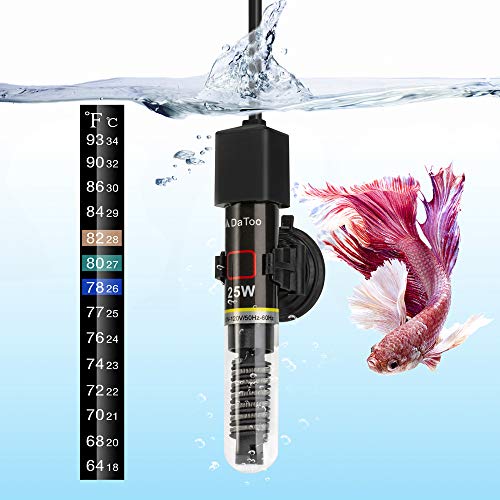
The DaToo Mini 25W heater targets 1–5 gallon tanks with passive presets. It maintains a comfortable 78°F in many tropical setups and uses an indicator that shows red while heating and green when at temperature. Best for beginners who want a set-and-forget approach in small tanks. A caution: it may not suit cooler rooms; in such environments, consider a higher-wattage heater for quicker and more stable control.
Hygger Mini Submersible Heater — 20W

The Hygger 20W nano heater fits 1–5 gallon tanks and includes low-water shutoff and overheat protection. Its external thermostat and digital display provide easy temperature monitoring, with an indicator showing heating mode or standby. Best for compact desktops where a discrete, easily hidden heater is desired. Limitation: the 4″ x 1″ profile may require careful placement to avoid obstruction in very small tanks with dense decor.
Hygger Mini 50W — 5–10 Gallons

The 50W Hygger unit is designed for 5–10 gallon tanks. It keeps a slender profile (4″ long, 1″ high) and includes beeper alarms and fault prompts. Best for slightly larger nano setups where a bit more heat capacity is helpful. A caution is that in very small volume or heavily shaded tanks, you may want to verify the heater is not overheating in warmer rooms, as larger wattage can raise temperature faster.
VCRAZE Mini Aquarium Heater — 25W
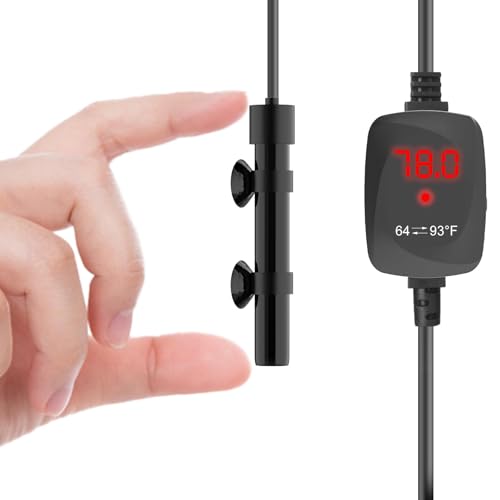
The VCRAZE 25W heater targets 3–5 gallon tanks with a compact 4″ length. It uses alumina ceramic for durability, and a precise temperature control with a two-reading display (current vs. set). Best for nano tanks where space is at a premium and consistent performance matters. A potential limitation is to ensure the temperature range aligns with your fish species and room conditions, as very warm rooms may require careful adjustment.
Buying Guide: Key Considerations For Nano Heaters
What tank size and water type will you heat? Nano heaters must match small water volumes; too powerful a heater can quickly push water past the target temperature. Always verify compatibility with freshwater or saltwater setups.
Do you need adjustable temperature or preset settings? Adjustable controllers provide flexibility across seasons, while presets are simpler for beginners. Consider digital displays for quick readings and reliability features like dry-run protection.
Where will you place the heater? In shallow or heavily decorated tanks, size and placement matter to avoid obstructing views or causing hotspots. Choose low-profile models when possible.
What safety features matter? Look for low-water shutoff, overheat protection, and alarms that alert you to malfunctions or temperature drift. Small tanks are more sensitive to failures, so these features are valuable.
Maintenance and monitoring: Regularly check temperature readings, ensure the heater is fully submerged per manufacturer instructions, and verify that the display is functioning correctly. Keep a notebook or digital log if you manage multiple nano tanks.
FAQ
- What size heater is best for a 2–3 gallon tank? A 10–25W heater is typically suitable, but verify the manufacturer’s recommendations for your specific tank dimensions.
- Are digital thermostats better than simple dial thermostats for nano tanks? Yes, digital displays offer clearer readings and more precise control, which is helpful in small volumes where small temperature changes matter.
- Can I use a 50W heater in a 5 gallon tank? It may be overkill for many 5 gallon setups; choose around 25–30W unless your room temperature or species require more heat.
- What happens if the heater runs dry? Look for models with dry-run protection to prevent overheating when water levels fall.
- Is it necessary to hide the heater in a nano tank? Hiding helps maintain aesthetics, but ensure the heater is still fully submerged and accessible for temperature checks.
- Should I calibrate a nano heater after installation? It’s recommended to verify actual water temperature against the set temperature and adjust if necessary, especially in variable room temperatures.