Finding a quiet aquarium air pump is essential for peaceful living spaces and undisturbed sleep. This guide highlights five top options that balance strong airflow with low noise, making them ideal for bedrooms, offices, and small living areas. The best choice depends on tank size, preferred airflow, and whether you need more than one outlet. Below, you’ll find side-by-side details, usage notes, and practical buying tips to help you compare with confidence.
| Product | Tank Size Fit | Airflow Range | Best For | Notes |
|---|---|---|---|---|
| AQUASMITH 1w Ultra Quiet Aquarium Air Pump | 20–40 gal | Up to 24 GPH, 0.018 MPa | Small to medium tanks; quiet operation in bedrooms | Single-hole design, compact |
| hygger Quiet <30dB Aquarium Air Pump | Up to 150 gal | Up to 160 GPH | Mid to large tanks; adjustable output | Two outlets, strong damping |
| Uniclife 64 GPH Aquarium Air Pump | 10–100 gal | 64 GPH, 0.016 MPa | Budget-friendly, dual outlets | Low noise at low settings |
| INCLY 7W Ultra Silent Aquarium Air Pump | Large tanks and hydroponics | 245 GPH, up to 0.025 MPa | High airflow, minimal footprint | Hi/Low switch, quiet operation |
| AquaMiracle Quiet Fish Tank Air Pump | Up to 1200 gal (hydroponics/demanding setups) | 475 GPH, up to 0.03 MPa | Very high flow needs, commercial use | Aluminum housing, durable |
AQQA Aquarium Air Pump, 3W/6W/10W With Stainless Steel Outlets

Best for small-to-medium tanks where ultra-quiet operation is a priority. This pump uses a double-layer casing and four soft feet to minimize vibration, keeping noise below 35dB. The stainless steel dual outlets support multiple tanks or configurations, aiding in flexible layout planning.
Who it’s for: hobbyists with a quiet bedroom or office setup and tanks up to about 200 gallons per the product notes. Why chosen: its built-in noise reduction and robust dual outlets provide dependable performance with minimal disturbance.
Caution: As a smaller wattage option, airflow may be reduced on very large or heavily stocked systems; consider higher wattage if you need dense aeration.
Tetra Whisper Air Pump 20 To 40 Gallons

Best for compact, quiet setups where a simple, dependable airflow is needed. Its patented dome shape and sound-dampening chambers contribute to reduced noise, making it suitable for small tanks and spaces where discretion matters.
Who it’s for: aquarists seeking a straightforward, quiet pump without extra bells and whistles. Why chosen: reliable quiet operation with a traditional, compact form factor.
Caution: Not UL-listed according to the data provided; ensure compatibility with your local electrical standards and tank depth.
AQUASMITH 1w Ultra Quiet Aquarium Air Pump

Best for bedrooms and offices where ultra-quiet operation matters most. With a claimed 24 GPH at low power, this model focuses on stability and silent performance for smaller aquariums or dedicated gas exchange needs.
Who it’s for: users prioritizing minimal noise over high airflow; ideal for quiet environments and smaller tanks. Why chosen: proven quiet design and compact size.
Caution: Lower airflow means it may not meet high aeration needs in larger systems; pair with a larger model if you require higher turnover.
hygger Quiet <30dB Aquarium Air Pump

Best for mid-to-large tanks where you still want a quiet environment. It offers adjustable airflow up to 160 GPH and two outlets, helping maintain adequate oxygenation across multiple zones of a larger tank.
Who it’s for: aquarists needing adjustable airflow and dual outlets without creating a noisy hub. Why chosen: higher airflow flexibility while maintaining quiet operation.
Caution: Bigger tanks may require additional outlets or pumps in a multi-tank setup; ensure the pump’s height and space fit your installation.
Uniclife 64 GPH Dual Outlet Pump
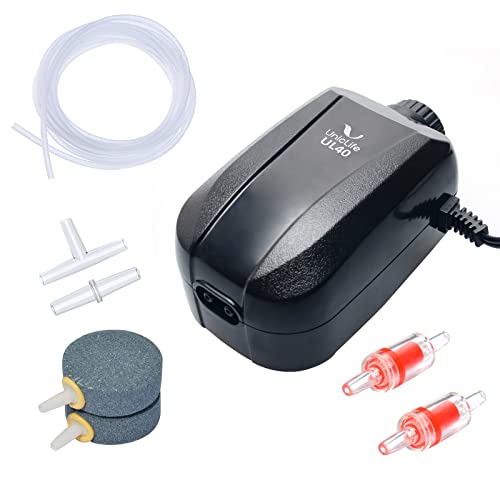
Best for budget-conscious setups that still require dual-air outlets. This model provides adjustable flow with two outputs and quiet operation, suitable for 10–100 gallon tanks.
Who it’s for: beginners or hobbyists seeking economical, reliable dual-outlet aeration. Why chosen: balance of price, dual outlets, and quiet performance.
Caution: Airflow can drop if intake material becomes clogged; regular maintenance helps preserve performance.
INCLY 7W Ultra Silent Aquarium Air Pump

Best for large aquariums and hydroponic systems requiring substantial airflow with quiet operation. This pump delivers up to 245 GPH and features a Hi/Low speed switch for flexible control.
Who it’s for: systems needing high airflow in larger tanks or non-aquarium uses like hydroponics. Why chosen: high capacity with notable quiet performance for its class.
Caution: Higher airflow means more potential for vibration if not properly mounted; use the included stand or place on a stable surface.
Buying Guide: Quiet Air Pump Considerations
What tank size should you target? Align aeration needs with tank volume. Smaller tanks (under 40 gallons) typically require low-output, ultra-quiet models, while larger setups benefit from higher-flow pumps with multiple outlets.
How important is noise level? If you sleep or work near the tank, prioritize pumps advertised as “quiet,” with specific dB ratings or sound-dampening features. Built-in vibration dampening is a strong plus.
What about outlets and configuration? Single-outlet pumps are compact and simple, but dual outlets offer flexibility for multi-tank or multi-zone setups. Consider whether you’ll piggyback air stones or use macro-scale aeration features like filtration systems.
Power efficiency and durability matter. Look for pumps with energy-efficient motors and low heat generation. Durable housings (metal or reinforced plastics) typically last longer in water-adjacent environments.
Maintenance and placement. Place pumps above water level when possible and ensure good ventilation around the unit. Regular filter checks and occasional diaphragm or check-valve maintenance extend life and prevent leaks.
Frequently Asked Questions
- What makes an air pump “quiet”?
- Do dual-outlet pumps noise differ from single-outlet models?
- Is higher airflow always better?
- Can I run an air pump in a bedroom?
- How do I reduce pump noise further?
- How often should I replace pump diaphragms or seals?
Quiet pumps minimize vibration and air-induced noise through dampening casings, rubber feet, and stable housings. Many advertise noise levels under a specific decibel rating.
Not inherently; noise usually depends on overall build quality and vibration management. Dual-outlet pumps can be equally quiet if designed with proper mounts and damping.
No. Higher airflow suits larger tanks or fast gas exchange needs, but can introduce more noise and turbulence in small tanks. Match airflow to tank size and stocking level.
Yes, choose models marketed as quiet and place them away from sleeping areas if possible. Use rubber feet and vibration isolation to minimize sound transfer.
Elevate the pump, use longer air hoses with gentle curves, add a bubble diffuser or air stone with proper sizing, and ensure hoses are not kinked or rubbing on surfaces.
Follow manufacturer guidance and inspect for wear during cleaning. Replace components if you notice reduced airflow, unusual noises, or leaks.