Answering the need for reliable water quality checks, a master water test kit helps hobbyists and professionals monitor key parameters that keep fish healthy. This guide highlights five top choices, clarifying who each is best for and why. Use these kits to detect issues early and maintain stable tank conditions. The products below are organized to help you compare results, ease of use, and suitability for freshwater, saltwater, or reef setups.
| Product | Best For | Key Benefit |
|---|---|---|
| API Freshwater Master Test Kit 800-Test | Freshwater aquariums | Monitors 5 vital freshwater parameters |
| Pawfly 5 in 1 Master Test Kit | Mixed tanks (freshwater & saltwater) | All five core measures in one kit |
| API Saltwater Master Test Kit 550-Test | Saltwater systems | Focused on pH, ammonia, nitrite, nitrate |
| API Reef Master Test Kit | Reef aquariums | Calcium, carbonate hardness, phosphate, nitrate |
| SJ WAVE 11 in 1 Test Strips | Comprehensive home testing | 11 parameters with color-chart matching |
API Freshwater Master Test Kit 800-Test

The API Freshwater Master Test Kit provides seven bottles of testing solutions, a color card, and four tubes with caps. It measures pH, high range pH, ammonia, nitrite, and nitrate, giving a broad view of freshwater health. This kit is best for hobbyists managing standard freshwater aquariums who need a consolidated set of vital readings in one package. A limitation is the fixed number of tests; repeat purchases may be needed for ongoing monitoring.
Who it’s best for
- New and experienced freshwater hobbyists seeking a complete, single-kit solution.
- People who want a traditional liquid-reagent approach with a clear color card.
Pawfly 5 in 1 Master Test Kit

The Pawfly 5-in-1 kit covers pH, nitrite, nitrate, ammonia, and phosphate for both freshwater and saltwater tanks. It includes color-matching charts for quick results and emphasizes enhanced accuracy with professional liquid reagents. This kit suits mixed tanks or beginners who want a single-kit solution for multiple environments. A potential limitation is the inclusion of phosphate, which may be less critical in some reef setups where other tests take priority.
Who it’s best for
- Aquarists with both freshwater and saltwater tanks seeking a unified testing solution.
- Users who prioritize laboratory-quality liquid reagents and straightforward color matching.
API Saltwater Master Test Kit 550-Test
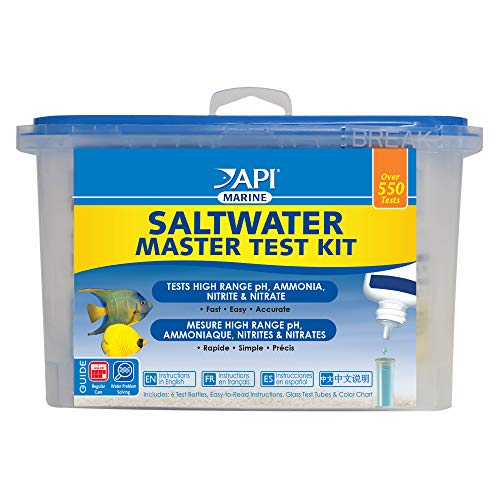
This kit focuses on four essential saltwater parameters: high range pH, ammonia, nitrite, and nitrate. It comes with six bottles of testing solution, a color card, and four test tubes with caps. It is best for saltwater hobbyists who want reliable, streamlined parameter checks specifically for marine systems. A limitation is that it does not include calcium or alkalinity tests found in reef-focused kits.
Who it’s best for
- Saltwater aquarists needing a straightforward, reliable test set for key parameters.
- Marine keepers who prefer a compact kit with clear results for routine monitoring.
API Reef Master Test Kit
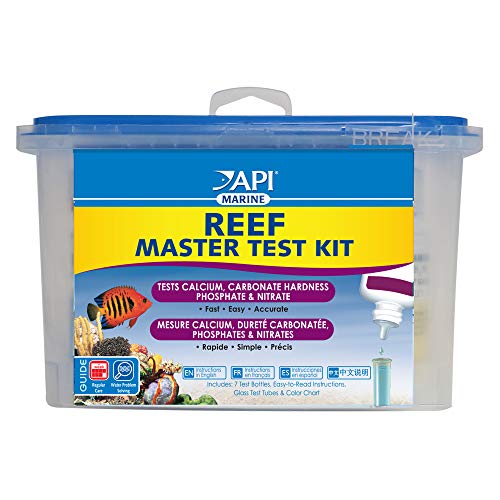
The Reef Master Test Kit targets reef aquariums, testing calcium, carbonate hardness, phosphate, and nitrate. It includes seven bottles of testing solution, two color cards, and four test tubes with caps. This kit is best for reefkeepers who require regular monitoring of calcium and alkalinity in addition to common nutrients. A limitation is that it focuses on reef-relevant parameters; it may be less comprehensive for non-reef saltwater setups.
Who it’s best for
- Reef tank owners needing precise calcium and alkalinity guidance alongside nutrient checks.
- Users seeking consistent, reef-focused testing to support corals and life in a reef system.
SJ WAVE 11 in 1 Test Strips

SJ WAVE offers an 11-parameter test strip kit for both freshwater and saltwater environments. It includes strips for ammonia, pH, nitrite, nitrate, alkalinity, hardness, chlorine, iron, fluoride, copper, and temperature. The kit emphasizes home testing with color charts and quick results, making it suitable for ongoing monitoring. A caveat is that strips can be less precise than liquid tests, depending on lighting and strip age.
Who it’s best for
- Home aquarists who prefer quick strip testing with a broad parameter range.
- Users who want a single kit for multiple tank types and easy color matching.
Buying Guide: Master Water Test Kit Essentials
Key considerations when selecting a master water test kit include parameter coverage, tank type, and ease of use. Below are practical questions to guide your choice.
What parameters should the kit test for my tank type?
Freshwater kits typically measure pH, ammonia, nitrite, and nitrate. Reef kits add calcium and carbonate hardness. Saltwater kits focus on pH, ammonia, nitrite, and nitrate. Choose based on your tank’s needs and coral sensitivity.
Liquid reagents vs. test strips: which is better?
Liquid reagent kits generally offer higher accuracy and long-term stability, while test strips provide quick results and convenience. For beginners, strips can be easier to use, but for precise management, liquid tests are often preferred.
How many parameters do you need at once?
Consider a kit that covers the core parameters you monitor regularly. For mixed tanks, 5-in-1 or 11-in-1 options can reduce the number of separate tests, whereas dedicated freshwater or reef kits provide deeper data for specific needs.
What about color interpretation and charts?
Reliable color charts or digital readouts improve accuracy. Ensure the kit includes clear, durable charts and enough solution or strips for your maintenance schedule.
Ease of use and rate of testing
Assess how long tests take, how many steps are required, and whether the kit ships with enough bottles, caps, and color cards. For busy hobbyists, quick results and straightforward steps are valuable.
Maintenance and replacements
Check availability of replacement reagents and parts. Some kits require periodic replacements of liquids and color cards, which affects long-term cost and planning.
Final considerations
Balance accuracy, scope, and practicality with your tank’s needs. For beginners, a 5-in-1 or 11-in-1 kit offers simplicity. For reef or high-precision needs, consider a kit that includes calcium and alkalinity testing in addition to standard parameters.
FAQ
Which master water test kit is best for freshwater tanks?
The API Freshwater Master Test Kit is widely used for its comprehensive set of freshwater parameters, including pH, ammonia, nitrite, and nitrate.
Can I use saltwater test kits for reef aquariums?
Some saltwater kits work for reef setups, but reef-specific kits that measure calcium and carbonate hardness are often more suitable for coral health.
Are test strips accurate enough for daily monitoring?
Test strips provide quick results and are convenient, but liquid tests generally offer higher precision, especially for tracking small changes over time.
How often should I test my aquarium water?
In general, test weekly, or more often during changes, new fish introduction, or after parameter shifts. Reef tanks may require more frequent checks for calcium and alkalinity.
Should I buy separate kits for freshwater and saltwater?
If you keep both types, a versatile 5-in-1 or 11-in-1 kit can cover most needs. Otherwise, select dedicated freshwater or reef-specific kits for more detailed readings.
What is a good indicator of a kit’s reliability?
Look for kits with clear color charts, multiple parameter tests, and consistent reagent availability. Reading logs and documentation can help validate results over time.