Keeping a saltwater aquarium in peak condition requires regular, reliable testing of water parameters. This guide highlights top test kits that cover essential measurements for marine tanks, helping hobbyists prevent invisible problems before they impact fish and coral. Explore five highly capable kits, with practical insights on accuracy, ease-of-use, and scope. A quick buying table follows to summarize core details of each option.
| Product | Brand | Key Focus | Format |
|---|---|---|---|
| API Saltwater Master Test Kit 550 | API | pH, Ammonia, Nitrite, Nitrate | Liquid reagents |
| Red Sea Marine Care Test Kit | Red Sea | Nitrate, Nitrite, Ammonia, pH, Alkalinity | Liquid reagents |
| 11 in 1 Aquarium Test Strips | SJ WAVE | 11 parameters with color charts | Test strips |
| API Freshwater Master Test Kit 800 | API | pH, Ammonia, Nitrite, Nitrate | Liquid reagents |
| API Reef Master Test Kit | API | Calcium, Alkalinity (carbonate), Phosphate, Nitrate | Liquid reagents |
The following sections summarize each kit, highlighting what makes it suitable for marine setups and how it complements a routine maintenance plan. All price details are omitted to keep the focus on performance and practicality for ongoing fish- and coral-keeping success.
API Saltwater Master Test Kit: Comprehensive Saltwater Monitoring
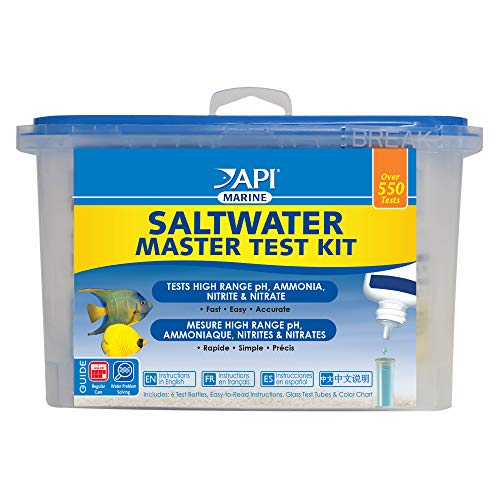
The API Saltwater Master Test Kit is a robust option designed for saltwater aquariums that require reliable monitoring of four core parameters. It includes six testing solutions, a color card, and multiple test tubes, enabling regular checks without frequent replacements. This kit focuses on high-range pH, ammonia, nitrite, and nitrate levels—critical indicators for reef and fish health. For hobbyists managing live rock, beneficial bacteria, or sensitive corals, this kit provides a dependable baseline to prevent stress-related issues.
Red Sea Marine Care Test Kit

Red Sea’s Marine Care Test Kit provides a focused set of tests to monitor the main health indicators in marine systems. It covers nitrate, nitrite, ammonia, pH, and alkalinity with clear color charts and straightforward instructions. This kit is well-suited for hobbyists who want a compact, reliable option that emphasizes stability of water chemistry—key for livestock acclimation, coral vitality, and stable reef ecosystems.
11 in 1 Aquarium Test Strips

This 11-in-1 strip kit from SJ WAVE delivers rapid, in-home testing across 11 key parameters in one strip, including ammonia, pH, nitrate, nitrite, alkalinity, calcium, magnesium, and more. It’s a versatile option for both freshwater and saltwater setups, with color charts designed for quick interpretation. The broad parameter coverage supports early detection of imbalances and can simplify routine checks for busy hobbyists who manage mixed tanks or reef systems with diverse inhabitants.
API Freshwater Master Test Kit 800

Although marketed for freshwater, this API kit remains a staple for many aquarists who also run hybrid or transitional tanks. It tests five core parameters—pH, high-range pH, ammonia, nitrite, and nitrate—providing a depth of information that can help prevent stress and disease in transitional species. The kit’s widespread availability and proven reliability make it a go-to for novices transitioning from freshwater to marine environments, or for those who maintain mixed setups.
API High Range pH Test Kit

This kit focuses specifically on high-range pH testing, ranging from 7.4 to 8.8—an important window for many saltwater setups, including reef systems and marine fish that prefer slightly alkaline conditions. It’s compact and straightforward, ideal for quick checks between larger tests. Regular pH monitoring helps maintain stability, which is essential for coral health and fish well-being in vibrant, high-alkalinity environments.
API Copper Test Kit

Copper management is critical when using copper-based medications or when certain invertebrates are present. The API Copper Test Kit enables precise monitoring of copper levels to avoid toxicity and to ensure treatments are effective. This kit is particularly useful for reef setups and quarantine tanks where copper exposure must be controlled to protect invertebrates and corals from adverse effects.
API Reef Master Test Kit
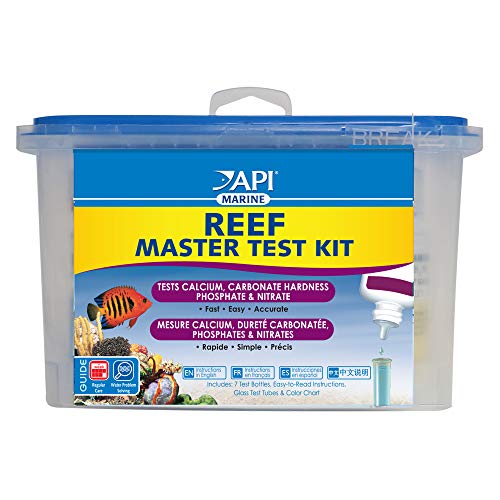
The Reef Master Test Kit is tailored for reef aquariums, monitoring calcium, carbonate hardness, phosphate, and nitrate. With multiple bottles of testing solutions and color cards, it supports reef-keepers who require precise control of mineral balance and nutrient levels to sustain corals, clams, and other calcium-dependent organisms. This kit emphasizes stable water chemistry essential for a thriving reef ecosystem.
Buying Guide: Key Purchase Considerations for Marine Test Kits
- Parameter needs: Identify which metrics are most critical for your tank type—reef, fish-only, or mixed. Reef systems often require calcium, alkalinity, and phosphate tracking in addition to standard ammonia, nitrite, and nitrate.
- Test format: Liquid reagent kits generally offer high accuracy and longer-term cost efficiency, while test strips provide convenience for quick checks but may be less precise over time.
- Number of tests and coverage: Consider how many tests you will perform monthly. Some kits include 550 tests or multiple bottles, which can lower per-test costs for high-frequency testing.
- Ease of use: Clear instructions, color charts, and user-friendly tubes or strips help ensure consistent results, especially for beginners.
- Result interpretation: Look for kits with straightforward color comparisons and, if possible, digital options or supportive guides to reduce interpretation errors.
- Compatibility with reef peripherals: For reef tanks, ensure the kit covers calcium, alkalinity, and phosphate—parameters that directly influence coral growth and stability.
- Maintenance workflow: Choose kits that fit your routine—whether you perform weekly, biweekly, or monthly tests. A kit with a manageable number of components can streamline workflows.
- Brand reliability and support: Established brands with robust documentation and customer support tend to provide more reliable results and easier replacements for reagents and accessories.
- Cost considerations: Balance initial kit costs with ongoing reagent replacement needs. Some options include more liquid tests, which may require periodic reseating or refills.
- Flexibility for freshwater and marine setups: If you maintain a hybrid system, a kit offering multi-parameter coverage across freshwater and marine environments can simplify inventory.