Liquid CO2 products provide readily available carbon for planted aquariums, helping aquatic plants grow faster and healthier without complex pressurized systems. This guide highlights five reliable options and clarifies who each is best for—whether you want a simple weekly boost, a steady daily dose, or a flexible plant-fuel solution. Use this to choose a product that fits your tank size, plant load, and maintenance routine. Below is a quick starter table of the featured items to compare at a glance.
| Product | Best For | Container Size |
|---|---|---|
| API Co2 Booster Freshwater Aquarium Plant Treatment 16 oz | Medium to large tanks seeking easy growth boost | 16 oz |
| Seachem Flourish Excel 500 ml | Users needing a bioavailable carbon source with iron considerations | 500 ml |
| Flourish Excel 2 L / 67.6 fl. oz. | Large tanks or long-term use requiring substantial carbon | 2 L |
| Hygger CO2 HC034 Aquarium Plant Liquid Fertilizer | Planted tanks needing a balanced macro-nutrient mix | 150 ml |
| Crystalpro Carbon Boost 4.22 Oz | Simple, quick carbon boost with convenient dosing | 4.22 oz |
API Co2 Booster Freshwater Aquarium Plant Treatment 16 oz

Contains one 16-ounce bottle designed to promote plant growth in freshwater aquariums by supplying essential carbon that plants can absorb from water. Best for hobbyists seeking a ready-to-use weekly dose that integrates with standard water changes. This is a straightforward option for small-to-midsize tanks with moderate plant load. A limitation is that dosage consistency depends on routine water changes and dosing intervals rather than a continuous micro-dose system.
API Co2 Booster Freshwater Aquarium Plant Treatment 8 Fl oz
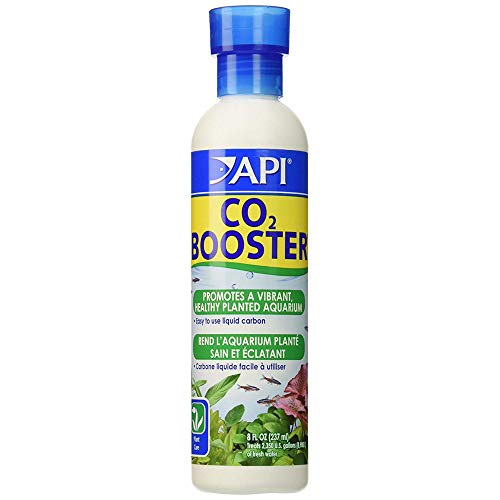
This 8-ounce bottle provides a compact, easy-to-manage carbon boost for smaller or education-focused setups. It’s best for hobbyists who want a reliable, smaller-volume option to supplement plant growth in modestly planted tanks. A potential limitation is needing more frequent dosing in larger tanks or with heavy plant loads.
Seachem Flourish Excel 500 ml

Organic carbon source designed to support bioavailable carbon and iron reduction for plant uptake. Benefits include assisting photosynthesis by providing readily usable carbon compounds and aiding the ferrous iron state. Useful for tanks without continuous CO2 injection. Best for moderate-to-high light setups that require dependable carbon without equipment. A limitation is that it may not replace CO2 injection in high-demand, heavily planted systems.
Flourish Excel, 2 L / 67.6 fl. oz.

A large-volume organic carbon source suitable for bigger tanks or long-term dosing strategies. It provides bioavailable carbon and supports photosynthesis through a ready-to-use intermediate. Choose this if you maintain a high plant load and want fewer bottle changes. Limitation: higher upfront cost and larger bottle footprint.
Crystalpro Carbon Boost 4.22 Oz
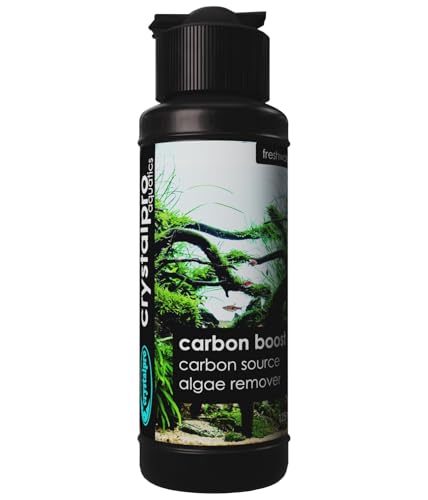
Provides an organic carbon boost for freshwater plants with a focus on quick growth. It is suitable for tanks that want a flexible dosing routine with a clear measurement: roughly 1 ml per 30 gallons weekly, with adjustments for heavier plant loads. Best for smaller to mid-sized tanks seeking a simple, no-fuss carbon solution. Limitation: may require more frequent dosing if plant density increases.
Hygger CO2 HC034 Aquarium Plant Liquid Fertilizer

Macro-nutrient solution designed for fresh planted tanks. It includes nitrogen, phosphorus, and potassium in a balanced ratio to support robust root and leaf growth. Dosing is simplified with an included cup that guides measurements, reducing user error. Best for hobbyists who want a straightforward, measured approach. A limitation is that it is a macro-nutrient mix, so users may need to add additional carbon sources if CO2 injection is not used.
Buying Guide: Key Considerations For Liquid CO2 In Aquariums
- Tank size and plant load: Larger tanks or heavy plant populations require more carbon, so consider higher-volume bottles or weekly dosing schedules.
- Form of carbon: Some products provide immediate organic carbon; others are macro or micro-nutrient blends that also support photosynthesis and iron uptake.
- CO2 injection vs. no-injection: If you already inject CO2, you may favor products designed to complement injection; if not, look for products marketed as carbon sources or growth boosters.
- Dosing simplicity: Pre-measured cups or clear drop-per-volume guidelines help maintain consistent dosing and water chemistry.
- Impact on water clarity: Some liquid carbon products can affect water clarity; choose products that mention staying clear or designed for fast-dissolving carbon.
- Compatibility with plants: Assess whether the formula targets carbon, essential macro-nutrients, or balanced plant nutrition to align with your plant varieties.
Frequently Asked Questions
- What is liquid CO2 for aquariums used for?
– It provides readily absorbable carbon to support plant growth and photosynthesis in freshwater tanks. - Do I need CO2 injection if I use liquid carbon boosters?
– Not always; liquid carbon can support growth in non-injected tanks, but heavily planted or high-light setups may still benefit from CO2 injection. - How often should I dose liquid carbon products?
– Follow product-specific dosing guidelines. Some are weekly, others are per 10–40 gallons per day or per 1–2 days depending on the formula. - Can liquid carbon harm fish or invertebrates?
– When used as directed, most liquid carbon products are formulated to be safe for experienced aquarists, but excessive dosing can stress aquatic life. - Which product is best for beginners?
– A smaller, easy-to-dose option like API Co2 Booster 8 oz or Crystalpro Carbon Boost offers straightforward usage and lower initial cost. - Is Flourish Excel a substitute for CO2 injection?
– It can supplement carbon needs, especially in low-light or moderate setups, but it may not fully replace CO2 injection in high-demand tanks.