Finding the best light for a planted tank means balancing spectrum, timing, and ease of use. This guide highlights seven LED aquarium lights designed to support aquatic plants while fitting common tank sizes. Each product is explained with who it’s best for, key strengths, and any limitations. Ideal buyers include beginners with small tanks, hobbyists expanding into high-light plants, and aquarists seeking programmable features for consistent growth and aesthetics.
Summary table of chosen products:
- Fishkeeper Clip On LED Light – Best for small tanks under 12 inches, simple 24/7 and DIY modes
- Hygger 18W 24/7 Light – Best for mid-sized planted tanks, strong sunrise-to-moonlight cycle, extendable bracket
- Hygger Clip On 24/7 Light – Best for 12–20 inch tanks, versatile mounting and color options
- SEAOURA 7-Color Clip Light – Best for 7–12 inch tanks, 24/7 cycle, full spectrum with color modes
- AQUANEAT LED Light – Best for 18–24 inch tanks, broad footprint, multiple LEDs
- SEAOURA 12-18 Inch Light – Best for mid-size, 24/7 cycle with 9 colors and LCD timer
- NICREW Clip On Light – Best for nano tanks, simple dual-mode (daylight and nightlight)
Fishkeeper Clip On Aquarium LED Light

Best for: Small tanks up to 12 inches, hobbyists who want a ready-made 24/7 cycle or a simple DIY option. This light offers a 24/7 default mode that simulates sunrise, full-spectrum noon lighting, and moonlight for evening ambiance, plus a clip-on gooseneck with 360° adjustability. The DIY mode allows color, brightness, and timing customization. A key benefit is the long-day operation with an adjustable on/off schedule, which helps plant growth during extended photoperiods. The 7-inch gooseneck and aluminum clip make it easy to position on framed or frameless tanks under 0.9 inches thick.
Caution: In 24/7 mode, brightness and color settings are disabled. For full customization, switch to DIY mode. Best used with low-to-moderate light-demand plants to avoid algae blooms in nutrient-rich setups.
Hygger 18W 24/7 Lighting Aquarium LED Light
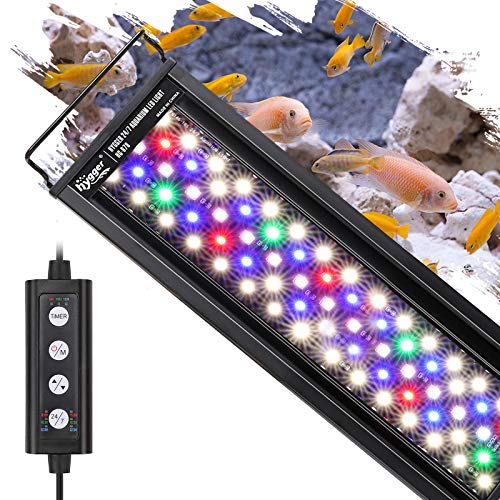
Best for: Mid-sized planted tanks, users who want a natural day-night cycle plus DIY timing. This light starts with a sunrise orange, transitions to white daylight, and ends with moonlight blue. It includes a DIY mode to set time, brightness, and color, plus an adjustable extendable bracket and a separable adapter for easier maintenance. The 15-minute ramp-up and ramp-down provide smooth transitions for sensitive plants and animals. The heat-dissipating aluminum construction helps ensure longevity in longer photoperiods.
Limitation: The cycle is designed for gradual changes, which may require patience when fine-tuning color balance to support specific plant species with higher light demands.
Hygger Clip On 24/7 Lighting Aquarium LED Light
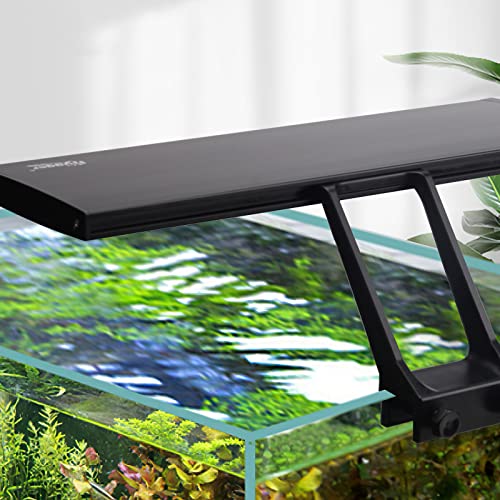
Best for: Tanks from 12 to 20 inches, users who prefer clip-on flexibility and color variety. It provides a 24/7 natural mode with sunrise, daylight, and moonlight, plus a DIY mode with time, brightness, and color adjustments. The clip bracket accommodates tanks up to 0.9 inches thick, and a separable adapter supports easy replacement if damaged. The light’s thick aluminum body enhances heat dissipation for stable performance in longer daily operation.
Caution: The Cycle Color mode does not include brightness control, which may complicate precise plant growth tuning for high-light species.
SEAOURA Clip On Aquarium Light for Plants

Best for: 7–12 inch tanks, hobbyists seeking full-spectrum lighting plus a 7-color mode. This 12W light supports a 24/7 cycle with auto On/Off and adjustable brightness. It emphasizes a balanced spectrum and multiple color options to enhance plant growth while maintaining visual appeal. The design includes adjustable height and a compact footprint for small tanks, making it suitable for nano setups. A potential limitation is the smaller LED footprint, which may not fully cover high-light plant beds in longer tanks.
AQUANEAT LED Aquarium Light Full Spectrum
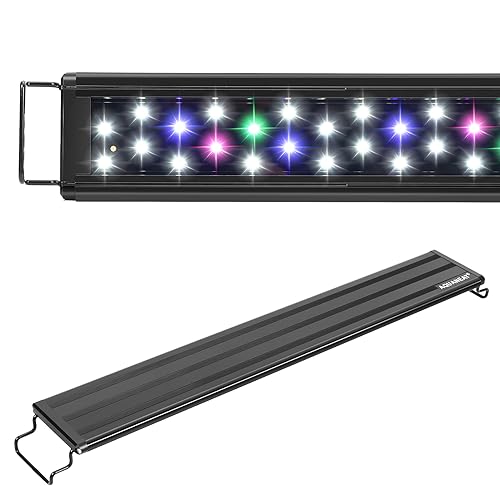
Best for: 18–24 inch tanks, broad coverage with 42 LEDs including 6500K white, blue, pink, and green. The light is designed for freshwater tanks and aims to deliver full-spectrum illumination that supports a variety of plant species. The included two extendable brackets help fit longer tanks, and the dense LED array provides even lighting across the substrate. This option is well-suited for mid-range to higher-light plant setups seeking consistent spectrum across a larger area.
Limitation: No detailed timer or advanced programmable features are listed, which means more manual adjustments may be needed to tailor photoperiods for specific plant cycles.
SEAOURA Led Aquarium Light for Plants

Best for: 12–18 inch tanks, adjustable brightness with DIY mode. The timer supports 6/10/12-hour options, and color modes include white, red, green, pink, blue, and a cycle mode. The controller is user-friendly with a simple LCD-style interface, and the lights offer full-spectrum output for healthy plant growth. The extendable brackets and multi-color options make it suitable for a wide range of freshwater plant setups. Consider this if you want a compact, feature-rich light that stays within a smaller footprint.
SEAOURA 24/7 LED Aquarium Light for Larger Tanks

Best for: Larger 30–36 inch tanks, built-in LCD timer with 24-hour scheduling and a 24/7 cycle. This model features six rows of high-quality LEDs (two rows 5054 and four rows 2835). It supports a 24-hour DIY cycle with eight customizable segments and a five-segment preset cycle for sunrise, daylight, sunset, and moonlight. The advanced controller displays current time, mode, start/end times, color, and brightness, helping ensure precise plant lighting for robust growth in larger aquariums. A caveat is the higher complexity, which might require a short learning curve for first-time users.
Buying Guide: Planted Tank Lighting Essentials
- Tank size and coverage: Choose a light that covers your tank length with even distribution. Longer tanks may benefit from lights designed for 18–24 inches or longer.
- Spectrum and plant type: Most planted tanks respond best to full-spectrum lights that include blue and red wavelengths. High-CRI good for accurate color rendering helps you monitor plant health.
- Intensity and photoperiod: Low to medium light plants need around 6–8 hours of peak light, while high-light plants benefit from longer photoperiods if nutrients and CO2 are sufficient. Programmable modes simplify this balance.
- Mounting and compatibility: Clip-on and extendable-bracket models work well for framed tanks and varying glass thicknesses. Ensure the mount fits your tank’s rim depth and thickness.
- Reliability and heat management: Aluminum bodies with good heat dissipation prevent overheating during extended use. Look for lights with durable builds and stable power components.
FAQ
- What light spectrum is best for most freshwater plants?
Full-spectrum LEDs that include white, blue, and red wavelengths are typically best, promoting photosynthesis while providing natural-looking color.
- Do I need a timer for planted tank lighting?
Yes. A timer helps maintain consistent photoperiods, reducing algae risk and promoting steady plant growth.
- What is a 24/7 mode?
24/7 mode creates a simulated daily cycle with sunrise, daylight, and moonlight. It’s convenient for automatic lighting without manual adjustments.
- Can I use a clip-on light for a large tank?
Clip-on lights work best for smaller tanks or narrow sections of larger tanks. For very long tanks, consider lights designed for longer coverage or multiple units.
- What should I consider if I have high-light plants?
Ensure the light provides adequate intensity and a long enough photoperiod, and confirm your nutrient and CO2 levels to prevent algae and ensure plant growth.