Answer: Lava stones add natural texture and porous surfaces that support beneficial bacteria, making them ideal for both freshwater and saltwater setups. This guide highlights top lava rock picks for aquariums, terrariums, and paludariums, explaining which buyers each product suits best and why.
Quick comparison table of selected products:
| Product | Best For | Size Range | Why It Stands Out |
|---|---|---|---|
| Tfwadmx 10 Pack Black Lava Rock (1.18″–1.96″) | Small to mid-sized tanks, nano aquascapes | 1.18″–1.96″ | Mixed shapes; versatile for detailed layouts |
| Tfwadmx 10 Pack Red Lava Rock (1.18″–1.96″) | Colorful accents, shrimp Betta tanks | 1.18″–1.96″ | Vivid red tones for contrast |
| Tfwadmx 10 Pack Black Lava Rock (1.96″–3.14″) | Larger aquascapes, caves, and focal points | 1.96″–3.14″ | Wider stones for bold structures |
| LANDEN Black Lava Stones (16 lbs, 3–10″) | Large builds, paludariums, rocks-and-moss scenes | 3″–10″ | Heavy-duty, expandable landscapes |
| ChaoLeHo Seiryu Stones (2–6″) | Hardscape accents, natural texture | 2″–6″ | Distinct natural patterns and safe for aquatic life |
Tfwadmx 10 Pack Black Lava Rock (1.18″–1.96″)

Best for small to mid-sized tanks, these 10 pieces offer varied shapes to create natural-looking layouts. Each rock is a natural volcanic pumice product with textures that help avoid uniform surfaces, making the aquarium resemble a real rocky habitat. The stones are suitable for planting flowers and for use as part of a decorative underwater landscape. Best for aquariums, terrariums, and fish tanks that require multiple decorative focal points.
Who this is for: compact tanks, community tanks with shrubs or mosses, and hobbyists who want flexible shapes. Why selected: the pack provides multiple pieces in a single order, enabling rapid layout planning. Caution: rinse well before use to remove any remaining dust from packaging.
Tfwadmx 10 Pack Red Lava Rock (1.18″–1.96″)

Best for shrimp and Betta setups that benefit from contrasting colors, these red lava stones add visual interest while maintaining porous surfaces for beneficial bacteria. The range 1.18–1.96 inches makes them suitable for mid-sized habitats and terrarium-style aquariums. They pair well with dark substrates to create striking foreground or midground accents.
Who this is for: hobbyists focusing on color accents in small to medium tanks. Why selected: color variety helps craft vivid, engaging layouts without compromising biological filtration. Caution: ensure no sharp edges to avoid snagging delicate fins or plants.
Tfwadmx 10 Pack Black Lava Rock (1.96″–3.14″)

Best for larger aquascapes and feature structures, these bigger stones support dramatic caves, cliffs, and mountains within the tank. The 1.96–3.14 inch range provides sturdy anchors for mosses and aquatic plants while forming robust focal points. Suitable for saltwater and freshwater setups alike.
Who this is for: aquarists building bold landscapes and caves. Why selected: larger stones offer structural presence and easier maintenance of aesthetic balance. Caution: larger rocks may reduce swimming space for very small fish in densely planted tanks.
LANDEN Black Lava Stones (16 lbs, 3–10″)
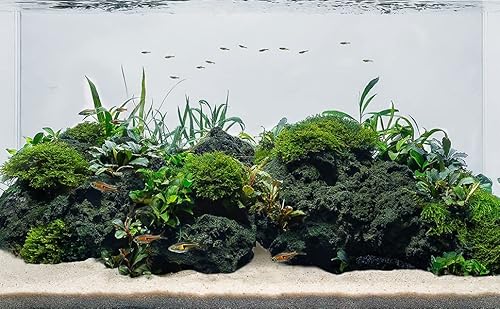
Best for expansive, durable landscapes in larger aquariums, paludariums, and terrariums. These stones offer a wide size range, enabling extensive hardscape builds and natural-looking caves. They are porous and light enough to be rearranged as your layout evolves, while helping to support beneficial bacteria.
Who this is for: aquarists planning long-term, large-scale rockwork. Why selected: high weight capacity and variety support complex designs. Caution: heavy stones require careful initial placement to prevent shifting in tall setups.
ChaoLeHo Seiryu Stones (2–6″)

Best for natural hardscape accents with distinctive textures, Seiryu stones provide unique patterns that enhance aquascapes. They are safe for aquatic life and help create stable environments without altering water quality. The 2–6 inch size range suits mid-height focal points and layered designs.
Who this is for: aquarists seeking natural texture with artistic patterns. Why selected: Seiryu texture adds visual depth while remaining safe for fish and plants. Caution: verify the rock size fits your tank’s scape plan to avoid crowding or crowding spaces in smaller tanks.
FISCAPE 4-Piece Black Lava Rock Set (2.2–6.1 Inches)

Best for precise layouts in nano to larger tanks, this 4-piece set offers small to mid-sized rocks with high porosity for biological filtration. Their rugged texture and deep black tone contrast well with mosses and delicate plants, aiding in anchor points for scaping. Quick prep with a simple rinse is enough for long-term use.
Who this is for: aquarists needing detailed, reliable hardscape elements. Why selected: provides reliable anchors and aesthetic variety in one compact package. Caution: avoid using excessively large pieces in tight installations where flow is restricted.
Buying Guide: Lava Stones For Aquariums
What to consider when choosing lava stones for aquariums
- Tank size and layout: Select stone sizes that fit your available space and desired structures without obstructing swimming areas.
- Porosity and texture: Highly porous stones support beneficial bacteria, aiding biological filtration; rough textures provide better moss attachment.
- Color and contrast: Black and red stones create striking contrasts against lighter substrates or plants; consider color harmony with your decor.
- Weight and stability: Heavier stones offer stable builds but require careful placement; ensure shapes allow secure anchoring in the substrate.
- Safety: Confirm stones are natural and free of additives. Rinse thoroughly to remove dust or mineral residues before introduction.
- Maintenance: Lava rocks can accumulate detritus; plan for periodic cleaning to maintain water clarity and health.
Frequently Asked Questions
- Are lava stones safe for all aquariums? Yes, natural lava stones are commonly used in both freshwater and saltwater setups, provided they are rinsed before use and do not introduce contaminants.
- Do lava stones affect water chemistry? Generally no significant change in water chemistry, but their porosity can host beneficial bacteria that help biological filtration.
- What size of lava stone should I choose? Choose sizes that fit your tank’s dimensions and intended hardscape; multiple smaller stones offer more layout flexibility, while larger pieces create bold focal points.
- How do I clean lava stones? Rinse under running water to remove dust, then soak briefly if needed to loosen debris; avoid using soaps or chemicals.
- Can lava stones be crushed for soil or substrate use? Some stones can be crushed for soil mixes or planting substrates, but confirm suitability for your plant species and tank type.
- Should I mix lava stones with other hardscape materials? Yes, combining lava stones with driftwood or Seiryu stones can create layered, natural-looking landscapes with varied textures.