Need an effective internal parasite treatment for aquarium fish? This guide highlights five well-regarded options and explains who each product benefits most. Use this to compare methods, active ingredients, and practical considerations for both freshwater and saltwater tanks. The selections favor treatments that address common parasites like flukes, tapeworms, and gut parasites while minimizing disruption to your tank’s balance. The buyer’s table below helps aligns products with your fish types and care goals.
| Product | Best For | Active Focus | Notes |
|---|---|---|---|
| Hikari Prazipro (4 oz) | Fluke and tapeworm cases in community tanks | Praziquantel-based | Effective for many internal parasites; handle carefully with sensitive invertebrates nearby |
| Seachem MetroPlex | Internal and external infections in coral and mixed tanks | Metronidazole | Supports both water and medicated-food dosing |
| Hikari Prazipro (1 oz) | Smaller tanks or trial use | Praziquantel-based | Compact option; use as directed for dose |
| Fritz ParaCleanse | Broad-spectrum parasite treatment in mixed systems | Metronidazole + Praziquantel | Targets various parasites and some bacteria |
| Absolute Wormer Plus | Preventive and treatment in larger tanks | Flubendazole | Gentle on most tropical fish; safe with proper use |
Hikari Usa AHK73254 Prazipro For Aquarium (4-Ounce)
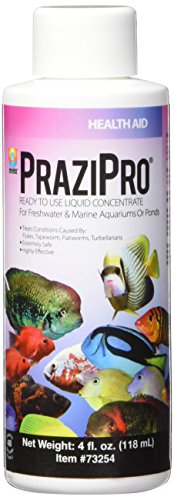
Active ingredient emphasis: praziquantel at a weight-based level, designed to combat flukes, tapeworms, flatworms, and turbellarians. This makes it a focused option for internal parasites common in community tanks. The 4-ounce size supports medium to larger setups or repeated treatments. Best for owners dealing with suspected parasitic infections that involve internal stages rather than external fungal issues.
Who it’s best for: hobbyists with mixed-species tanks facing suspected intestinal parasites, especially flukes and tapeworms. Why selected: strong historical use for praziquantel-based protocols and broad-spectrum internal parasite targeting. Caution: ensure compatibility with any invertebrates or delicate species in the tank before dosing.
Seachem MetroPlex Metronidazole Parasite Care

Active ingredient focus: metronidazole, with an approach that supports both internal and external infections depending on delivery. It is noted to not adversely affect the filter bed and is removable with carbon. Dosing can be added directly to water or combined with a medicated food mix, offering flexibility for various tank setups. Best for: systems that want a broad option that can address a range of infections without heavy disruption to filtration.
Selected because it accommodates both water-dosed and food-dosed administration, which can be important for tanks with picky eaters or sensitive filter media. Limitation: may require carbon removal for full efficacy and is not a one-size-fits-all cure for all parasite types.
Hikari USA Inc. Prazipro – Safest Parasite Treatment (1 oz)

This compact option provides praziquantel treatment in a smaller bottle, suitable for smaller tanks or initial trial dosing. Label mentions that it’s designed for safe internal parasite control in aquariums. Best for: small tanks or when testing sensitivity to praziquantel in a controlled setting. Caution: verify exact dosing for your tank size to avoid under- or over-dosing in a smaller volume.
Fritz ParaCleanse Parasite Treatment
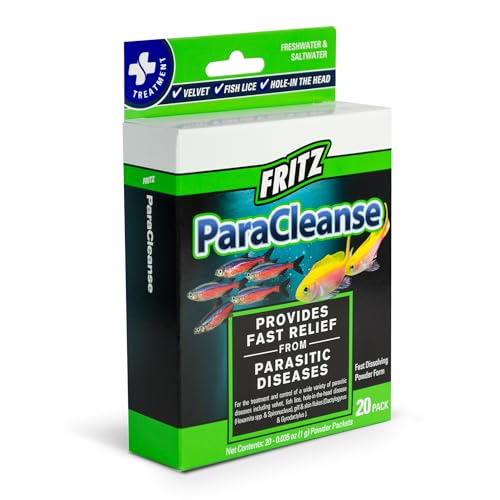
Parasite treatment with dual active ingredients: metronidazole and praziquantel. It targets a broad spectrum of parasites including velvet (Oodinium), Hexamita & Spironucleus, fish lice, and gill & skin flukes. Also noted as safe for freshwater and saltwater systems and not harmful to plants or uninfected fish. Best for: tanks facing multiple parasite threats or mixed-species communities requiring a broad approach. Limitation: while broad, it may not be the most targeted option for a single parasite if diagnosis is precise.
Absolute Wormer Plus (5g)

Active ingredient: flubendazole, described as effective against gut parasites and external worms, with a focus on gentle action that minimizes shifts to tank pH. This makes it a reasonable preventive option for ongoing parasite control in larger or population-dense tanks. Best for: hobbyists managing recurring parasite concerns or seeking a treatment that is compatible with routine maintenance. Caution: verify compatibility with plant-heavy or highly delicate species, and avoid overuse if not necessary.
Buying Guide: Key Considerations For Internal Parasite Treatments
- Parasite type and target: Identify suspected parasites (flukes, tapeworms, gut worms, velvet) and choose a product with a focused or broad approach accordingly.
- Tank size and layout: Dosing should align with aquarium volume. Some products offer small-bottle options for nano tanks, while others cover larger setups.
- Delivery method: Water-only dosing works in systems with stable filtration; medicated-food options help when fish won’t take medicine directly.
- Impact on tank inhabitants: Consider sensitive invertebrates, plants, and biofilters. Some treatments require carbon removal or avoid UV treatment during dosing.
- Combination therapy: Multi-ingredient products can address multiple parasites but may increase risk of interactions with other medications.
- Maintenance implications: Some therapies affect the biological filter or beneficial bacteria; plan a temporary maintenance window if needed.
Frequently Asked Questions
- What should I treat first to address internal parasites in fish?
Start with a diagnosis or a targeted treatment based on observed symptoms (stool changes, lethargy, weight loss) and consider a broad-spectrum option if multiple parasites are suspected. - Can I use more than one parasite treatment at the same time?
Avoid stacking medications unless a professional guidance specifies compatibility. Some combinations can cause chemical interactions or excess stress to fish. - Is it safe to use parasite treatments with plants and invertebrates?
Some products are marked as plant-safe and reef-safe, but always verify in the product details and observe carefully after dosing. - How do I know if dosing was effective?
Monitor for improvements in appetite, behavior, and appearance over the recommended treatment window. If symptoms persist, consult an aquatic specialist. - Should I remove media like carbon during treatment?
Some treatments recommend carbon removal to improve efficacy; check product instructions for best practices. - Do these products treat external infections as well?
Several formulations primarily target internal parasites, but some can assist with certain external issues when used appropriately.