Maintaining a stable pH is essential for fish health and plant growth in freshwater and reef setups. This guide highlights reliable products designed to raise pH levels in aquariums, along with practical considerations to choose the right solution for your tank size, inhabitants, and water source. Each option below provides a tested approach to boosting alkalinity or pH without triggering unwanted algae growth or sudden swings.
| Product | Brand | Notes |
|---|---|---|
| API pH UP Freshwater Aquarium Water pH Raising Solution | API | Phosphate-free formula, safe for plants and fish |
| KORDON pH Increase Adjuster | Kordon | Fast-acting, works in both fresh and saltwater |
| Brightwell Aquatics pH+ Alkalinity Booster (125 ml) | Brightwell Aquatics | Raises pH and alkalinity; supports coral-friendly systems |
| Brightwell Aquatics pH+ Alkalinity Booster (500 ml) | Brightwell Aquatics | Same purpose with a larger volume for bigger tanks |
| API PROPER pH 7.0 Freshwater Stabilizer | API | Stabilizes pH to neutral range for healthy, colorful fish |
Note: This overview focuses on products designed to increase or stabilize pH in aquariums. Always follow label directions and test water parameters after any adjustment to maintain a stable environment for your specific fish and plants.
API pH UP Freshwater pH Raising Solution
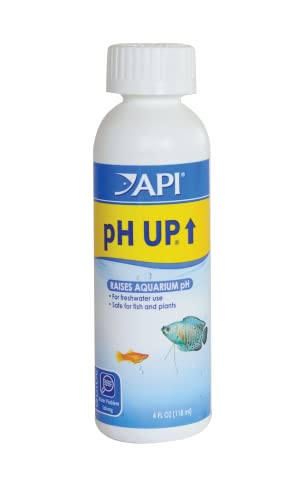
The API pH UP formula is designed to raise the pH of freshwater aquariums with a phosphate-free composition, reducing the risk of unintended algae blooms. It is labeled as safe for both plants and fish, making it a common first-choice for hobbyists adjusting acidity in community tanks. Users typically add small amounts gradually, testing pH between adjustments to maintain stability. This product is well-suited for tanks experiencing low pH levels due to soft water sources or high CO2 conditions. It pairs well with routine water testing and gradual titration to avoid rapid swings in alkalinity.
KORDON pH Increase Adjuster

Kordon’s pH Increase Adjuster is a fast-acting solution intended to raise aquarium water pH levels, suitable for both freshwater and saltwater setups. The product emphasizes performance in rapidly leveling pH and works in conjunction with other buffering strategies to maintain stability. It is often used in tanks where spoilage of pH due to low buffering capacity or recent water changes has caused stress to fish. For best results, operators should monitor pH after each dose and consider pairing with a reliable pH stabilizer to prevent overshoot.
Brightwell Aquatics pH+ Alkalinity Booster (125 ml)
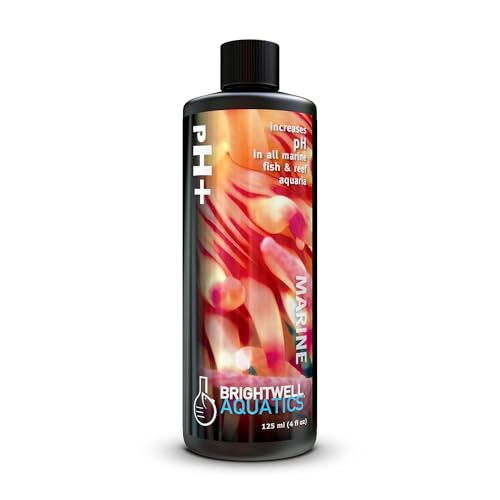
Brightwell Aquatics pH+ Alkalinity Booster for marine and reef aquariums is formulated to increase both pH and alkalinity (KH). The product is designed to strengthen carbonate buffering, which helps prevent pH swings in systems with corals and calcifying inhabitants. Its use is especially important in saltwater setups where maintaining stable carbonate chemistry translates to healthier coral growth and more predictable water parameters. Since reef tanks often experience more dynamic chemistry, careful dosing and regular testing are advised to avoid unintended alkalinity spikes.
Brightwell Aquatics pH+ Alkalinity Booster (500 ml)
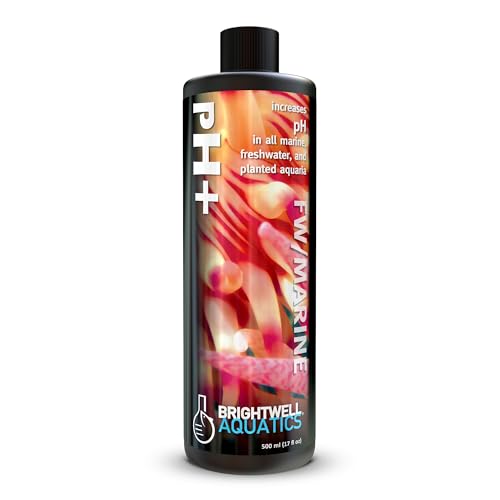
This larger Brightwell pH+ product serves the same purpose as the 125 ml variant but is intended for bigger tanks or higher-frequency dosing. By increasing both pH and KH, it helps stabilize water parameters in reef and mixed systems, reducing the risk of pH excursions caused by feeding, photosynthesis, or CO2 fluctuations. As with all buffering products, gradual increments and consistent water testing are essential, particularly in diverse aquariums with multiple live inhabitants and corals.
API PROPER pH 7.0 Freshwater pH Stabilizer

API PROPER pH 7.0 is a stabilizer that helps set and maintain a neutral pH in freshwater aquariums, supporting a calm baseline for many community fish and plants. While not a direct pH booster, stabilizing near neutrality can complement pH-increasing strategies by reducing the likelihood of rapid swings after adjustments or water changes. This product is commonly used in conjunction with pH up formulations where the goal is to maintain a stable, healthier environment over time rather than achieving a single high pH spike.
Buying Guide: Key Purchase Considerations And Comparisons
Choosing the right pH-increasing product depends on tank type, inhabitants, and personal maintenance routine. Here are important factors to weigh when buying:
- Tank type and inhabitants: Freshwater community tanks often benefit from pH up products that are gentle and phosphate-free. Reef and marine setups may require products that also raise alkalinity (KH) to support corals. Review product labels to ensure compatibility with your species and water chemistry goals.
- Rate of change and dosing control: Look for products that offer gradual dosing instructions and clear testing intervals. Sudden pH increases can stress or harm fish; gradual titration is safer and more reliable.
- Buffering and alkalinity effects: Some pH boosters also raise KH, which helps stabilize pH by strengthening carbonate buffering. If you experience swings, consider a product that targets both pH and alkalinity.
- Compatibility with stabilizers: When using pH up products, ensure compatibility with pH stabilizers and conditioners in your regimen to avoid conflicting chemistry.
- Tank volume and dosing frequency: Larger tanks require higher-volume products or multiple dosing steps. Check the product’s recommended dosing relative to your aquarium size.
- Testing and monitoring: Regular test results are essential. Invest in reliable test kits for pH, KH, and calcium (for reef tanks) to track responses and adjust dosing as needed.
- Safety and packaging: Choose phosphate-free and non-toxic formulations when possible, especially in planted tanks where algae growth can be a concern.
- Long-term strategy: For persistent pH management, combine pH boosting with proper filtration, water aging, and circulation to avoid excess dosing and maintain stable parameters.