Helping you maintain stable warmth in small fish tanks is essential for healthy tropical species and bettas. This guide highlights compact 25W–50W heaters that fit 1–6 gallon setups and similar micro-tanks. These options are ideal for hobbyists with space constraints, desktop desks, or nano aquariums. Each pick is assessed for ease of use, reliability, and how clearly it suits different aquarium sizes or species.
Summary of selected products:
| Product | ||
|---|---|---|
| DaToo Mini Aquarium Heater 25W | 1–5 gallons | Smallest form factor; auto-maintains ~78°F |
| hygger Small Heater | 1–5 gallons | Quartz glass; multiple protections |
| AQUANEAT 25W Small Heater | 3–5.5 gallons | Preset 78°F; easy plug-and-play |
| Orlushy 25W Submersible Heater | 1–6 gallons | Durable ABS housing; preset 78°F |
| HiTauing 25W | 1–5 gallons | Knob control with separate thermometer |
DaToo Mini Aquarium Heater 25W
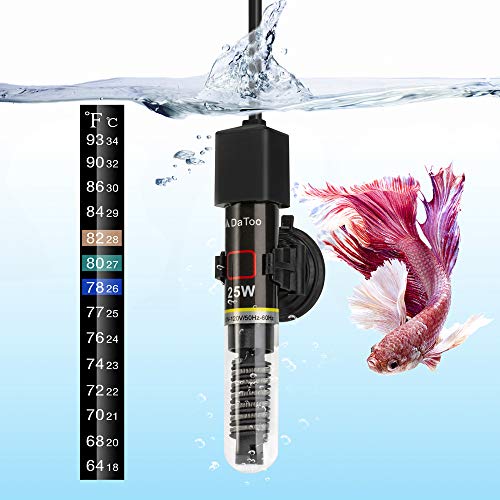
This compact 25W heater is designed for small Betta tanks and other 1–5 gallon setups. It automatically maintains a stable temperature around 78°F, eliminating the need for constant adjustments. The very small form factor helps preserve tank aesthetics and swimming space. Best for hobbyists who want a straightforward, low-profile heater and a clearly indicated heating state.
Who it’s best for: beginners with tiny tanks or keepers who prefer a plug-and-forget solution. Why selected: its automated control and obvious green/red status lights simplify temperature management in micro aquariums. Limitation: fixed target temperature may not suit every species, so verify compatibility with your fish’s needs.
hygger Small Aquarium Betta Heater

The hygger heater line offers a 10W option suitable for 1–5 gallon tanks, with 2mm thickened quartz glass and several protective features. The unit provides dry-run and overheat protection, helping prevent accidental overheating in compact spaces. This makes it a safer choice for unmonitored or space-limited setups.
Who it’s best for: keepers who want robust protection features in a tiny heater. Why selected: the design emphasizes durability and safety in small environments. Caution: verify the power rating for your tank size to avoid undersizing the heater for larger nano setups.
AQUANEAT 25W Small Betta Heater

With a short 4.5-inch profile, this 25W heater is tailored for 3–5.5 gallon tanks. It arrives preset to 78°F, making it a quick plug-and-play option for bettas and other small tropical fish. The indicator light helps daily checks without having to measure the water each time. Best for: users who want a compact, effortless-to-use heater with a visible status indicator.
Why selected: ease of use and reliable preset temperature support straightforward maintenance. Limitation: fixed preset may not accommodate species with different thermal needs, so plan an alternative if you keep more temperature-sensitive species.
Orlushy 25W Submersible Heater

Orlushy offers a 25W heater suitable for 1–6 gallon tanks with a 4.7-inch length. The device is designed for easy vertical submersion, and it uses a red-on/green-off indicator to show heating status. The outer ABS shell and nickel-chromium heating wire provide durability in small tanks. Best for: users needing a slim heater with a clear status indicator. Caution: ensure the water level remains above the minimum line to maintain safe operation.
HiTauing 25W Submersible Heater

HiTauing’s 25W model targets 1–5 gallon desktops with a knob-style temperature control (65–89°F) and a separate digital thermometer for real-time readings. The slim 6.5-inch form factor and CE-certified cord length suit compact setups where discreet hardware is important. Best for: hobbyists who value visible temperature control and a dedicated thermometer. Limitation: adjustable knob requires manual calibration and monitoring to confirm the target temp is reached.
Buying Guide
What size and tank type should you choose? For nano to small tanks (1–5 gallons), a 25W heater is typically appropriate. For slightly larger small tanks (5–6 gallons), a 50W option can offer more reliable heating without constant cycling. Consider whether your tank is freshwater or marine, as some heaters are marketed for both but performance can vary by salinity and system heat load.
What features matter most? Look for automatic temperature control, reliable safety protections (dry-run or overheat protection), and a visible indicator. A compact design helps preserve swimming space, while a clear thermostat or digital display reduces guesswork for temperature management.
How important is ease of monitoring? Heaters with a separate thermometer or built-in indicators help you confirm the water temperature without testing with a separate device. In small tanks, even minor deviations can affect fish well-being, so choose units with easy-to-read signals.
Should you prioritize durability or price? Glass or quartz glass heaters tend to be more durable, while ABS shells protect the internal components in busy tanks. For a low-cost nano setup, a basic model with decent protections may suffice; for ongoing use, prioritize durability and safety features.
What are typical limitations to watch for? Some compact heaters come preset to a fixed temperature, which might not suit all species. Others require vertical insertion and proper water coverage to function. Always align heater wattage and positioning with your tank’s volume and fish requirements.
Frequently Asked Questions
- What wattage should I choose for a 2–3 gallon tank? A 25W heater is typically suitable, provided the tank is near room temperature and the species tolerate 78°F. If your tank runs cooler or you keep more sensitive species, consider a 25W heater with tighter control.
- Is it safe to leave a heater in a small tank with a turtle or other non-fish inhabitants? Yes, but ensure the heater is rated for the combined heat load and that placement avoids direct contact with the animal. Use a model with stable temperature control and protective materials.
- Do digitally controlled heaters offer real-time feedback? Some models provide a dim display or indicator, while digital thermometer readings help verify the current temperature. Look for a unit with separate thermometer or easy-to-read lights.
- Can I use a 50W heater in a 5-gallon tank? In some cases, yes, but it may run more frequently and risk overheating if not monitored. It’s often safer to match wattage to the tank size as recommended by the manufacturer.
- What is the advantage of a heater with dry-run protection? It helps prevent overheating when the water level drops or if the heater runs without submersion, reducing risk to fish or other livestock.
- How do I hide a small heater in a nano tank? Choose a compact model designed for 1–5 gallons and mount it along a side wall where it won’t obstruct viewing. Ensure full submersion as required by the product instructions.