Maintaining a stable temperature is crucial for saltwater ecosystems. The right heater offers precise control, auto shutdown when out of water, and durable construction to handle salt exposure. Below are five top options that balance reliability, safety features, and ease of use. A quick product summary follows, then in-depth sections for each heater, and finally a buying guide to help you compare models for your marine setup.
| Product | Wattage Range | Tank Range (Approx.) | Notable Feature |
|---|---|---|---|
| HiTauing 300W/500W Upgraded | 300W/500W | 40-75 gallons | Intelligent leaving-water stop; advanced temp control |
| hygger 800W | 800W | 80-220 gallons | Digital LED controller; auto cut-off out of water |
| Fluval M 200W | 200W | Up to ~65 gallons | Mirror technology for sleek look |
| HiTauing 50W/100W/200W/300W/500W | Various | Varies by wattage | Explosion-proof quartz glass; rapid heating |
| Orlushy 300W | 300W | 40-55 gallons | Explosion-proof quartz glass; easy to hide |
HiTauing 300W/500W Upgraded Aquarium Heater
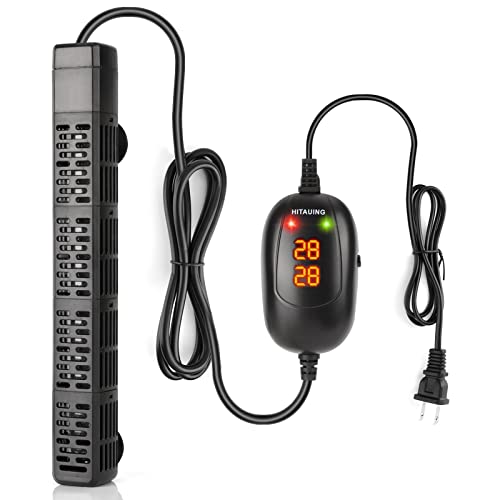
The HiTauing upgraded heater combines fast heating with intelligent safety features for both saltwater and freshwater tanks. With a 5-10 inch range in wattage across models, it supports a broad range of tank sizes. The device uses explosion-proof quartz glass and a nickel-chromium heating element for robust performance. A key feature is automatic shutdown when water is low or if the temperature exceeds the set limit, helping protect aquatic life and equipment. The digital controller supports Celsius and Fahrenheit, simplifying setup for mixed-parameter marine environments.
Model-specific safety includes a water-sensor that halts heating when the heater is not submerged. This reduces the risk of overheating and electrical hazards. The robust black ABS shell adds a layer of protection against impacts and salt creep. For marine aquariums, this heater provides dependable thermal control without taking up excessive space inside the canopy or cabinet.
HiTauing 300W/500W, Intelligent Leaving-Water Stop

This model emphasizes a seamless two-stage temperature control and automatic stopping when the water level falls or when the target temperature is reached. The heater head is designed to minimize heat loss while delivering quick, steady warmth to the water. It is suited for marine tanks on the larger side of small- to mid-sized setups. The combination of explosion-proof glass and protective ABS shell helps maintain interior tank aesthetics and safety in salty environments.
hygger 800W Submersible Heater

The hygger 800W heater is designed for large marine aquariums, supporting tanks from roughly 80 to 220 gallons. It features a digital LED controller with a precise temperature range and an accuracy of about ±1°F. Overheating and out-of-water protection are built in, with easy-to-read error codes and an audible alert. The unit includes a bracket for mounting the controller externally, making adjustments convenient without wetting hands. The robust construction includes a nickel-chromium heating element and a corrosion-resistant housing suitable for saltwater use.
Fluval M 200-Watt Submersible Heater

The Fluval M 200W heater offers precise, reliable temperature control for freshwater and saltwater systems up to 65 gallons. It is notable for its mirror technology, which helps the heater blend into the tank without drawing attention. The sleek design and compact footprint make it easy to position in tight spaces, while maintaining consistent warmth. This model emphasizes consistent performance across a moderate tank size, delivering stable temperatures without frequent adjustments.
Orlushy 150W Submersible Heater

The Orlushy 150W heater is sized for smaller tanks, typically 20 to 30 gallons. It emphasizes ease of integration and discreet placement, with adjustable temperature control and a robust quartz glass construction that supports both freshwater and saltwater environments. The unit includes two suction cups and a thermometer for monitoring, making it a convenient option for nano or small reef setups where space is at a premium. The design prioritizes safe operation and straightforward maintenance for hobbyists.
Buying Guide: Key Purchase Considerations For Saltwater Setups
- Tank size compatibility: Select wattage that matches your aquarium volume. Underpowered heaters struggle to maintain stable temperatures in larger tanks, while oversized units may overshoot and cause fluctuations.
- Temperature control accuracy: Look for a digital controller with clear readings and a tight precision range (ideally ±1°F). This reduces stress on delicate corals and fish in marine systems.
- Safety features: Automatic shutdown when water is low or heater head is out of water is essential in saltwater to prevent overheating and corrosion. Explosion-proof glass and ABS housings reduce risk of leaks and physical damage.
- Sensor placement and accessibility: An external or easily accessible display/controller helps with quick adjustments. Brackets or external mounts that don’t require reaching into the water are beneficial.
- Material quality: Quartz glass heating elements resist thermal shocks and chemical exposure common in saltwater. Corrosion-resistant housings protect internal components and extend life.
- Ease of maintenance: Detachable or easy-to-clean parts, visible temperature readouts, and straightforward replacement options help keep performance consistent over time.
- Quiet operation: For tanks in living spaces, choose models designed for low noise with a calm hum and minimal vibration.
- Safety certifications: While not always stated, look for heaters designed for aquarium use with well-documented safety features and user reviews confirming reliability in marine setups.
When selecting a heater, consider your target water temperature range, the natural heat load of your room, and whether you need features like auto shut-off when leaving water. For mixed freshwater-saltwater houses, choose models offering precise control, robust materials, and corrosion resistance. The five heaters outlined here provide a spectrum of wattages and safety features suitable for various marine displays, from nano reefs to large, community tanks.