For small tanks and nano aquariums, a 15-watt heater can maintain stable temperatures without crowding the space. This guide highlights five compact options that balance size, precise temperature control, and safety features. It’s best for tiny tanks (1–4 gallons) and habitats like bettas or nano communities. The top picks emphasize mini form factors, precise digital readouts, and smart protections to prevent overheating or dry runs. The buyer types most served by these heaters include nano-tank enthusiasts, dorm-room aquarists, and hobbyists seeking discreet, reliable heating.
| Product | Brand | Tank Range | Key Feature |
|---|---|---|---|
| AquaMiracle 15W Small | AquaMiracle | 1–3 Gal | Dual LED display, memory function |
| FUMAK 15W Mini | FUMAK | 1–3 Gal | Alumina ceramic, energy saving |
| AquaMiracle Upgraded 15W | AquaMiracle | 1–3 Gal | Dual LED, inverter technology |
| VCRAZE Mini 15W | VCRAZE | 1–3 Gal | Alumina ceramic, precise temp |
| HITOP 15W Super Mini | HITOP | 1–4 Gal | External regulator, memory function |
AquaMiracle 15W LED Digital Mini Heater

Best for: nano tanks that require compact heating with clear readings. This model uses a digital thermostat with an external display showing current and set temperatures, offering precise control to within 1°F. Its dry-run and overheat protections reduce the risk of stressing or cooking inhabitants. The design hides easily in small setups, letting hobbyists preserve a clean aesthetic. Caution: ensure water covers the heater fully during operation to maintain safety indicators.
FUMAK 15W Mini Aquarium Heater
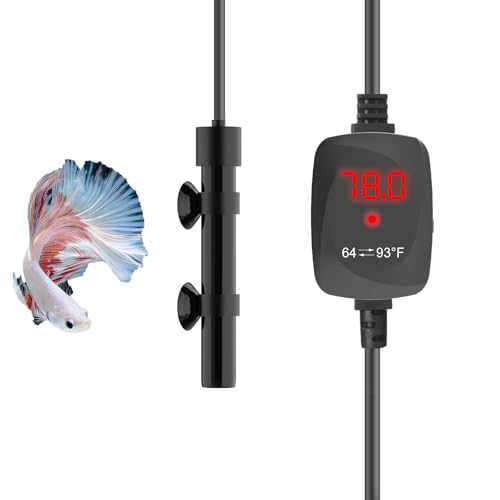
Best for: small betta and nano tanks where durability and efficiency matter. It uses alumina ceramic for durability and energy savings, with precise temperature control and a two-reading display (current vs set temperature). The compact size helps hide the heater in tight spaces. Limitation: full power is needed to heat very cold rooms; in cooler rooms, a slightly larger wattage may be considered.
AquaMiracle 15W Small Compact Heater

Best for: users needing a compact heater with accurate external control. The external thermostat displays two readings (current and desired temperature) and the heater leverages inverter technology to heat efficiently while maintaining a stable temperature. A potential limitation is that the extended exposure to air during maintenance can momentarily disrupt readings if the sensor is exposed.
VCRAZE Mini 15W Digital Heater
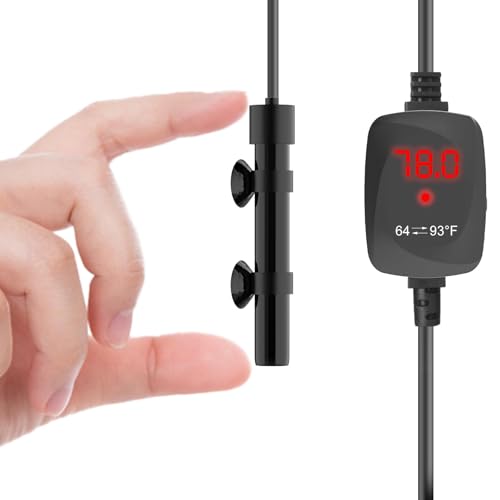
Best for: minimalist nano tanks where space is at a premium. This alumina ceramic heater provides precise temperature control through a compact design and a digital display showing current vs set temperature. It’s energy-efficient and easier to tuck away behind decor. Caution: confirm the water level to avoid dry-run protections triggering during large water changes.
HITOP 15W External Controller Heater

Best for: beginners and students who want easy external control. The external regulator reduces wet-hand adjustments, and a 4.9ft cord makes it easy to position controls outside the tank. The memory function preserves temperature settings after power loss, which helps maintain stability. Limitation: for larger or drastically fluctuating environments, a higher wattage may be beneficial for faster recovery.
AquaMiracle Upgraded 15W Mini Heater

Best for: fish keepers who want longer life and efficiency. This upgraded model uses inverter technology for faster heating and a longer lifespan, plus a precise external thermostat with a two-reading display. A potential drawback is that some setups may benefit from pairing with an additional small heater for redundancy in extreme environments.
Buying Guide: Key Considerations For 15W Small Heaters
- Tank size: Ideal for 1–3 gallon systems, with some models suitable up to 4 gallons. Avoid using 15W heaters in larger tanks unless you pair with a second unit.
- Temperature accuracy: Look for thermostats accurate within 1°F to minimize swings and stress on inhabitants.
- Protection features: Dry-run protection, overheat protection, and auto shut-off when leaving water are essential for safety.
- External vs. internal controls: External controllers reduce wet handling and can be easier to read from a distance.
- Size and concealment: Ultra-mini heaters are designed to be tucked behind decor or rocks; ensure they’re fully submerged for safety indicators to work properly.
- Energy efficiency: Inverter technology can reduce energy use and extend heater life, especially in small volumes.
- Reliability in cold rooms: In very cold environments, consider models with higher heat output or supplemental heating options.
- Maintenance: Check for replaceable parts, easy access for cleaning, and clear display readings for ongoing accuracy.
Frequently Asked Questions
- Q: Can a 15W heater heat a 3-gallon tank effectively? A: Yes, many 15W models are designed for 1–3 gallon tanks and can maintain stable temperatures in that range, provided the room temperature isn’t extremely low.
- Q: Are external controllers safer for beginner hobbyists? A: External controllers reduce the risk of water exposure during adjustments and can improve readability, which benefits beginners.
- Q: What should I do if the heater turns red or green? A: Red typically indicates heating, green indicates the set temperature is reached or standby. Use these indicators to monitor tank status at a glance.
- Q: Is inverter technology necessary? A: Not strictly, but it improves temperature stability and energy efficiency, which helps maintain a stable environment for sensitive species.
- Q: Can I use two 15W heaters in one small tank? A: In some setups, yes, but it’s often unnecessary for 1–3 gallon tanks. If used, stagger their placement to avoid heat hotspots.
- Q: What are common signs of failure in nano heaters? A: Inconsistent temperatures, rapid temperature swings, or a non-responsive display are typical indicators to inspect or replace the unit.