Direct answer: Foam sponge block filters provide mechanical and biological filtration in aquariums and are ideal for hobbyists seeking affordable, cut-to-fit media. They work well for small to mid-size tanks, sumps, canister systems, and DIY setups. The top picks below are chosen for fit, filtration quality, and versatility across freshwater and saltwater tanks. Best suited for hobbyists who want customizable filtration, easier maintenance, and reliable pre-filtration for larger systems.
Buyer’s quick-start table
| Product | |||
|---|---|---|---|
| AQUANEAT 9″ x 9″ x 0.5″ Open Cell Foam Pad | Pre-filter to fit multiple filter types | 40 PPI | Small to mid tanks; DIY projects |
| ALEGI 20″ x 20″ x 1″ (50 PPI) | Mechanical + biological filtration | 50 PPI | Medium to large tanks; durable, cut-to-fit |
| Pawfly 6.3″ x 5.5″ x 0.78″ | Pre-filter for multiple filter types | 30 PPI | DIY setups; ponds and sumps |
| CKDFK 11″ x 10.25″ x 2″ (20 PPI) | Biological + mechanical filtration | 20 PPI | Budget-friendly, freshwater or saltwater |
| CKDFK 11″ x 10.25″ x 2″ (40 PPI) | Fine filtration plus structural support | 40 PPI | Water clarity improvement; fine debris |
AQUANEAT 9″ x 9″ Open Cell Sponge Pad

Best for compact aquariums or DIY filter projects where a cut-to-fit pre-filter is needed. This 9″ x 9″ pad uses open-cell foam with 40 PPI, offering a larger inner surface area for improved mechanical filtration and a habitat-friendly microenvironment for beneficial bacteria. Suitable for canister, sump, wet/dry, or HMF DIY setups. The product ships as two pieces, enabling flexible customization.
- Best for small tanks or custom filter housings.
- Cut to fit any compatible filter system.
Who it’s best for: hobbyists building a DIY filtration stage or replacing pre-filter media in a compact system. Caution: ensure a precise cut to prevent water bypass and maintain flow.
Aquarium Bio Sponge Fitler Media (AC 110 / 500 Compatible)

Selected for compatibility with commonly used AC 110 / 500 filter models, this 30 PPI sponge offers balanced filtration. It combines mechanical filtration with a biological layer as beneficial bacteria colonize the sponge pores. It’s well-suited for freshwater setups, ponds, sumps, and canister systems.
- Better for standard canister and power filter users needing plug-and-play media.
- Maintain balanced ecosystems with a medium PPI that supports bacteria growth.
Who it’s best for: aquarium owners seeking straightforward compatibility with popular filter brands. Caution: check exact fit for your model before purchasing.
ALEGI Cut-to-Size Foam Sponge Pads (20″ x 20″ x 1″)

Designed for flexible use across freshwater and saltwater tanks, this 50 PPI sponge balances mechanical filtration with biological activity. The material is described as durable and resistant to deformation, enabling long-term filtration performance. It is easy to trim to fit various filtration setups.
- Best for long-term filtration in medium to large tanks.
- Choose this if you want a sturdy, trim-to-fit option with good debris capture.
Who it’s best for: aquarists wanting a robust, cut-to-fit media with reliable durability. Caution: verify cut dimensions to ensure a tight seal in your filter housing.
Pawfly 4 Pack Aquarium Bio Sponge Pad

This 6.3″ x 5.5″ x 0.78″ pad set offers a 30 PPI structure that balances mechanical filtration with space for beneficial bacteria. The pads are cut-to-fit for various filters and work well as pre-filters for sumps, ponds, or HMF DIY projects.
- Ideal for multi-tank setups or as replacement media in different filtration systems.
- Better for DIY builds where you need flexible sizing and quick replacement.
Who it’s best for: hobbyists who want multiple pads for a single or multiple filters. Caution: ensure you’re using the correct thickness and size to avoid flow restrictions.
CKDFK 20/30/40PPI Open Cell Sponge Pad (11″ x 10.25″ x 2″)

Available in multiple PPI options, this CKDFK line is designed for versatile filtration across freshwater and saltwater tanks. The 20 PPI variant focuses on stronger mechanical filtration, while remaining cost-effective and easily trimmed to fit a range of filter systems.
- Choose this if you want budget-friendly, trim-to-fit media with simple replacement.
- Avoid this if you need ultra-fine filtration in a high-flow system without an additional polishing stage.
Who it’s best for: aquarists seeking value and flexible sizing for various filtration setups. Caution: confirm your filter’s acceptance of the 11″ x 10.25″ footprint for a proper seal.
CKDFK 11″ x 10.25″ x 2″ 30PPI Open Cell Foam
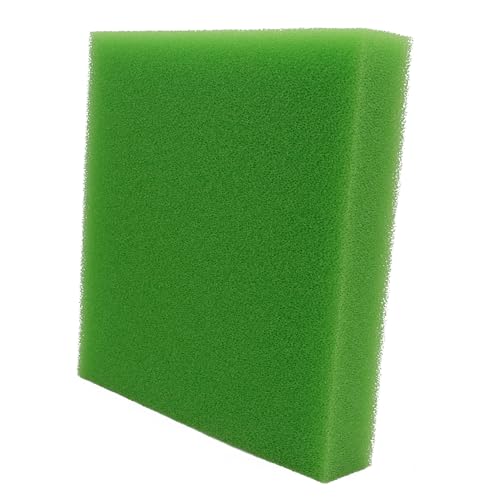
This 30 PPI CKDFK pad provides a middle ground between coarse mechanical filtration and efficient water flow. It’s suitable for freshwater and saltwater tanks and can be trimmed to fit various filter systems. Durable construction supports repeated use.
- Better for balanced filtration and dependable long-term use.
- Limitations: may require additional polishing media for extremely clear water in heavily stocked tanks.
Who it’s best for: hobbyists wanting reliable, mid-range filtration with easy customization. Caution: ensure the exact fit in the filter housing to prevent bypass.
CKDFK 11″ x 10.25″ x 2″ 40PPI Open Cell Foam

This 40 PPI option offers fine filtration capacity for capturing small particulates while maintaining adequate water flow. It is well suited for tanks that require clearer water and a dense biofilm presence for bacteria.
- Best for polishing and enhanced debris capture in moderately stocked tanks.
- Caution: finer pores may reduce flow rate in high-demand systems; pair with adequate pump capacity.
Who it’s best for: aquarists needing finer mechanical filtration and stronger bacterial colonization. Caution: ensure your filter’s inlet flow can support the higher filtration resistance of a 40 PPI pad.
Buying Guide: Key Considerations For Foam Sponge Filter Media
- Size and fit: Measure your filter housing or sump opening and choose pads that can be trimmed to fit without impeding flow.
- PPI (pores per inch): Higher PPI means finer filtration but potentially lower flow. Balance debris capture with water turnover for your tank size.
- Filtration balance: Combine mechanical filtration (foam) with biological filtration (biofilm on the sponge) for a healthy aquarium ecosystem.
- Material durability: Look for closed-cell or high-density foam designed to resist compression and decomposition in water over time.
- Compatibility: Check compatibility with filter brands and models, especially for pre-filter or DIY setups.
- Maintenance: Foam pads are easy to rinse or replace; consider pads that can be cut to fit multiple systems for flexibility.
- Cost and replacement: Compare price per pad and plan for replacement frequency based on stocking levels and water quality requirements.
- Application scope: Use as pre-filters, sump media, or as the main filtration medium in DIY configurations.
Frequently Asked Questions
- What is a foam sponge filter pad best used for?
Foam sponge pads provide mechanical filtration and support biological filtration by giving bacteria a surface to colonize, making them versatile for pre-filters and main media in DIY systems. - How do I choose the right PPI?
Higher PPI captures finer debris but may reduce flow; choose based on tank stocking, filtration needs, and pump capacity. A mid-range PPI often balances filtration and flow. - Can foam sponge pads be cut to fit my filter?
Yes. Most pads can be trimmed to fit the filter dimensions. Use a sharp utility knife and measure twice before cutting. - Are foam sponges safe for both freshwater and saltwater?
Yes. They are widely used in both regimes, but ensure the material is reef-safe if used with sensitive organisms and reef systems. - Should I replace or clean foam sponge pads?
Clean regularly by rinsing in tank water or ro water to preserve beneficial bacteria. Replace pads when they become worn, torn, or ineffective. - Do I need additional filtration beyond foam sponges?
Many setups use foam sponges in combination with mechanical, chemical, and biological filtration stages to achieve optimal water quality.