When choosing fish water test strips, look for accurate 8-in-1 or multi-parameter options that cover pH, ammonia, nitrate, nitrite, chlorine, hardness, alkalinity, and more. This guide highlights top strips for both freshwater and saltwater setups and explains who each product suits best. The selections emphasize quick results, clear color charts, and practical usage for routine monitoring. Buyers range from casual hobbyists to dedicated hobbyists maintaining ponds or multiple tanks. The table below compares representative products to help you decide which is best for your needs and budget.
| Product | Key Benefit | Best For |
|---|---|---|
| AAwipes 8-in-1 Aquarium Test Kit (K02-50) | Comprehensive 8-parameter test in 50 strips | Moderate to large tanks; general hobbyists |
| AAwipes 8-in-1 Aquarium Test Strips (K02-25) | Compact 25 strips; reliable color readings | Starter kits; smaller setups |
| 11 in 1 Aquarium Test Strips (SJ WAVE) | 11 parameters with included thermometer | All-in-one monitoring with temperature |
| DaToo 8 in 1 Aquarium Test Kit | 9-parameter coverage with durable packaging | Active hobbyists needing broad checks |
| Tetra EasyStrips 6-In-1 | Six tests per strip, simple to use | Budget-conscious freshwater or saltwater |
AAwipes 8-in-1 Aquarium Test Kit (K02-50)

Includes 50 strips for testing Free Chlorine, Nitrate, Nitrite, Hardness, Carbonate, Total Alkalinity, pH, and Ammonia nitrogen. Claimed to provide up to 99% color-accurate readings after a simple 3-step process. Suitable for both freshwater and ponds, and adaptable for tanks, pools, and shrimp habitats. Best for hobbyists who want a robust kit with a wide parameter set and longer supply.
Best for: Fishkeepers who monitor multiple parameters and prefer a single, extended kit for ongoing water quality checks. Choose this if you manage several tanks or ponds and value a larger strip supply.
Caution: Reading accuracy depends on following the timing steps carefully; delays can affect colors and interpretation.
AAwipes Aquarium Ammonia Test Strips (K02-25)

This kit offers 8-in-1 testing with emphasis on ammonia nitrogen along with other essential parameters (Free Chlorine, Nitrate, Nitrite, Hardness, Carbonate, Total Alkalinity, pH). Designed for freshwater and ponds, it stresses twice-weekly testing to maintain water quality and filter function.
Best for: Users who want a compact, lower-count strip option focusing on a complete set of common parameters, including ammonia, for routine maintenance.
Caution: Smaller quantities may require more frequent replenishment if you monitor many tanks.
11 in 1 Aquarium Test Strips (SJ WAVE)

Delivers 11 tested parameters plus a thermometer, covering ammonia, pH, nitrate, nitrite, chlorine, total hardness, carbonate, alkalinity, copper, iron, and temperature. Marketed for both freshwater and saltwater setups and designed for home testing without trips to the store.
Best for: Aquarists seeking a wide parameter range in a single kit, including temperature. Choose this if you prefer an all-in-one solution with temperature monitoring.
Caution: The broader panel may require careful color-chart interpretation to distinguish close readings.
DaToo 8 in 1 Aquarium Test Kit
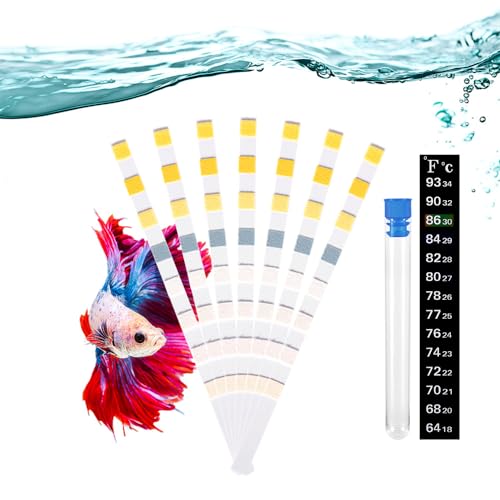
Offers 8+1 parameters, including essential items like pH, Ammonia, Total Alkalinity, Carbonate, Hardness, Free Chlorine, Nitrate, Nitrite, plus an extra temperature reading. The kit highlights durability and ease of use with double-sealed packaging and a color-chart system for quick interpretation.
Best for: Active hobbyists who want a robust set with an extra thermometer reading and high sensitivity. Useful when precise monitoring across several parameters is needed.
Caution: As with all strips, results depend on correct dipping times and chart matching for accuracy.
HOVIRAN 7 Way Aquarium Test Strips

This kit tests seven parameters—Chlorine, Total Hardness, Carbonate, Alkalinity, Nitrate, Nitrite, and pH—and contains 125 strips, aimed at frequent testing for freshwater and saltwater tanks. It promotes easy dipping and color matching for practical, quick checks.
Best for: Budget-conscious buyers with ongoing testing needs who want a larger supply of strips and dependable, straightforward results.
Caution: The number of strips means storage and shelf life can be a factor; ensure proper sealing to prevent moisture exposure.
Wolmds 8-in-1 Aquarium Test Strips

Provides an all-in-one test for pH, ammonia, nitrate, chlorine, and more, tailored for freshwater, saltwater, and ponds. Claims fast, precise readings in seconds with user-friendly color charts for quick interpretation.
Best for: General-purpose testing across different water types. Choose this if you want broad compatibility and a fast read.
Caution: Ensure you test consistently with the same strip type to avoid cross-kit confusion.
AAwipes Ammonia Test Strips 8-in-1 (K02-100)

Includes 100 strips covering essential parameters including ammonia, pH, carbonate, alkalinity, hardness, chlorine, nitrite, nitrate, and total alkalinity. Emphasizes versatile use for freshwater and ponds and supports twice-weekly testing for optimal water quality.
Best for: Hobbyists with larger tanks or multiple tanks who want a longer-lasting supply and a complete parameter panel. Avoid this if you prefer smaller, more portable kits.
Caution: Volume can lead to overconfidence—do not rely on color changes alone; follow charts carefully for interpretation.
Buying Guide: Choosing The Right Fish Water Test Strips
What should I test first? Start with pH, ammonia, nitrite, nitrate, and chlorine as primary indicators of water safety. Add total hardness, carbonate, and alkalinity for buffering capacity, and temperature if available.
How many parameters do I need? For basic setups, 6–8 parameters usually suffice. For mixed tanks or ponds, 9–11 parameters can help catch subtle shifts in water quality.
Which kit works best for small tanks? Look for compact kits with 25–50 strips and clear color charts. They’re easier to handle and cost-effective for small volumes.
Are all strips equally accurate? All kits rely on color charts and timing. Consistency in dipping, waiting times, and color comparison is essential to obtain reliable readings.
What should I avoid? Avoid kits with vague charts or unclear instructions. Also avoid mixing strips from different brands in the same monitoring routine to prevent inconsistent results.
FAQ
- Q: How often should I test aquarium water? A: Most hobbyists test at least twice a week, or more often if a problem is suspected.
- Q: Can I reuse test strips? A: No, reuse can lead to inaccurate readings; use fresh strips each time.
- Q: Do strips work for saltwater tanks? A: Yes, several kits are designed for both freshwater and saltwater environments.
- Q: Which parameter is most critical for fish health? A: Ammonia is particularly toxic; monitoring it closely helps prevent harm to fish.
- Q: Should I rely on color charts only? A: Use color charts as a guide and verify with repeat tests if readings are borderline.