Finding the right return pump is essential for reliable circulation, safe water flow, and energy efficiency in both saltwater and freshwater tanks. The following selections offer multiple flow rates, adjustable settings, and quiet operation to help maintain stable tank conditions. Each model includes a controller option, submersible or inline configurations, and durable components designed for long-term use in marine and planted systems alike.
Summary of selected products
| Product | Brand | Max Flow | Power | Lift | Notes |
|---|---|---|---|---|---|
| JEREPOND 660GPH Aquarium Return Pump | JEREPOND | 660 GPH | 25W | 10 ft | LCD display, 20 speeds, quiet |
| hygger 800GPH Quiet Return Pump | hygger | 800 GPH | 25W | 9.8 ft | External controller, auto shut-off |
| JEREPOND 1850GPH Return Pump | JEREPOND | 1850 GPH | 55W | 18 ft | LCD, 20 speeds, quiet |
| JEREPET 1850GPH 55W DC Pump | JEREPET | 1850 GPH | 55W | 14.8 ft | Controller with 6 speeds, feeding/wave modes |
| JEREPET 4800GPH 36V Pump | JEREPET | 4800 GPH | 105W | 25 ft | Highest capacity, multiple modes |
Note: All product details summarized here are based on listed features, including flow capacity, power consumption, lift height, and available control options. This guide highlights options suitable for a range of tank sizes and setups, from small nano tanks to larger reef systems.
JEREPOND 660GPH Return Pump With LCD Controller

This compact return pump delivers up to 660 GPH with a DC 24V supply and a 25W power draw. Features include a 20-speed controller, an LCD panel showing current speed and status, and the ability to adjust flow from 30% to 100% of max. The unit supports multiple operating modes, including a feeding timer and a wave-maker setting. Its design emphasizes quiet operation with a ceramic shaft and seal impeller for durability, making it suitable for small to medium aquariums, sumps, and inline configurations.
- Max flow: 660 GPH
- Power: 25W, DC 24V
- Lift: up to 10 ft
- Quiet operation (≤25 dBA)
hygger 800GPH Quiet Return Pump

This pump provides 800 GPH with a 25W DC 24V motor and includes an external controller with 71 flow settings, allowing precise adjustments from 30% to 100%. An auto shut-off feature activates when water is absent or level is too low, protecting the unit. It ships with two intake screens for normal and low water levels, enhancing reliability in varied setups such as refugiums or sumps. It is designed for quiet operation and energy efficiency, suitable for mid-sized freshwater or marine tanks.
- Max flow: 800 GPH
- Power: 25W, DC 24V
- Head: 9.8 ft
- Auto shut-off with no-water sensor
JEREPOND 1850GPH Return Pump
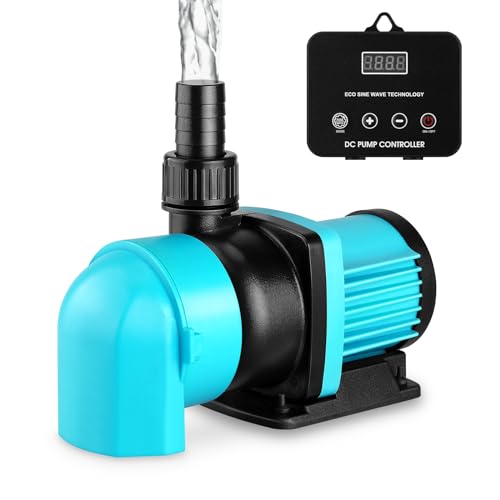
With a maximum flow of 1850 GPH and a 55W DC24V motor, this pump supports larger setups, including reef tanks and expansive sumps. It features a 20-speed controller and an LCD readout for speed and status. The unit offers a range from 30% to 100% of max flow and includes a feeding mode and wave-maker mode. Its design emphasizes quiet operation with a seal impeller and ceramic shaft, reducing noise to tolerate indoor aquariums. It handles lifts up to 18 feet and comes in a submersible/inline configuration suitable for various installations.
- Max flow: 1850 GPH
- Power: 55W, DC 24V
- Lift: 18 ft
- Control: LCD, 20 speeds
JEREPET 1850GPH DC Pump With Controller
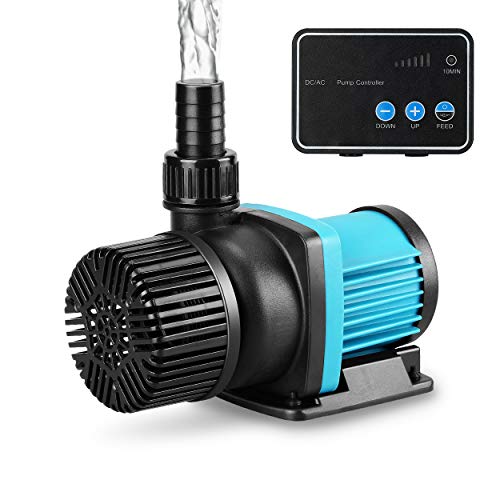
This 1850 GPH DC pump pairs a 55W motor with a 14.8 ft lift and a robust controller offering six speeds, with adjustable flow from 30% to 100%. It includes a 10-minute feeding mode and a wave-maker function for diverse tank needs. The unit emphasizes quiet operation through a seal impeller and ceramic shaft, and is suitable for both freshwater and marine environments, including fountains and hydroponics alongside traditional aquariums.
- Max flow: 1850 GPH
- Power: 55W, DC 24V
- Lift: 14.8 ft
- Controller: 6 speeds, feeding, wave modes
JEREPET 4800GPH 36V Pump

For large aquariums and high-demand systems, this 4800 GPH pump delivers strong flow with a 105W 36V motor. It supports a 25-foot lift and offers 12 adjustable speeds, enabling precise control from 30% to 100% of max flow. It includes a 10-minute feeding mode and a quiet operation profile due to a seal impeller and ceramic shaft. This model suits expansive saltwater coral, large freshwater tanks, and hydroponic installations requiring substantial circulation.
- Max flow: 4800 GPH
- Power: 105W, DC 36V
- Lift: 25 ft
- Speeds: 12, with feeding mode
Buying Guide: Key Purchase Considerations
- Tank size and required flow: Larger tanks require higher GPH pumps or multiple pumps to ensure adequate turnover. Match max flow to aquascape and fish load, considering head height and pipe configuration.
- Lift height and head pressure: Head height determines actual flow. Check the pump’s max lift and verify it suits your sump depth, return line, and vertical routing.
- Power, efficiency, and noise: DC pumps with variable speeds offer energy savings and quieter operation. Look for ceramic shafts and sealed impellers for longevity and reduced vibration.
- Controller features: External controllers and LCD displays simplify fine-tuning. Features to value include feeding modes, wave mode, and multiple speed settings.
- Reliability and safety: Auto shut-off sensors protect pumps in case of dry running. Consider models with screens or strainers to prevent clogging from debris.
- Installation type: Submersible and inline configurations suit different plumbing setups. Ensure compatibility with your sump, returns, and cabinetry.
- Maintenance and parts availability: Easy access to filters, screens, and replacement impellers saves downtime. Check warranty and spare parts availability from the brand.
- Corrosion resistance and salt tolerance: For marine or reef tanks, verify that materials withstand saltwater exposure and brine exposure without degradation.
Selecting the best return pump involves balancing flow requirements, space constraints, and noise tolerance. The options listed here span compact, mid-range, and high-capacity models to support diverse American home aquariums—from nanos to large reef systems. Consider your tank’s dimensions, sump layout, and desired maintenance routines when choosing the optimal pump and controller configuration for long-term tank health.