Keeping a fish tank clean often means quick, reliable water changes. The following pumps are among the best-selling options for emptying or transferring aquarium water, ponds, and hydroponic setups. Each model below offers different flow rates, lift heights, and power sources to suit small betta bowls up to larger tanks. This guide highlights five top picks with practical features like bottom inlet designs, dry-run protection, and quiet operation, helping you choose the right tool for efficient maintenance.
Summary of Selected Products
| Product | Brand | Max Flow | Power | Special Feature |
|---|---|---|---|---|
| VIVOSUN 660GPH Submersible Pump | VIVOSUN | 660 GPH | 40W | Bottom inlet, 360° filter, anti-dry protection |
| hygger 400 GPH Quick Water Change Pump | hygger | 400 GPH | 40W | 2-in-1 water change and fountain |
| hygger 1060 GPH Quick Water Change Pump | hygger | 1060 GPH | 90W | High flow, bottom intake, quiet |
| HORUSDY Portable Battery-Operated Pump | HORUSDY | 2.2 GPM | Battery powered | Battery option for emergencies |
| AQUANEAT Aquarium Vacuum Siphon | AQUANEAT | Manual siphon pump varies | Manual | Simple, no electricity needed |
VIVOSUN 660GPH Submersible Pump

This submersible pump is designed for fish tanks, ponds, and hydroponic systems. It features a 5 ft power cord for flexible placement, a maximum flow of 660 GPH, and a lift height up to 8.2 feet. The bottom inlet provides strong suction for shallow water, and a 360° omnidirectional filter helps prevent debris buildup. The anti-drying design and copper wiring contribute to reliability and energy efficiency. With 4 nozzles included, you can tailor discharge to your setup and minimize splashing during water changes.
Key specs and considerations
- Bottom inlet for thorough circulation
- Thermal protector to stop operation if overheating
- 115–120V, 60Hz operation
- Energy-efficient copper wiring
hygger 215 GPH Quick Water Change Pump
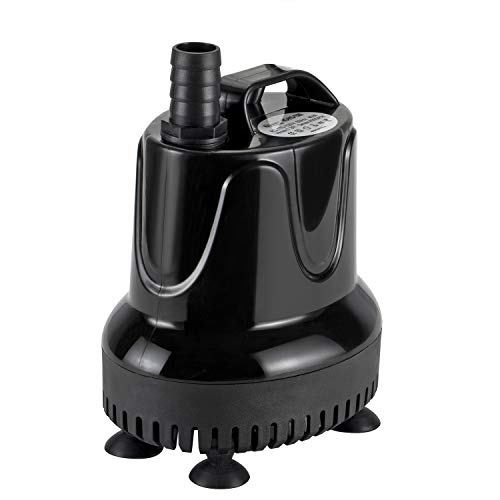
This compact submersible pump is ideal for smaller tanks or as a reservoir transfer pump. It supports water changes and fountain features with a maximum flow of 215–400 GPH depending on model. It’s built for easy low-water draining and can handle debris with its bottom intake design. A 6 ft power cord adds flexibility for placement, and the pump operates quietly for routine maintenance.
Key specs and considerations
- Bottom intake reduces clogs
- Low-water draining capability
- Quiet operation with decent flow for small to medium tanks
hygger 400 GPH Quick Water Change Pump
This 400 GPH model emphasizes multi-use functionality: it supports aquarium water changes, transfers, and fountain power. It can drain water down to 1/4 inch, pulling up debris and waste with its bottom intake. The 6 ft cord length, combined with a compact footprint, makes it suitable for mid-sized tanks and ponds. It operates with a quiet motor and offers convenient adaptability for routine maintenance tasks.
Key specs and considerations
- 2-in-1 function: change water and power fountain
- Drains to shallow levels for easy cleaning
- Bottom suction reduces clogging
HORUSDY Portable Battery-Operated Pump

This transfer pump emphasizes portability with a battery-powered option. It can draw water at 2.2 gallons per minute and offers a siphon capability via an included nozzle. Batteries (2 D or 6 AA) are required but not included, enabling operation during power outages or when an outlet isn’t available. A filter design helps reduce impurities, and the included hose length supports emergency transfers in smaller containers or tanks.
Key specs and considerations
- Battery-powered operation for emergencies
- 2.2 GPM flow rate with adjustable nozzle
- Corrosion-resistant construction
BBjinronjy Siphon Pump Manual Transfer

This manual siphon pump emphasizes quick priming and portability. With a 1.2–1.5 inch hose range and a 3.5 gallons-per-minute transfer capability, it supports fast water changes without electricity. The pump bulb is made of durable rubber with metal ends and a built-in stop valve to prevent backflow. It’s suitable for small to medium tanks or emergency emptying tasks when power access is limited.
Key specs and considerations
- No electricity required
- Fast priming with a robust bulb
- Long-lasting hose and stop valve
Buying Guide: Key Purchase Considerations
When selecting the best fish tank emptying pump, consider the following factors to ensure a device matches your setup and maintenance routine.
- Flow rate vs. tank size: Larger tanks benefit from higher GPH models; smaller tanks do well with compact pumps.
- Lift height: Ensure the pump can move water to the desired discharge location, including upstairs reservoirs or sinks.
- Power source: Submersible pumps require outlets; battery-powered or manual siphons work during outages or without power access.
- Bottom inlet and filter: A bottom inlet design reduces clogging and enables thorough drainage; a filter basket helps protect fish from debris.
- Dry-run protection: A thermal or sensor-based shutoff prevents damage when the water level gets low.
- Noise and energy use: Quiet operation is important for living spaces; look for energy-efficient models with copper windings or efficient motors.
- Accessories: Adapters, hoses, and nozzle options affect how you discharge into bins, sinks, or raised reservoirs.
- Maintenance: Easy cleaning and accessible inlets prolong pump life; consider models with simple disassembly.
Depth of use varies by setup. For small freshwater tanks, a 200–400 GPH model with bottom intake is often sufficient. For larger aquariums or ponds, a high-flow, higher-lift unit (500–1000+ GPH) provides faster water changes. In emergencies or remote locations, battery-powered or manual siphon options offer reliable transfer without power.