Looking for a reliable fish tank ammonia test kit? This guide compares top options to help you maintain safe ammonia levels for freshwater and saltwater tanks. The recommended kits below are suited for beginner fish keepers, busy hobbyists, and advanced aquarists who want fast, actionable results. Each product is evaluated for accuracy, ease of use, and how well it fits typical aquarium setups.
Summary table of chosen products:
| Product | Best For | Testing Type | Notes |
|---|---|---|---|
| API Ammonia 130-Test | Balanced, experienced setups | Liquid reagent-based | Widely trusted, good for precise ammonia tracking |
| HOVIRAN Ammonia Strips | Quick checks, busy routines | Strip | Simple color comparison, fast results |
| SJ WAVE 11 in 1 | All-in-one quick overview | Strip | 11 parameters including ammonia, comprehensive kit |
| AAwipes 8-in-1 K02-50 | Comprehensive 8 tests | Strip | Versatile for freshwater and ponds |
| Pawfly 5 in 1 Master Kit | 5-key parameters | Liquid reagents | High-accuracy color-matching |
API Ammonia 130-Test Freshwater and Saltwater Kit
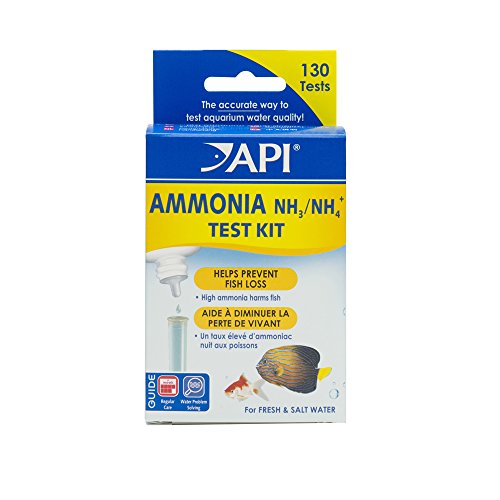
The API Ammonia 130-Test kit provides a traditional liquid-reagent approach with two bottles of testing solution, two color cards, and a test tube with cap. It is designed to help monitor ammonia levels from 0 to 8 ppm. This kit is best for hobbyists who prefer a well-established method and direct, color-based interpretation. It is suitable for both freshwater and saltwater tanks but may require careful handling of reagents. Choose this if you want long-standing reliability and a straightforward testing process.
Best for: Experienced hobbyists who rely on proven chemical testing methods and need clear ammonia readouts to prevent rapid water quality shifts.
Caution: Ensure proper storage of reagents and follow the included instructions to avoid inaccurate readings due to improper mixing or timing.
Ammonia Test Strips for Fish Tank — 50 Count

This ammonia test strip set is designed for quick, everyday checks. Dip the strip, wait a few minutes, and compare colors to the chart for a fast ammonia reading. It’s especially useful for busy aquarists who want a simple, no-fuss method to gauge ammonia levels and catch problems before they escalate. Best for: Home aquariums where rapid confirmation of ammonia is more important than ultra-precise measurements. Limitation: Strips may be less precise at very low ammonia levels compared with liquid tests.
SJ WAVE 11 in 1 Aquarium Test Strips

This 11-in-1 strip kit offers a broad water quality snapshot, including ammonia, pH, nitrate, nitrite, total alkalinity, hardness, carbonate, copper, iron, chlorine, and temperature. It’s ideal for aquarists seeking an all-in-one solution to monitor multiple parameters without juggling several different test formats. Best for: Aquarists who want a comprehensive, single-kit overview. Caution: Color interpretation can be challenging for very close parameter values; use the color chart carefully for best results.
AAwipes 8-in-1 Aquarium Test Kit (K02-50)

AAwipes’ 8-in-1 strips test for Free Chlorine, Nitrate, Nitrite, Hardness, Carbonate, Total Alkalinity, pH, and Ammonia nitrogen. It’s designed for quick results in minutes and supports both freshwater and pond environments. Best for: Hobbyists needing an affordable, 8-parameter quick-check that covers ammonia alongside other key metrics. Limitation: Reading accuracy depends on precise dipping and timing; follow the vendor’s steps closely.
Pawfly 5 in 1 Aquarium Master Test Kit

The Pawfly 5-in-1 kit focuses on five essential parameters: pH, nitrite, nitrate, ammonia, and phosphate. It is designed for both freshwater and saltwater tanks and emphasizes precise color-matching for reliable results. Best for: Aquariums needing a balanced, multi-parameter view with clarity on ammonia trends. Limitation: Fewer parameters than some 8- or 11-parameter kits, so it may require supplementation for full water quality monitoring.
Buying Guide: How To Choose The Right Ammonia Test Kit
What to consider when selecting an ammonia test kit for your tank:
- Testing method: Liquid reagent kits (like API) can offer precise readings, while strips provide quick, convenient checks. Choose based on how often you test and your need for precision.
- Number of parameters: If you want a single kit that covers ammonia plus other key water quality metrics, consider 8-in-1 or 11-in-1 strips.
- Tank type: Some kits are marketed for freshwater, others for saltwater, and many work for both. Verify suitability for your setup.
- Ease of use: Dip-and-read formats are faster but require good technique; liquid tests demand careful timing and handling.
- Result interpretation: Look for clear color charts and readable ranges that align with safe ammonia levels for your fish species and bioload.
- Maintenance routine: For high-bioload tanks, plan for more frequent testing (e.g., twice weekly) to detect ammonia spikes early.
Practical tips for ammonia testing
- Test at the same time of day and under similar water conditions to maintain consistency.
- Rinse test tubes and containers to avoid cross-contamination that could skew results.
- Record results to track trends and respond quickly to rising ammonia.
- Avoid overreaction: Small, temporary ammonia changes are common after water changes or feeding; follow up with additional tests before making changes.
FAQ
- Q: How often should I test ammonia in a new tank? A: In a new setup, test daily or every other day during cycling and after water changes to ensure levels stay safe.
- Q: What is considered a safe ammonia range for most home aquariums? A: Ideally near 0 ppm; any detectable ammonia requires action to prevent harm to fish.
- Q: Are strips less accurate than liquid tests? A: Strips are generally faster and convenient, but liquid tests often provide higher precision, especially at low ammonia levels.
- Q: Can I use ammonia test strips for saltwater tanks? A: Yes, many strips are designed for both freshwater and saltwater; confirm product specs and color charts for saltwater ranges.
- Q: What should I do if ammonia is high? A: Perform water changes, inspect filtration, reduce feeding, and re-test to verify improvement.
- Q: Is it necessary to test for ammonia every week? A: For established tanks, a weekly check is common, but high-bio-load or recently disturbed tanks may require more frequent testing.