Answering the question “What helps keep a fish tank safe, clean, and visually appealing?” this guide highlights five essential products for freshwater and saltwater setups. From water testing and conditioning to decorative accents, each pick serves a specific purpose and audience. Best for beginners: simple all-in-one conditioners. Best for fishkeepers who test regularly: robust test kits. Best for visual appeal: glow accents and colorful gravel. Best for small tanks: compact decorations and plant alternatives. Read on to see which item fits your tank needs and why.
Summary table of selected products:
| Product | Best For | Key Benefit | Notes |
|---|---|---|---|
| AAwipes 8-in-1 Aquarium Test Kit | Water quality monitoring | 8 parameters, quick results | Great for regular testing cadence |
| API TAP WATER CONDITIONER | Water conditioning | Neutralizes chlorine & chloramines | Essential during water changes |
| Oubest Glow Rocks | Aesthetic lighting effect | Best for visual impact, not filtration | |
| GloFish Aquarium Gravel | Colorful base for tanks | Fluorescent accents under blue LED | Use with compatible lighting |
| Ameliade Plastic Plants & Rock Cave | Decorative habitat | Safe, soft-sculpted plant decor | No live plants needed |
AAwipes 8-in-1 Aquarium Test Kit

The AAwipes test kit provides eight parameters in one strip-based system, including Free Chlorine, Nitrate, Nitrite, Hardness, Carbonate, Total Alkalinity, pH, and Ammonia nitrogen. It is designed for both freshwater and ponds, with clear color charts and a straightforward 3-step process. This kit is best for hobbyists who test regularly to detect subtle water shifts before problems arise. A potential limitation is the need for careful timing when reading pads, especially Ammonia nitrogen, to ensure accuracy.
API TAP WATER CONDITIONER

This conditioner neutralizes chlorine and chloramines in tap water and helps protect fish from exposure to harmful chemicals. It’s best for new and established tanks during water changes or when setting up a fresh tank. It’s an essential first step for any aquarist who wants to avoid gasping fish or irritated gills caused by untreated tap water. A limitation is that it does not address all potential contaminants beyond chlorine and chloramines; additional testing may be needed for ongoing water quality management.
Oubest Glow Rocks
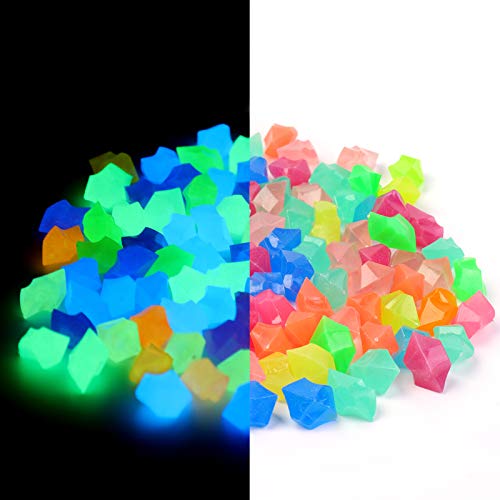
Oubest glow stones store ambient light and emit a bright glow for several hours, creating an attractive nighttime ambiance in fish tanks or outdoor settings. Best for hobbyists who want decorative lighting effects without electrical equipment. A caution is that glow duration may vary with exposure to light and the glow can fade over time. They are decorative, not functional in filtration or water chemistry.
GloFish Aquarium Gravel

GloFish Gravel adds vibrant color to aquarium substrates, available in pink, green, white, black, or fluorescent mixes. This gravel is designed to complement GloFish ornaments and blue LED lighting to enhance visual appeal. Best for color-themed tanks and showy displays. A limitation is that colored gravel can sometimes influence algae growth or require more frequent cleaning in glow-oriented setups.
Ameliade Plastic Plants & Rock Cave

Ameliade artificial plants and rock cave décor provide a safe, maintenance-free habitat for fish. The leaves are designed to be soft and non-abrasive, allowing fish to swim and hide without risk of injury. These decorations are suitable for both freshwater and saltwater tanks and do not require lighting or substrate care. Best for tanks where live plants are impractical or for beginners seeking low-maintenance aesthetics. A potential limitation is that plastic plants do not contribute to natural filtration or biological cycling.
Buying Guide
What should I prioritize for a new or small tank?
Start with a reliable water conditioner and a basic test kit. Conditioning ensures immediate safety for new water, while testing helps monitor parameters as you cycle the tank. If you want quick visual appeal, add decorative accents that are safe for fish and easy to clean.
Which items improve water quality the most?
- Water conditioner to neutralize harmful chemicals
- Test kit to track pH, ammonia, nitrite, nitrate, and hardness
- Seasonal or routine partial water changes based on test results
Are decorative items safe for fish?
Choose decorations labeled aquarium-safe and designed for freshwater or saltwater use. Avoid sharp edges and porous rocks that could harbor bacteria. Artificial plants are good substitutes when live plant care is not feasible.
How often should I test my tank?
For new setups, test at least twice weekly during the cycling stage. After stabilization, a weekly test routine is common, with more frequent checks if a parameter drifts.
What about glow rocks and gravel with lighting?
Glow-focused decor is primarily for aesthetics and nighttime ambiance. It should not replace filtration or water chemistry management. Use LED lighting to maximize the glow effect, but ensure it doesn’t disrupt fish or plant health.
Maintenance tips for longevity
- Rinse test strips and avoid cross-contamination between tests
- Regularly clean substrate and decor to prevent algae buildup
- Rotate decor to distribute wear and prevent hotspots in the tank
FAQ
- What is the most essential product for a new fish tank? A water conditioner to remove harmful chemicals and a basic test kit for monitoring water safety.
- Can I use artificial plants as a substitute for live plants? Yes, they are maintenance-free and safe, but they do not provide biological filtration like live plants.
- How often should I test pH in my tank? Test during setup and at least weekly during normal operation to track fluctuations.
- Do glow rocks affect fish health? They are decorative; ensure they are clean and do not have sharp edges that could injure fish.
- Is a larger test kit always better? A kit with essential parameters (pH, ammonia, nitrite, nitrate, hardness, alkalinity, chlorine/chloramines) is typically sufficient for most hobbyists.