Answering the common question “which filter media is best for a sump?” this guide highlights five well-suited options. Each product fits sump setups and helps balance biological and mechanical filtration. This selection targets hobbyists seeking reliable, versatile media for freshwater, saltwater, ponds, and mixed-use systems. The list includes ceramics, sponge pads, and floss media designed to maximize surface area, water flow, and ease of maintenance. Use the quick comparison table below to identify the best match for your sump configuration and bioload needs.
| Product | Brand | Type | Best For |
|---|---|---|---|
| Reefing Art Ceramic Bio Filter Media | Reefing Art | Ceramic bio media | High surface area for robust bio-filtration |
| ALEGI Aquarium Sponge Filter Pad | ALEGI | Sponge pad | Mechanical filtration with easy cut-to-fit |
| AQUANEAT Bio Sponge Foam Pad | AQUANEAT | Triple-density foam | Mechanical & bio filtration, customizable fit |
| Aquatic Experts Classic Bonded Filter Pad | Aquatic Experts | Bonded filter pad | Pre-filter and water polishing, durable |
| hygger 1” Thick Filter Floss | hygger | Polyester filter floss | Fine particle removal and polishing |
Reefing Art Ceramic Bio Filter Media For Sump And Canister
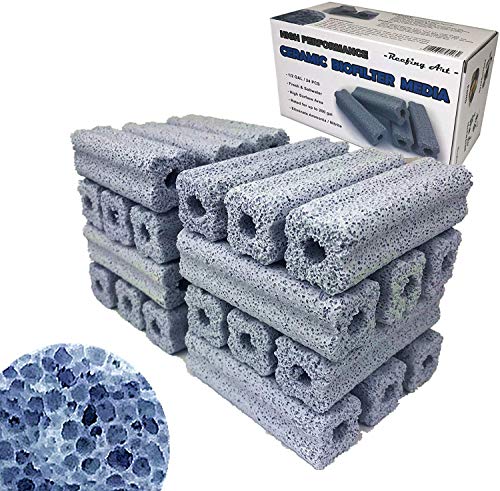
Best for: Sump setups with high biological demand and multiple species in freshwater or saltwater aquariums. Why chosen: The vast surface area and porous internal structure provide efficient bio-filtration by hosting beneficial bacteria. This media is suitable when you need a reliable biological anchor in a sump canister or filter chamber. Limitation: Ceramic pieces may require periodic rinsing to prevent debris buildup and restore flow if not regularly maintained.
ALEGI Aquarium Sponge Filter Pad (Cut-to-Size)

Best for: Hobbyists who want flexible mechanical filtration that can be tailored to any sump or filter compartment. Why chosen: High-density sponge with durable material provides effective particle capture while remaining easy to cut to fit. It’s especially useful when you need a custom fit for oddly shaped sump chambers. Limitation: Mechanical filtration efficiency relies on consistent maintenance to prevent clogging and reduced water flow.
AQUANEAT Bio Sponge Foam Pad Set

Best for: Sump and filter setups that benefit from a multi-density approach to capture both large and fine particles. Why chosen: The three pads (coarse, medium, fine) work together for layered filtration, providing both mechanical and bio filtration due to surface area. This makes it a versatile choice for mixed aquariums and DIY filtration projects. Limitation: The triple-density design may require careful placement to avoid bypass and ensure even flow through all layers.
Aquatic Experts Bonded Filter Pad Roll

Best for: Bulk users who need a durable, cut-to-fit filter media for sumps, wet/dry systems, or canister filters. Why chosen: The blue and white bonded fibers resist clogging longer and are designed to retain structure under continuous flow. Limitation: This pad needs regular trimming and placement to prevent channeling and ensure consistent filtration across the pad.
hygger 1” Thick Filter Floss

Best for: Filtration systems requiring polishing and removal of micro-particles in sump or canister setups. Why chosen: The multi-layer microfine polyester fibers trap small particles while maintaining water flow, aiding both mechanical filtration and downstream biological filtration. Limitation: Bulk pads can be bulky; plan fit carefully to avoid restricting water flow in tight sump spaces.
Buying Guide: Key Purchase Considerations
- Filtration goals: Determine whether you need more mechanical filtration (particle removal) or biological filtration (bacteria hosting). Media with a combination of both tends to offer balanced performance in most sumps.
- Fit and customization: Sump compartments vary in size. Choose media that can be cut to fit or comes in sizes matching your chamber to maximize contact with circulating water.
- Durability and reuse: Ceramic and bonded pads may last longer with proper cleaning, while sponge and floss media can be replaced more frequently depending on bioload and maintenance routines.
- Maintenance regimen: Regular rinsing or replacement intervals prevent clogging and maintain optimum flow. Avoid over-cleaning that removes beneficial bacteria (where applicable).
- Water clarity impact: Fine filter floss and high-density sponges improve water polishing, but ensure they do not overly restrict flow, which can stress the pump or reduce filtration efficiency.
FAQ: Quick Answers For Buyer Intent
- What filter media should I start with for a sump?
– Start with a combination set that provides both mechanical filtration (sponges or pads) and biological filtration (ceramic media or bio balls). This covers immediate particle removal and long-term ammonia conversion. - Can I reuse sponge media?
– Yes, most sponge media can be rinsed and reused. Rinse in tank water to preserve beneficial bacteria and remove debris before reinstalling. - How often should I replace filter pads?
– Replace or thoroughly rinse pads when flow noticeably decreases or after persistent visible debris. Frequency depends on bioload and feeding amounts. - Is bonded pad better than loose pad?
– Bonded pads tend to resist shedding and hold shape longer, which can reduce clogging and extend intervals between replacements in busy systems. - Do ceramic media provide instant benefits?
– Ceramic media enhances long-term biological filtration by increasing surface area for bacteria; benefits accrue over time with stable water conditions. - What is the best media for ultra-clear water?
– A combination of mechanical polishing media (fine floss or high-density sponge) with robust biological media typically yields the clearest water while supporting biological balance.