When selecting an external fish tank heater, look for precise temperature control, reliable safety features, and compatibility with canister filters and larger setups. The following five models represent solid choices for different tank sizes and keeper needs. This guide helps you pick the best fit whether you maintain a small Betta tank, a medium community setup, or a larger freshwater or saltwater system.
Overview table of the chosen products
| Product | Brand | Wattage | Best For |
|---|---|---|---|
| DaToo Aquarium External Heater | DaToo | 300W | Canister-filtered setups; precise control for mid-to-large tanks |
| DaToo Mini Aquarium Heater 25W | DaToo | 25W | Small 1–5 gallon tanks; compact space-saver |
| HiTauing Aquarium Heater | HiTauing | 50W–500W | Medium to large tanks; multiple wattage options |
| hygger Small Aquarium Heater | hygger | 10W | Very small tanks and nano setups |
| Orlushy Submersible Aquarium Heater | Orlushy | Various sizes | General purpose for marine and freshwater tanks |
DaToo Aquarium External Heater In-Line 300W
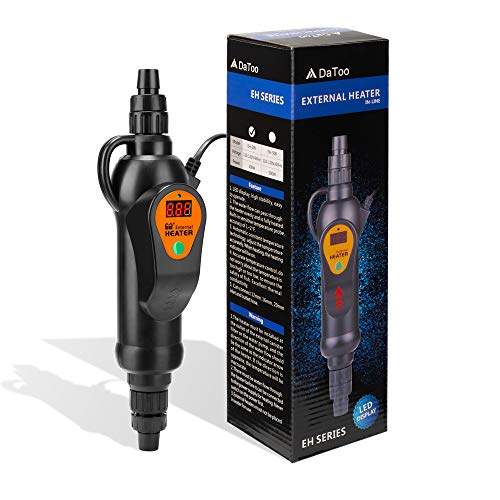
The DaToo external heater is designed for canister-filter setups, with a focus on precise temperature control and safety. It uses an STM8-based control system and features two sensors—one at the inlet and one at the outlet—to monitor temperature changes accurately. The display provides a clear readout of current water temperature, and the heater stops heating if the water exceeds the set temperature by 0.2°F. Best for hobbyists or professionals maintaining a larger canister-filtered system where consistent warmth matters for fish comfort and health. A potential limitation is the need for compatible canister plumbing and setup, which may require some pipe fitting adjustments for non-standard configurations.
DaToo Mini Aquarium Heater 25W
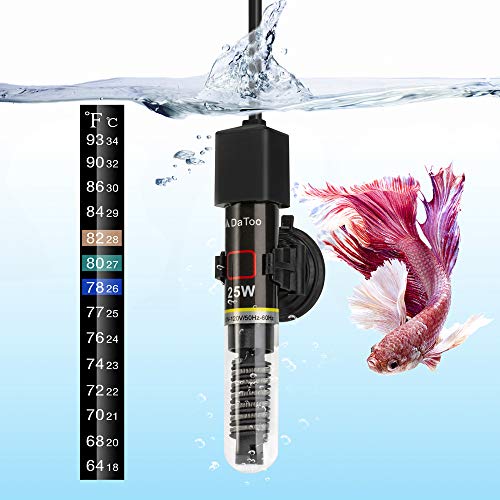
The 25W model is tailored for small tanks up to about 5 gallons, including Betta setups. It provides a fixed temperature around 78°F, with a simple indicator system (red light when heating, green light when at temperature). This heater is excellent for tiny spaces where a larger heater would be intrusive. Limitations include a fixed temperature that may not suit all species or seasonal needs; it’s best for small, warm-water species that prefer stable warmth around 78°F.
HiTauing Aquarium Heater
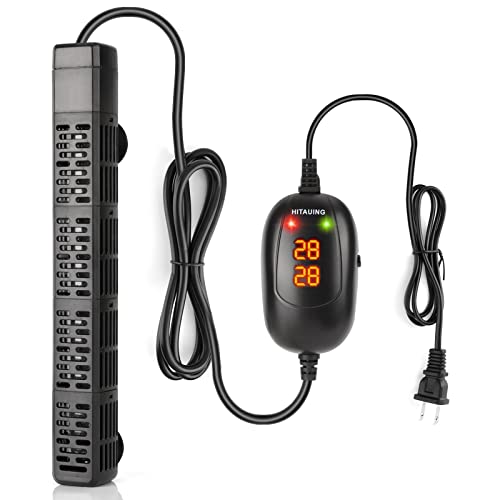
HiTauing offers a range including 50W, 100W, 200W, 300W, and 500W, suitable for a broad spectrum of tank sizes. It features a two-temperature control system, an intelligent water sensor to prevent dry-running, and an explosion-proof quartz glass construction for safety. Best for mid-sized to larger tanks where precise temperature control and safety features are critical. A potential limitation is the need to rely on the external controller for temperature readings and adjustments; ensure your setup has space for the unit and secure mounting.
hygger Small Aquarium Heater

The hygger 10W model is designed for very small tanks (1–5 gallons) and includes a dry-run and over-temperature protection system. It uses a quartz glass heater with a digital display, supporting simple level of control for tiny tanks or turtle setups. Best for nanos or small hobbyist tanks where space is at a premium. The limitation is its low wattage; larger or heated-water needs require a higher-wattage unit.
hygger Aquarium Heater 250W/500W
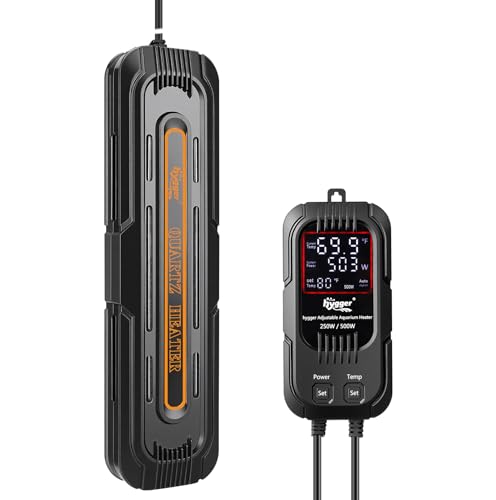
This hygger model offers 250W or 500W options, ideal for larger tanks (50–106 gallons). It features multiple protections (out-of-water, high temperature, and low temperature), a digital LED controller for easy temperature tuning, and an external display that shows current temp, target temp, and status. Choose this if you need scalable power for larger freshwater or saltwater setups and straightforward monitoring. A limitation is the requirement to manage external controls and potential visibility considerations on larger tanks.
Orlushy Submersible Aquarium Heater
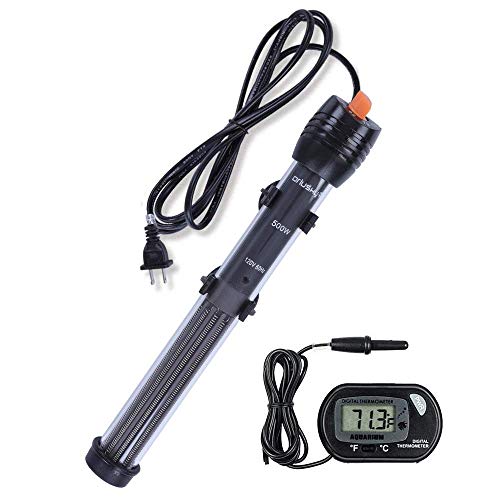
Orlushy offers a family of six sizes designed for both marine and freshwater tanks. The heater aims for stable heating with a stair-step cycle and a separate thermometer for real-time temperature monitoring. Durable construction uses heat-resistant ABS housing and a nickel-chromium heating element. Best for flexible installation across a variety of small to medium tanks. It’s wise to verify the exact wattage needed for your tank to avoid under-heating or over-heating with a misfit size.
Buying Guide: How to Choose the Right External Aquarium Heater
- Tank size and wattage: Match heater wattage to your tank volume. Larger tanks need higher wattage to maintain stable temperatures; undersized heaters struggle to reach or hold target temperatures.
- Control precision: Look for digital controllers, accurate temperature readouts, and clear indicators. External controllers are helpful for precise adjustments without reaching into the water.
- Safety features: Overheat protection, dry-run protection, and automatic power-off when water levels drop prevent harm to fish and equipment.
- Tank type compatibility: Ensure the heater is suitable for freshwater or saltwater and compatible with canister filters if you use one. Some models are optimized for canister setups, while others suit basic hang-on or submersible configurations.
- Durability and materials: Quartz glass and corrosion-resistant components extend heater life in saltwater or aggressive environments. A robust outer shell reduces the risk of cracking or leaks.
- Installation and visibility: Consider whether you prefer external mounting on the canister or a discreet internal fit. External units minimize disturbance to the aquascape but require space and secure mounting.
- Maintenance: Look for heaters with easy-to-read displays and straightforward maintenance requirements. Regular inspection of sensors and seals helps prevent temperature drift.
Frequently Asked Questions
- Can I use any heater with any type of fish tank? No. Choose a heater rated for your tank size and appropriate for freshwater or saltwater, plus compatible with your filtration system.
- What is a safe temperature range for most tropical fish? Most tropical species thrive around 76–82°F, but always verify the preferred range for your specific inhabitants.
- Do external heaters require special maintenance? Regularly inspect for leaks or corrosion, verify sensor accuracy, and ensure fittings remain secure in the canister line.
- Is a digital thermostat necessary? A digital thermostat improves precision and ease of use, especially in larger systems or setups with fluctuating ambient temperatures.
- What should I do if the heater stops heating? Check the display for error codes, confirm the heater is fully immersed in water, and verify the power supply and circuit safety.
- Are these heaters safe for beginners? Yes, with guidance on tank size and proper wiring. Start with a unit designed for beginner-friendly setup and confirm it includes clear safety features.