Finding the right electronic aquarium water tester helps maintain stable tank conditions with less guesswork. This guide focuses on user-friendly, app-enabled and digital testers that deliver quick, lab-like insights for both freshwater and saltwater setups. Ideal buyers include hobbyists managing small nano tanks, reef enthusiasts needing precise readings, and beginners seeking reliable, easy-to-interpret results. Below are five top picks, each explained with who it’s best for, key strengths, and a practical caution. A quick summary table follows to help you compare at a glance.
Summary Table of Selected Products
- DROPLYTIX Digital Aquarium Water Test Kit — Best for all-in-one app-based testing in diverse setups.
- Instant 4-in-1 TDS Meter by VARIFY — Best for quick water quality checks and RO/aquarium systems.
- API Freshwater Master Test Kit — Best for traditional, reliable color-based parameter tracking.
- 9-in-1 Smart Water Tester by LKBird — Best for app-connected, multi-parameter data logging.
- Pawfly 6 in 1 Digital Kit — Best for balanced, mid-range digital testing with clear ranges.
DROPLYTIX Digital Aquarium Water Test Kit

This app-enabled 10-in-1 test strip kit covers ammonia, nitrate, nitrite, pH, GH/KH, chlorine, and more for freshwater, saltwater, reef, and even turtle tanks. The key advantage is digital results via a mobile app, eliminating color-guessing. Best for busy hobbyists who want lab-like readings without manual chart comparisons. A potential limitation is dependence on the app’s performance and smartphone compatibility, which may vary by device.
Who it’s best for: Reef enthusiasts and mixed tanks who need comprehensive data in one scan. Why selected: It streamlines multi-parameter monitoring into a single workflow with instant results. Caution: Ensure your phone’s compatibility and keep the app updated for best accuracy.
Instant 4-in-1 TDS Meter Digital Water Tester
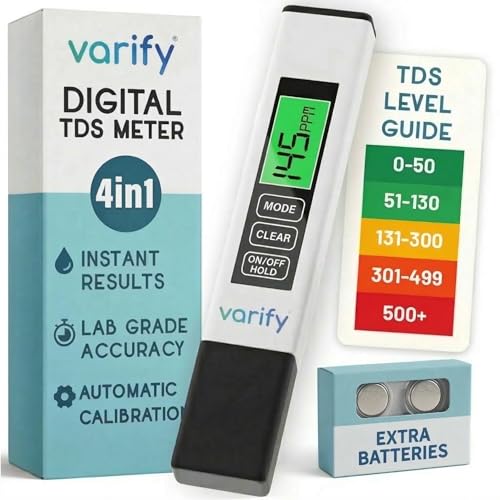
This compact meter measures TDS, EC, and temperature, with a titanium sensor for durability. It provides quick digital readings suitable for drinking water, aquariums, RO systems, pools, and hydroponics. Best for quick spot checks or routine maintenance when you need a simple yes/no on water quality. Limitation: It does not provide a full chemical profile; use alongside dedicated test kits for comprehensive ammonia, nitrate, or pH data.
Who it’s best for: Aquarists who want a fast, straightforward check rather than a full nutrient panel. Why selected: It delivers clear numbers in seconds with a robust sensor. Caution: Rely on it as a supplement to, not a replacement for, complete water parameter testing in sensitive tanks.
API Freshwater Master Test Kit

This classic kit covers the five key freshwater parameters: pH, high range pH, ammonia, nitrite, and nitrate. It includes multiple bottles, a color card, and tubes for reliable, repeatable readings. Best for new tank setups or ongoing monitoring where color comparison is well understood. A limitation: It relies on color interpretation, which can be challenging in certain lighting conditions or for color-vision differences.
Who it’s best for: Beginners learning basic freshwater maintenance or anyone who prefers a traditional, well-established kit. Why selected: It remains a cornerstone for accurate, repeatable freshwater data. Caution: Color-chart interpretation may vary; use good lighting or digital references for accuracy.
9-in-1 Smart Water Tester by LKBird
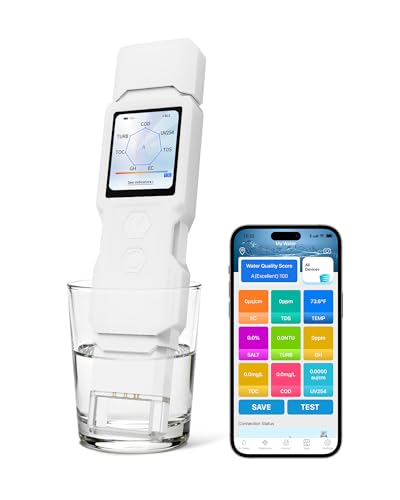
Offers nine measurements including turbidity, TDS, EC, pH, salinity, TOC, COD, and UV absorbance, with app connectivity for real-time data. Best for users who want long-term trends and cross-parameter analysis in one device. Limitation: Higher price point and more complex setup than single-parameter testers.
Who it’s best for: Advanced hobbyists or small facilities needing multi-parameter history. Why selected: It combines lab-like precision with digital storage and trend charts. Caution: Data management can be heavy; use the app to tag scenarios and avoid overload.
Pawfly 6 in 1 Digital Water Testing Kit

This 6-in-1 kit tests pH, nitrate, nitrite, chlorine, total hardness (GH), and carbonate (KH). It provides clear parameter ranges and is designed for both freshwater and ponds. Best for hobbyists who want a mid-range digital tester with straightforward ranges. Limitation: It covers fewer parameters than a full 10-in-1 or 9-in-1 system, so consider supplementing for reef or high-precision needs.
11 in 1 Aquarium Test Strips Kit

This all-in-one strip kit covers ammonia, pH, iron, chlorine, GH, carbonate, nitrate, nitrite, total alkalinity, copper, and temperature across freshwater and saltwater tanks. Best for owners who want a quick at-a-glance assessment without cartridges or digital readers. Caution: Strip accuracy can be sensitive to timing and dipping technique; follow the included chart closely.
AAwipes 8-in-1 Aquarium Test Kit

This 8-in-1 kit measures free chlorine, nitrate, nitrite, hardness, carbonate, total alkalinity, pH, and ammonia nitrogen. Best for enthusiasts who want robust parameter coverage with color references and quick steps. Limitation: More parameters mean more interpretation steps; ensure you’re comfortable reading multiple charts per test.
Hofun Pool Salt Tester & PH Meter
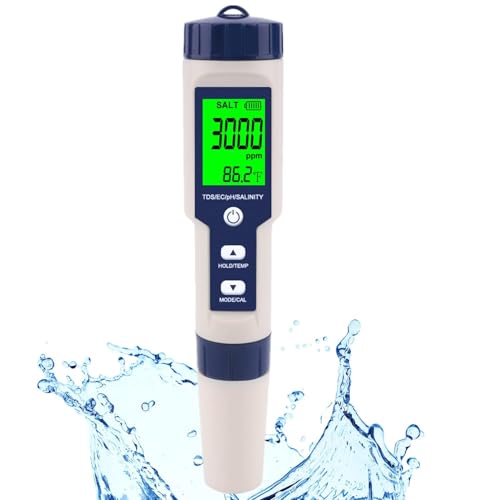
This 5-in-1 device measures salinity, pH, temperature, EC, and TDS. Best for mixed-use settings like aquariums with saltwater components and pool or spa water. Limitation: It focuses on salinity and basic water chemistry; may not replace full tank-specific test kits for reef or sensitive species.
Buying Guide: Key Considerations for Choosing an Electronic Aquarium Water Tester
- Purpose and tank type: Freshwater, saltwater, reef, or mixed tanks require different parameter sets. Decide which parameters you must monitor regularly.
- Accuracy vs. convenience: Digital meters offer speed and consistency, while test strips or color cards may be cheaper but require interpretation.
- App integration: If you prefer digital records and trend analysis, prioritize testers with reliable app compatibility and data export options.
- Parameter breadth: Some kits cover 4–6 parameters; others reach 9–11. Match breadth to your maintenance routine and tank sensitivity.
- Maintenance and replacement: Check kit longevity, the cost of consumables (strips, reagents), and ease of replacing parts.
- Ease of use: Consider how intuitive the device is, including calibration needs and how results are displayed.
Frequently Asked Questions
- What is an electronic aquarium water tester good for?
It provides quick, objective readings of key water parameters to help prevent toxic conditions for fish and corals. - Should I use digital testers or test strips?
Digital testers offer faster, more precise readings; strips are inexpensive and useful for spot checks or budgeting. - Can I rely on one tool for all parameters?
Some devices cover many parameters, but sensitive tanks often benefit from a combination of digital meters and traditional tests. - How often should I test aquarium water?
For new tanks, test daily during cycling; established tanks typically benefit from weekly checks and after water changes. - Do app-based testers require a smartphone?
Most do, but some provide standalone readings. Check compatibility with your device’s operating system. - Are these testers safe for reef tanks?
Yes, many models support reef setups, but reef tanks may need more precise readings for alkalinity and calcium balance.