Looking for an electric aerator that keeps your fish healthy with steady oxygenation? This guide highlights five reliable, quiet aquarium air pumps designed for a range of tank sizes and setups. It’s ideal for hobbyists stocking small bowls to mid‑sized aquariums, to hydroponic enthusiasts seeking robust airflow. Each product is explained with its best use case, plus a practical caution to help you choose confidently. A quick summary table follows to compare key points at a glance.
| Product | Best For Tank Size | Outlets | Approx. Noise Potential |
|---|---|---|---|
| HITOP Dual Outlet Aquarium Air Pump | 20–100 gallons | 2 | Low |
| Uniclife 64 GPH Dual Outlet Pump | 10–100 gallons | 2 | Very Quiet |
| AQUANEAT 100Gallon Dual-Outlet Pump | Up to 100 gallons | 2 | Quiet |
| HITOP 4W 110GPH Shark Design Pump | 20–200 gallons | 2 | Moderate |
| AQQA Dual-Outlet Quiet Pump | Up to 80–200 gallons (varies by model) | 2 | Low |
HITOP Dual Outlet Aquarium Air Pump

This two-outlet air pump is designed for quiet operation in mid‑sized tanks. It uses ABS thickening engineering plastics and features soft rubber feet to minimize vibration. The unit offers manual adjustable air volume instead of electronic controls, reducing potential electrical fluctuations. Best for fish rooms or living spaces where noise must stay low. Suitable for 10 to 100 gallon tanks with moderate aeration needs.
Best for: hobbyists who want a reliable, low‑maintenance pump without complex electronics. The two outlets support multiple air stones or diffusers for varied oxygenation patterns. Caution: airflow can be reduced if intake is blocked; regular cleaning helps maintain performance.
Uniclife 64 GPH Dual Outlet Pump
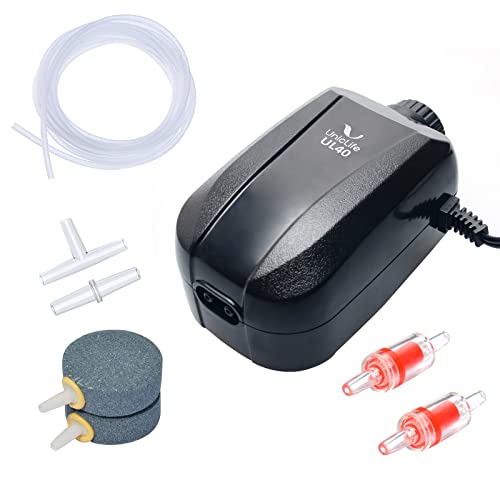
With a maximum air flow of 64 GPH and a compact 4 W motor, this pump suits 10–100 gallon aquariums. It includes dual outlets, an adjustable rotary control for each line, and is advertised as very quiet—under typical “Low” operation. A simple choice for budget-minded hobbyists who need reliable aeration across medium tanks.
Best for: smaller setups where precise air flow per outlet matters. Choose this if you want straightforward, adjustable control without extra features. Caution: performance can dip if air intake becomes clogged; replace the intake components as needed.
AQUANEAT Aquarium Air Pump

This 100 gallon-capable dual-outlet pump emphasizes quiet aeration with four rubber stabilizer feet to minimize vibration. The kit commonly includes stones, tubing, and check valves, supporting a ready-to-run setup in larger tanks or multiple aquarium zones. It’s a robust option for households seeking dependable oxygenation without a high noise footprint.
Best for: larger single tanks or setups requiring multiple air outlets. Caution: actual airflow depends on connected accessories; ensure compatibility with your diffuser and tubing to maximize oxygen delivery.
HITOP Shark Design 4W Air Pump
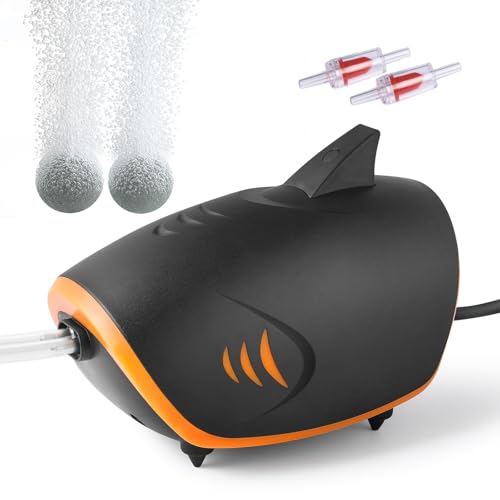
This standout model features a distinctive shark-shaped shell with a 4 W motor delivering up to 110 GPH. Designed for medium to large tanks (20–200 gallons), it supports diverse aeration devices and even hydroponic applications. The two-layer construction aims to reduce noise to a quieter level than standard pumps.
Best for: aquarists wanting a visually unique pump that still delivers solid airflow for larger systems. Caution: the larger footprint may require more space on the tank hood or stand.
AQQA Dual-Outlet Quiet Pump

The AQQA pump uses a stainless steel dual-outlet design and a double-layer casing with rubber feet to minimize vibration. It’s positioned for larger tanks up to around 200 gallons depending on the model, with an energy-conscious 3 W to 10 W range. It’s suitable for freshwater and marine setups where quiet, steady oxygenation is essential.
Best for: buyers seeking durable dual outlets with a focus on low noise and steady performance. Caution: confirm the specific model’s maximum tank size to match your aquarium’s needs.
Buying Guide: Key Purchase Considerations
What tank size and shape will you aerate? Match the pump’s recommended range (for example, 10–100 gallons) to your actual tank size to ensure adequate oxygenation without overstimulation. Consider the number of outlets you need for multiple diffusers or decorations.
How quiet is quiet enough? If your tank is in a living space or bedroom, look for pumps advertised as under 35–45 dB. Two-layer builds or rubber feet help reduce vibration and noise.
What about durability and maintenance? Pumps with accessible air intake components, replaceable filters or cotton, and simple rotary controls tend to require less ongoing maintenance. ABS plastics and stainless steel outlets can influence longevity in varied water conditions.
Which features matter most? If you want adjustable flow per outlet, favor rotary controls. If you’re using a larger tank with multiple zones, choose a higher GPH rating. Consider if you prefer an aesthetically unique design or a compact footprint for tight setups.
Practical Buying Scenarios
- Small home aquarium (5–20 gallons) with minimal noise: Uniclife or Pawfly compact models.
- Medium tanks (20–100 gallons) with multiple diffusers: HITOP Dual Outlet or AQUANEAT 100Gallon pump.
- Large tanks (100–200 gallons) or hydroponics: HITOP Shark Design or AQQA Dual-Outlet options.
Frequently Asked Questions
- What is the typical noise level for aquarium air pumps? Many quiet models operate under 40 dB, especially those with rubber feet and two-layer casings.
- Do I need a pump with two outlets? Two outlets help oxygenate multiple zones or support several air stones. One outlet can work if you only need a single air stone.
- How do I prevent pump failure due to debris? Regularly inspect intake filters and replace any clogged components to maintain airflow.
- Can an aerator be used for hydroponics? Yes, many pumps are suitable for hydroponic setups as they deliver reliable oxygen for root systems.
- Is bigger always better? Not necessarily. Choose a pump that matches your tank size and desired aeration. Oversizing can waste energy and create unnecessary noise.
- What maintenance steps extend pump life? Clean the air intake, inspect tubing and stones, replace worn fittings, and ensure the unit sits on a stable surface.