Looking for a reliable dual stage CO2 regulator to keep your planted aquarium or beer system stable? This guide highlights five top options that balance precision, safety, and expandability. Each product is best for a specific setup: multi-tank aquariums, compact systems, or kegerator beer lines. Use the quick comparison table below to find the right fit for your needs.
Quick product snapshot
- FZONE Pro Series Aquarium Dual Stage CO2 Regulator — Best for multi-tank setups with independent control.
- Hygger CO2 Upgraded Regulator — Best for scalable, expandable two-tank systems with timer option.
- JARDLI Aquarium Dual Stage CO2 Regulator — Best for precise, safe, pro-style control with dual gauges.
- FUZIDDN Aquarium Dual Stage CO2 Regulator — Best for modular, multi-tank deployments with clear guidance and safety features.
- FZONE DC Solenoid Regulator With Bubble Counter — Best for compact, beginner-friendly plants setup with integrated counter.
FZONE Pro Series Aquarium Dual Stage CO2 Regulator
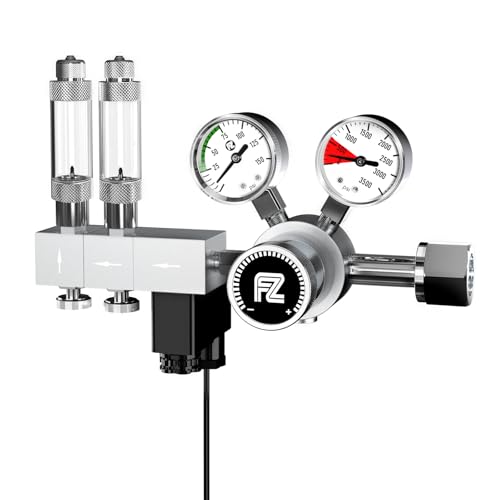
The FZONE Pro Series uses a true dual stage design to maintain steady output as cylinder pressure drops, reducing end-of-tank-dump risks. Output is adjustable from 0 to 65 PSI, enabling precise CO2 control for a range of aquariums. The system includes a modular manifold block with two independent blocks, each with its own high-precision needle valve. This allows you to run one regulator for a single tank or outfit two tanks from a single unit.
Who it’s best for: hobbyists managing two tanks or larger setups that need stable, adjustable CO2 delivery with modular expansion. Why selected: independent blocks offer flexibility, while dual-stage stability minimizes fluctuations during tank depletion. Safety note: a built-in relief valve opens above 100 PSI to prevent over-pressurization.
Key takeaways:
- Dual-stage stability for consistent CO2 flow
- Two independently operable blocks
- Adjustable 0–65 PSI output
FZONE Aquarium CO2 Regulator Mini Series V3.0 Dual Stage
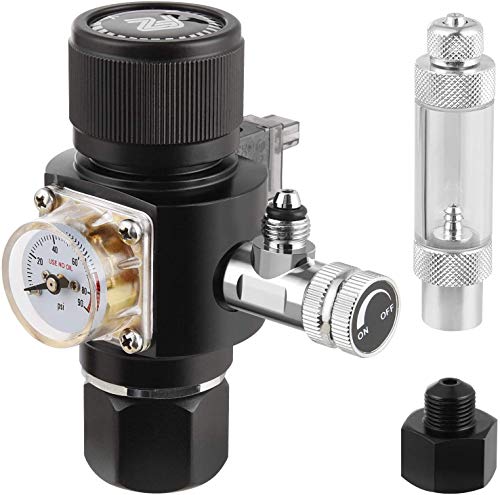
This dual-stage regulator is designed for stable CO2 output with a 12V DC solenoid and a precision needle valve. It features a bubble counter and check valve to monitor flow and prevent backflow. The design emphasizes safety and reliability, with included installation tools for quick setup. Output pressure can be kept within a tight range, supporting steady plant growth in smaller to mid-sized tanks.
Who it’s best for: aquarists who want a compact, reliable dual-stage regulator with clear flow readouts for a single tank or a small two-tank system. Why selected: robust safety features and easy, precise fine-tuning. Caution: some users report setup complexity if you are new to CO2 tubing connections.
Why choose this: easy integration with standard CGA320 cylinders and a compact form factor makes it a strong starter option for planted tanks requiring dependable stability.
Hygger CO2 Upgraded Regulator

The Hygger kit emphasizes expandability with an expandable manifold design that supports two tanks right out of the box. It uses dual-stage regulation for stable output, while a dedicated needle valve provides fine flow control. The system includes bubble counters and quick-connect fittings designed for effortless setup. A motorized valve with a timer option enables automated CO2 delivery, reducing manual adjustments and enabling scheduled dosing.
Who it’s best for: hobbyists running two tanks or planning future expansion who value automation and a straightforward setup. Why selected: scalable design and timer option help manage CO2 supply efficiently. Limitation: motorized valve adds complexity and requires power management in installation.
Choose this if you want a scalable, timer-ready multi-tank solution that can grow with your aquascape.
JARDLI Aquarium Dual Stage CO2 Regulator

JARDLI’s regulator focuses on safety and precision with dual-stage regulation, integrated relief valve, and dual gauges showing working and tank pressure. Output is adjustable 0–60 PSI, suitable for tanks ranging from small to very large volumes. A 12V DC solenoid valve minimizes noise and power use, and the unit can be paired with an automatic timer for hands-free operation. The kit includes a complete set for immediate setup.
Who it’s best for: aquarists seeking pro-grade control with clear pressure readouts and an integrated safety mechanism. Why selected: dual gauges offer direct visibility into both working pressure and gas pressure, aiding precise dosing. Caution: ensure compatible tubing and timer integration to maximize automation benefits.
Choose this if you value robust gauges and a safety-focused design for precise dosing in larger or high-precision setups.
FUZIDDN Aquarium Dual Stage CO2 Regulator

This regulator emphasizes a 0–65 PSI adjustable output, dual-stage stability, and a modular, scalable design with a bubble counter manifold. It supports multi-tank setups via a dual-outlet splitter. The 12V DC solenoid is designed for efficiency and silent operation, with a high-precision needle valve for fine control. The unit includes documentation and tools for straightforward installation.
Who it’s best for: hobbyists managing multiple aquariums who want a scalable, adjustable CO2 solution with modular controls. Why selected: the multi-outlet capability paired with precise flow control makes multi-tank dosing practical. Limitation: the marketing copy uses Q&A style details that may require careful interpretation before purchase.
Choose this if you plan to run more than one tank and want simple scalability without sacrificing control or safety.
FZONE Aquarium Co2 Regulator DC Solenoid With Bubble Counter

This model features an updated 12V DC split-type solenoid, replacing older AC versions for better safety and stability. High-precision tuning aims for 1 bubble every 3 seconds, with a bubble counter and check valve to ensure accurate readings and prevent backflow. The kit includes all necessary installation tools, making setup easier for beginners and seasoned hobbyists alike.
Who it’s best for: beginner to mid-level aquarists who want a compact, reliable regulator with an integrated counter for easy monitoring. Why selected: safe, low-noise DC solenoid and included tools reduce installation friction. Caution: check compatibility with your cylinder size and tubing length to match your layout.
Buying Guide: How To Choose A Dual Stage CO2 Regulator
What size tank or tanks will you run? For one tank, a compact dual-stage regulator with a single outlet may suffice. For two or more tanks, consider a modular or multi-outlet design that allows independent control per tank or a scalable manifold.
Do you need automation? If yes, look for a regulator with a solenoid and optional timer. A motorized valve can offer quieter, energy-efficient operation, especially in multi-tank setups or daily dosing schedules.
How important are gauges and readouts? Dual gauges that show working pressure and tank pressure help maintain precise dosing and prevent end-of-tank-dump. Bubble counters provide direct feedback on flow rate, aiding stability for plant growth.
What safety features matter? A built-in relief valve protects against over-pressurization. Locking adjustment knobs prevent accidental changes. Ensure the regulator is designed to operate safely with your cylinder size (CGA320, etc.).
Is expandability a priority? If you plan to add more tanks later, choose a regulator with an expandable manifold or modular design to minimize future purchases and complexity.
Frequently Asked Questions
- What is a dual-stage CO2 regulator? A regulator that uses two stages to maintain stable output pressure as the gas in the cylinder depletes, reducing rate fluctuations and end-of-tank-dumps.
- Do I need a timer with my regulator? A timer is useful for automated dosing, especially in planted tanks or multi-tank systems, reducing manual adjustments.
- What is a bubble counter for? It measures CO2 flow rate by counting bubbles per minute, helping you tune delivery for plant needs.
- Can I run two tanks from one regulator? Yes, with a modular or dual-outlet design that supports independent control for each tank.
- Are DC solenoids safer than AC solenoids? Generally yes; DC units run cooler, quieter, and with lower power consumption, making them safer for enclosed setups.
- How do gauges help prevent over-pressurization? Gauges show both working and tank pressures, allowing you to watch for pressure spikes and adjust before risks arise.