Choosing the right divider helps create thriving, organized habitats in home aquariums. The selections below cover adjustable, easy-to-install options built from durable plastics and clear acrylics. Each product supports different tank sizes and configurations, from small Betta setups to large community tanks.
| Product | Tank Compatibility | Material | Key Feature |
|---|---|---|---|
| Weramics 8pcs Divider Kit | Various 11.8″ x 5.9″ boards | Durable plastic | DIY piecing with clips and suction |
| TQDXZA 8 Pacs Plastic Grid | 10, 20, 55 gal tanks | PVC plastic | Customizable grid panels, versatile use |
| LYL LEYOULAND Divider Set | Most 18″ wide tanks; two-piece panels | Eco-friendly PMMA acrylic | High transparency, dense holes for water flow |
| CLarellara 75 Gallon Divider | 75 gal tanks (also adjustable for others) | PMMA acrylic | Laser-cut, adjustable height, strong |
| Weramics 4pcs Black Divider | 11.8″ x 5.9″ boards | Plastic egg crate | DIY compatible with buckles, durable |
The following sections highlight five top options. Each entry includes a concise overview, design notes, and how the divider supports fish health and tank maintenance. All summaries draw from the listed features and typical use cases for aquarium dividers.
8pcs Weramics Aquarium Divider Kit

The Weramics divider kit includes eight boards measuring 11.8 inches by 5.9 inches with 0.15-inch holes and ten clips with suction. The design emphasizes a DIY approach, allowing pieces to be joined via concave-convex buckles and cut with scissors to fit unique tank dimensions. Constructed for durability, it offers a sturdy barrier that can help reduce territorial aggression and provide opportunities to segregate fry or quarantine new or sick fish without full tank remodeling.
TQDXZA 8 Pacs Plastic Grid Panels

These customizable plastic grid panels connect to form dividers or can be cut to fit specific tank dimensions. They are designed for 10, 20, and 55 gallon tanks, making them versatile for breeding spaces, separation of fish, or as a lid and base support grid. Made from non-toxic PVC, they resist corrosion and are suitable for both freshwater and saltwater setups, contributing to flexible tank layouts without compromising safety.
RA AquaTech Acrylic Divider Kit
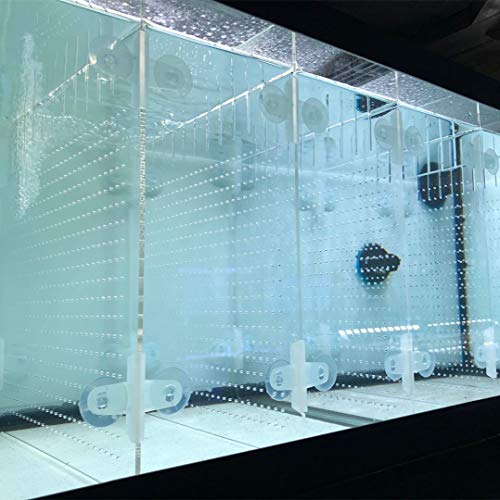
The RA AquaTech acrylic divider kit focuses on acrylic panels with options for 5.5- to 20-gallon setups. The kit’s essential feature is clear visibility with minimal visual intrusion, preserving aquarium aesthetics while allowing partitions for fry rearing or housing incompatible species separately. Users benefit from predictable sizing and straightforward installation with compatible suction options.
CLarellara 75 Gallon Clear Divider

This 75-gallon divider uses laser-cut PMMA acrylic with a thickness of 4 mm to ensure strength against larger fish and aggressive tank mates. The design includes long holes around the panel, enabling flexible height adjustment to fit various breeder and display tanks. Its high light transmittance (over 94%) helps maintain visual appeal and natural viewing in the aquarium while supporting more efficient water flow and waste removal through denser hole spacing.
Weramics Adjustable Plastic Grid Divider (4pcs)

This option includes four black plastic egg crate panels (11.8 x 5.9 inches) with 0.15-inch holes. The DIY friendly design supports modular assembly via concave-convex buckles, and panels can be cut to shape for custom tank fits. The construction aims for durability and resistance to tampering by curious animals, helping to protect fish during quarantines or breeding cycles and enabling stable separated environments.
Buying Guide: Key Considerations For Choosing A Fish Tank Divider
- Tank size and shape: Measure width, height, and length to determine panel size, hole spacing, and the number of panels needed for desired separation zones.
- Material and safety: Acrylic panels offer clarity and strong impact resistance, while PVC or other plastics provide flexibility and lower cost but ensure non-toxicity for aquatic life.
- Mounting system: Suction cups, clips, or screw-in options affect ease of installation and stability. Smoother panels and well-sealed edges reduce algae buildup and debris accumulation.
- Flexibility vs. permanence: DIY or modular panels can be reconfigured as tank inhabitants change. Fixed, rigid dividers suit stable setups with minimal future adjustments.
- Water flow and filtration: Denser hole patterns or well-spaced slots help maintain circulation and prevent dead zones where waste accumulates.
- Cleaning and maintenance: Choose surfaces that are easy to wipe and resistant to scratching. Clear acrylics preserve aesthetics without obstructing viewing.
- Aquarium compatibility: Confirm that divider material is safe for freshwater or saltwater use and compatible with your brand of tank and lid covers if applicable.
- Future needs: If you plan to expand to larger tanks or aggregate multiple tanks, consider modular systems that scale up with minimal replacement costs.
- Pricing and availability: Compare kits with bundled panels and clips versus individual pieces to balance upfront cost against ongoing reconfiguration needs.
- Installation guidance: Some kits include video or printed instructions, which can reduce setup time and ensure proper panel alignment for safe operation.