Dissolved oxygen (DO) is essential for the health of fish, coral, and beneficial bacteria in aquariums, ponds, and aquaculture systems. This guide reviews five reliable DO meters designed for hobbyists and professionals alike, highlighting how each device measures oxygen, temperature, and salinity when applicable. Use this overview to compare portability, accuracy, battery life, and ease of calibration to keep aquatic environments thriving.
| Product | Brand | Key Benefit |
|---|---|---|
| UIUZMAR Digital DO Meter | UIUZMAR | Large LCD, 1.1 m probe, versatile use |
| EZTOCH Portable DO Meter | EZTOCH | Calibrated kit with calibration solutions |
| ORAPXI Smart DO Meter | ORAPXI | Mobile app data viewing and export |
| GISNPA DO Meter | GISNPA | ATC, user-friendly calibration |
| GIDIGI DO Meter | GIDIGI | Extended probe length, dual units |
UIUZMAR Digital Dissolved Oxygen Meter
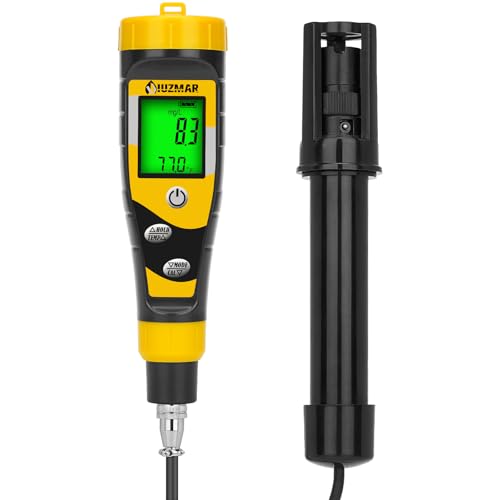
The UIUZMAR DO meter offers a portable solution for aquariums, ponds, and aquaculture, with a clear LCD display and a polarographic probe connected by a 1.1-meter cable. It provides precise measurements of dissolved oxygen and temperature, helping maintain healthy oxygen levels for aquatic life. Its versatile design suits fish tanks, koi ponds, and educational settings, enabling quick checks of DO and temperature in a range suitable for most hobby and small-scale professional applications.
EZTOCH Portable DO Meter Kit

The EZTOCH DO meter provides a dual-range readout (0.0-40.0 mg/L and 0.0-300.0%), with a 3.6-foot probe and a calibration kit that includes calibration fluids and membranes. This configuration supports accurate monitoring in ponds, koi and goldfish habitats, and hydroponic systems. The included calibration supplies simplify setup, while the dual unit capability helps users compare DO against saturation levels under varying temperatures and salinities.
ORAPXI Smart DO Meter

The ORAPXI DO meter stands out with dual mg/L and % saturation modes, plus a real-time mobile app for viewing, recording, and exporting readings. It supports up to 1,000 measurements and provides salinity and altitude compensation for freshwater and saltwater testing. Built-in temperature compensation ensures stable DO readings across diverse environments, making it suitable for aquaculture, hydroponics, brewing, and field research where on-site data continuity matters.
GISNPA Dissolved Oxygen Meter (ATC)

This GISNPA model emphasizes automatic temperature compensation and an easy calibration workflow, with a 0.0-40.0 mg/L range and a 0.0-300.0% saturation scale. The device prioritizes ease of use, allowing quick immersion for readings and straightforward digital display interpretation. It’s suitable for ponds, aquariums, wastewater analysis, and teaching labs where reliable DO measurements support system health decisions.
GIDIGI Dissolved Oxygen Meter

The GIDIGI DO meter features an extended 4.92-foot probe cable, dual measurement modes (mg/L and % saturation), and an automatic temperature compensation function. This configuration supports testing in deeper water bodies and ensures readings remain accurate under temperature fluctuations. It’s well-suited for professional aquaculture, breweries, laboratories, and large-scale educational projects that require robust data collection in varied water conditions.
Buying Guide
When selecting a dissolved oxygen meter for aquariums or ponds, consider these key factors:
- Measurement range and units: Ensure the device covers 0.0-40.0 mg/L (typical DO range) and supports both mg/L and percentage saturation if your applications vary.
- Temperature compensation: Automatic temperature compensation (ATC) improves accuracy across different water temperatures and altitudes; essential for outdoor and seasonal testing.
- Probe length and accessibility: Longer probes (3.6 ft to 4.92 ft) help with deep tanks, ponds, and outdoor water bodies, reducing the need to move equipment.
- Calibration and maintenance: Look for kits with calibration fluids and membranes; straightforward calibration saves time and improves reliability.
- Portability and durability: For field use, select handheld meters with a stable display, durable housing, and comfortable handling.
- Data features: Some models offer mobile apps and data export, which can be advantageous for monitoring trends in aquaculture or research settings.
- Additional capabilities: Temperature display, salinity compensation, and backlight can aid readability and expand use cases beyond standard freshwater DO testing.
- Cost vs. value: Balance initial cost with calibration supplies, replacement probes, and durability to maximize long-term reliability.
In practice, choose a model that aligns with your primary environment—indoor freshwater tanks may need a compact, simple meter, while outdoor ponds or aquaculture setups benefit from extended probes, ATC, and data logging capabilities. For hobbyists focusing on routine checks, a reliable single-mode meter with straightforward calibration often suffices. For research or commercial operations, a smart meter with app connectivity and export options can provide deeper insights and streamlined record-keeping.