Answering the need for quick, accurate aquarium water testing, these digital testers help hobbyists monitor key parameters like pH, nitrates, ammonia, and TDS. They’re ideal for freshwater setups, reefs, shrimp tanks, and mixed-aquarium habitats. The top picks below focus on app-enabled or digital strip solutions that minimize guesswork and streamline ongoing maintenance. Each product is evaluated for who benefits most, how it works, and any notable limitations to consider.
Quick comparison table of chosen products:
| Product | Best For | Key Benefit |
|---|---|---|
| DROPLYTIX Digital Aquarium Water Test Kit | All-in-One Digital 10-in-1 | App-scannable strips for lab-grade results |
| Instant 4-in-1 TDS Meter (VARIFY) | Water professionals and hobbyists needing fast TDS/EC | 4-in-1 readings with titanium sensor |
| AAwipes 8-in-1 Aquarium Strips | Budget-conscious hobbyists | 8 parameters with reliable color charts |
| Pawfly 6 in 1 Digital Kit | Comprehensive digital testing | 6 parameters in one device |
| VIVOSUN 3-in-1 pH/TDS/EC | Hydroponics and aquariums alike | 3-in-1 with broad measurement range |
DROPLYTIX Digital Aquarium Water Test Kit

Type: Digital 10-in-1 test strips with app support. Detects ammonia, nitrate, nitrite, pH, GH, KH, chlorine, and more. Works with freshwater, saltwater, reef setups, betta, turtle, nano tanks, and axolotl kits. The mobile app scans strips for instant lab-grade results, reducing color-guessing and manual chart references.
Best for: Reef tank owners, freshwater masters, and hobbyists who want comprehensive, app-based readings in real time. This kit excels when ongoing multi-parameter monitoring is needed and you rely on digital results for maintenance records.
Limitation: Requires the smartphone app for results; without the app, interpretation relies on the digital readout available via the app.
Instant 4-in-1 TDS Meter Digital Water Tester (VARIFY)
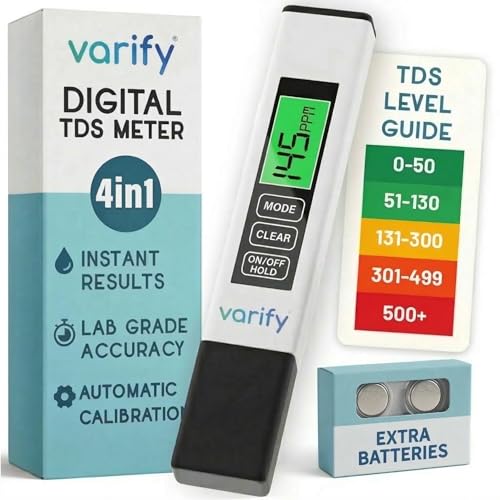
Type: 4-in-1 meter for TDS, EC, and temperature. Compact, fast readings with a backlit display. Titanium sensor for durability and a simple one-button operation.
Best for: Professionals and hobbyists needing quick, reliable TDS/EC readings for drinking water, RO systems, aquariums, pools, or hydroponics. Ideal as a supplementary tool to verify water quality between more complex tests.
Caution: It reads total dissolved solids and conductivity but does not measure specific nutrients or ammonia directly; use with other tests for a complete aquarium profile.
AAwipes 8-in-1 Aquarium Test Kit

Type: 8-in-1 test strips (50 strips). Measures Free Chlorine, Nitrate, Nitrite, Hardness, Carbonate, Total Alkalinity, pH, and Ammonia nitrogen with color-chart interpretation.
Best for: Budget-minded hobbyists seeking a broad range of parameters without digital devices. Suitable for freshwater and ponds, including shrimp tanks and pools where quick checks are needed.
Caution: Strip-based results can be influenced by lighting and interpretation; ensure color charts are compared under proper lighting for accuracy.
Pawfly 6 in 1 Digital Water Kit

Type: 6-in-1 digital tester for pH, nitrate, nitrite, chlorine, total hardness, and carbonate. Includes a backlit display and an auto-off feature for battery longevity.
Best for: Aquarium keepers who want a single device to regularly monitor multiple essential water parameters with clear digital readouts. Suitable for both freshwater and saltwater setups.
Limitation: Some parameters may require calibration or reference to manual ranges; accuracy can depend on proper usage and sample handling.
2026 All-New 4 in 1 TDS Meter Digital Tester

Type: 4-in-1 tester for TDS, EC, temperature (°C/°F). Upgraded with a large backlit LCD, auto-lock, factory calibration, and 2-minute auto-off for battery conservation.
Best for: Households and small labs needing a reliable TDS/EC reading with temperature compensation and a long-lasting display. Works well as a primary TDS/EC tool alongside aquarium maintenance routines.
Caution: Not designed to test seawater; use alternative kit for marine reef systems requiring salinity checks.
VIVOSUN 3-in-1 pH/TDS/EC Meter

Type: 3-in-1 meter for pH, TDS, and EC with temperature readouts. Broad measurement range suitable for hydroponics and aquariums; notes say not for seawater.
Best for: Home users who want a compact, all-in-one solution for general water testing in freshwater tanks and hydroponic environments. Helpful as a quick check between more detailed laboratory-style tests.
Limitation: Not suitable for marine or reef water where salinity and specific ion balance matter more than general TDS/EC readings.
11 in 1 Aquarium Test Strips (SJ WAVE)

Type: 11-in-1 strips covering multiple parameters including ammonia, pH, nitrate, nitrite, GH, KH, chlorine, and more, plus a temperature indicator. Includes an instructional ebook and 50 ammonia strips as a bonus.
Best for: Enthusiasts who want a wide parameter panel without digital devices, and who value an included guide and extra ammonia tests for proactive tank management.
Caution: Color interpretation can vary; ensure proper lighting and match to the provided charts for accuracy. This kit is best used with a reference chart rather than relying solely on a single reading.
Buying Guide
- What to test first: If you maintain reef, nano, or mixed tanks, prioritize ammonia, nitrite, nitrate, pH, and alkalinity. For planted tanks, KH and GH stability are essential.
- Digital vs. strips: Digital testers with app integration provide quick, trackable results and trend data. Strips are low-cost and straightforward but require careful color interpretation.
- Water type and scope: Seawater and reef setups demand salinity (not always covered by these devices). For freshwater, most options cover the core parameters effectively.
- Calibration and maintenance: Regular calibration and following the manufacturer’s instructions ensure accuracy. Look for models with auto-off to save battery life and backlit displays for readability in different lighting.
- Ease of use and data logging: App-enabled models offer history logs and trend charts, which help identify gradual shifts and inform maintenance decisions.
FAQ
- Do digital testers replace all traditional tests? They complement, not always replace, lab-grade tests. Digital readers provide quick, ongoing insights; confirm critical alerts with standard tests when needed.
- Which parameter matters most for beginners? Ammonia is critical because it is toxic to fish at even low levels. Regular ammonia checks help prevent sudden fish loss.
- Are app-based testers worth it? Yes for ongoing tracking and convenience. They centralize results and can simplify maintaining safe water conditions over time.
- Can I use strips for saltwater tanks? Some strips work for multiple tank types, but for reef or marine systems, ensure the product supports salinity-related measurements and does not misrepresent results.
- How often should I test my aquarium? For new setups, test daily during cycling. For established tanks, testing 1–2 times per week is common, with additional checks after water changes or parameter shifts.