The best digital reef test kit options let you monitor essential water parameters with app-assisted accuracy. This guide highlights five top picks ideal for reef keepers, saltwater enthusiasts, and serious aquarists who want quick, reliable results without guessing. Each product is chosen for accuracy, ease of use, and applicability to reef and saltwater setups. Read on to compare—whether you maintain a nano reef, a SPS/LPS system, or a mixed-tank, there’s a fit here.
Summary table of selected products:
| Product | Best For | Key Benefit | Note |
|---|---|---|---|
| DROPLYTIX Digital Aquarium Water Test Kit | Reef and freshwater hybrid tanks | App-enabled, 10-in-1 digital strips | Lab-grade-like results via app |
| Hanna Reef Pro Checker Kit V2 | Serious reef tanks | Digital multi-parameter testing | Premium reef-specific kit |
| GIDIGI Aquarium Salinity pH Meter | Saltwater setups | 5-in-1 readouts (pH, salinity, EC, TDS, temp) | Simple, portable |
| Pawfly 6-in-1 Digital Kit | Small to mid-size reef tanks | 6 parameters, digital readings | Compact, easy to use |
| AKSBTEC 11-in-1 Digital Pool/Test Kit | Saltwater aquariums and pools | Broad parameter range in one kit | Comprehensive, digital + strips |
DROPLYTIX Digital Aquarium Water Test Kit

This app-enabled digital 10-in-1 test kit covers freshwater, saltwater, and reef systems. It reads ammonia, nitrate, nitrite, pH, GH, KH, chlorine, and more, delivering results through a mobile app after scanning the test strips. Best for reef hobbyists who want fast, lab-like data without color matching. A potential limitation is dependency on the app for results, so ensure your device is compatible and up to date.
Best for: Reef keepers seeking a comprehensive digital readout and easy long-term tracking.
Why selected: It consolidates key reef water parameters into one package with app scanning for accuracy and trend tracking.
Hofun Pool Salt Tester & PH Meter
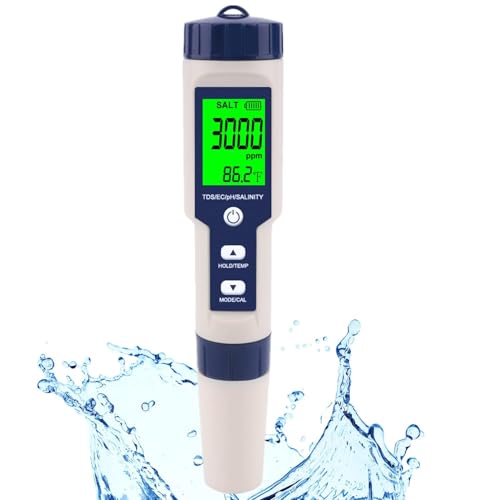
This 5-in-1 device measures salinity, pH, temperature, and related readings, with a focus on saltwater environments such as aquariums and pools. It’s versatile for reef setups that require consistent salinity and pH control. A caution is that it covers multiple water types; ensure you’re using the correct mode for aquarium readings to avoid unit confusion.
Best for: Saltwater aquariums where quick, multi-parameter readings are needed.
Why selected: Combines essential reef water metrics into a single handheld unit with straightforward operation.
Hanna Instruments Reef Pro Checker Kit V2

The Reef Pro Checker Kit targets calcium, alkalinity, and phosphates with digital precision. It’s designed for saltwater reef tanks where maintaining corals requires accurate, repeatable measurements. Best for hobbyists who monitor multiple reef-specific parameters and want a professional-grade tool. Caution: professional use may require understanding each parameter’s impact on coral health and longer calibration procedures.
Best for: Serious reef tanks requiring precise control of calcium and alkalinity.
Why selected: Digital accuracy and a multi-parameter focus help reef keepers maintain stable coral growth conditions.
GIDIGI Aquarium Salinity pH Meter

This 5-in-1 meter reads salinity, pH, EC, TDS, and temperature, simplifying regular reef maintenance. The digital readouts reduce color-guessing and provide quick, repeatable results for saltwater tanks. Best for beginners and intermediates who want a single device to monitor multiple critical reef parameters. Limitation: some users may outgrow a basic kit as coral systems mature and require more specialized measurements.
Best for: Saltwater aquariums needing consolidated measurements in one device.
Why selected: Easy-to-read, multi-parameter readings help maintain reef stability with minimal setup.
Note on the fifth product: The AKSBTEC 11-in-1 kit offers a broad range of tests, including pH, salinity, TDS, EC, temperature, and chlorine-related metrics via stri ps. It pairs digital readings with test strips for broader coverage, which is useful for hobbyists who test frequently and need a wide parameter net. Use this if you want versatility across reef tanks and pool-like setups.
Buying Guide: Key Considerations For A Digital Reef Test Kit
- Coverage: Ensure the kit measures the parameters critical to reef health (pH, ammonia, nitrite, nitrate, calcium, alkalinity, magnesium, salinity). Some kits lean toward pool use and may miss reef-specific metrics.
- Technology: App-enabled digital strips offer quick, trendable results, but rely on smartphone compatibility and app updates. Non-app options provide immediate readouts but may require color interpretation.
- Ease of use: Look for kits with straightforward operation, clear displays, and minimal calibration needs. Reef tanks benefit from consistent routine testing.
- Data handling: Apps that track historical data help identify gradual shifts before they become problems. Consider whether you prefer graphs, exportable data, or simple numeric readings.
- Form factor: Handheld meters are convenient for spot checks; larger systems may benefit from multi-parameter digital readers or a dedicated reef testing station.
- Maintenance and reliability: Check for included calibration standards, replacement strips, and customer support. In reef systems, precise readings are essential for stable coral growth.
Practical Tips For Using Digital Reef Test Kits
- Test regularly and at similar times of day to establish baseline trends for your tank.
- Record results in a log to detect gradual changes and correlate with feeding, dosing, or maintenance schedules.
- Keep spare strips and calibration solutions on hand to minimize downtime.
- Calibrate according to manufacturer instructions to maintain accuracy over time.
Frequently Asked Questions
- Q: Are digital reef test kits more accurate than color-change strips? A: Digital readers often provide more consistent results and are less subjective than color comparisons, especially for parameters like pH and alkalinity.
- Q: Can I rely on one kit for all reef parameters? A: Some kits cover most common reef needs, but more specialized setups may require separate tests for calcium, alkalinity, magnesium, and phosphate.
- Q: How often should I test my reef tank? A: For new or unstable tanks, daily testing for the first two weeks is common, then 2–3 times per week during stabilization, and weekly maintenance once established.
- Q: Do app-based kits require ongoing subscriptions? A: Some apps offer free basic features with optional paid upgrades for advanced data tracking or cloud storage.
- Q: What’s the best starter kit for a small reef tank? A: A kit with 5-in-1 or 6-in-1 readings plus reef-focused parameters offers a practical starting point for nano or small systems.
- Q: Should I trust a single kit for corals’ health? A: Use multiple checks and correlate with coral growth, color, and behavior; digital readings guide decisions but should be interpreted in context.