Answer: For hobbyists seeking crystal-clear aquarium water, choose diatom-filtering options that combine polishing media with reliable filtration. The best picks below are suited to hobbyists who want a noticeable reduction in fine particulates, odors, and discoloration. The top choices range from polishing filter pads that remove micro-particles to internal canister filters with built-in polishing capabilities. This guide highlights who each product is best for and why.
| Product | Best For | Why It Stands Out |
|---|---|---|
| Marineland Magnum 200 Polishing Internal Canister Filter | Medium to large tanks that need ongoing polish | Integrated mechanical, chemical, and bio filtration with a surface area for beneficial bacteria. |
| Aquatic Experts Aquarium Polishing Filter Pad (100 Micron) | Fine particle removal in sumps or filter chambers | High-density fibers trap very fine particles for sparkling clear water. |
| Aquatic Experts Aquarium Polishing Filter Pad (50 Micron) | Very fine filtration to improve clarity | Thinner pad suitable for precise polishing and layered media setups. |
| Fluval ClearMax Phosphate Remover | Chemical filtration to reduce nutrients and odors | Premium resin media that targets phosphate, nitrite, and nitrate for clearer water. |
| COODIA Internal Green Water Killer Aquarium Filter | Rapid green-water treatment for both saltwater and freshwater | Provides a practical solution for quick clarification when green water is a problem. |
Marineland Magnum 200 Polishing Internal Canister Filter

Best for: hobbyists with mid-sized aquariums who want integrated filtration with a polishing stage. This internal canister filter provides mechanical filtration via Rite-Size Floss Sleeve, chemical filtration with activated carbon, and biological filtration through a bacteria-supportive chamber. The combination helps reduce dirty particulates, odors, and organics, while supporting beneficial bacteria growth in the media container.
Why selected: The three-stage approach can simplify setup and maintenance for tanks around 60 gallons. The 48 square inches of bio-media surface area can support biological filtration, which helps stabilize ammonia and nitrate levels over time. A limitation to note is that internal canister units can be bulkier than hang-on-back models, so space and installation may require planning.
Aquatic Experts Aquarium Polishing Filter Pad (100 Micron)

Best for: aquarists who want to aggressively remove very fine particulates from flowing water paths, especially in sumps or filter chambers. The 100 micron fiber network traps fine to extremely fine particles, producing noticeably clearer water. It can be cut to fit and layered with other media to extend cleaning intervals.
Why selected: It delivers visible water clarity improvements with straightforward usage, and its cut-to-fit design helps adapt to different filter configurations. Caution: frequent cleaning is needed to prevent clogging if the pad becomes saturated with debris.
Aquatic Experts Aquarium Polishing Filter Pad (50 Micron)
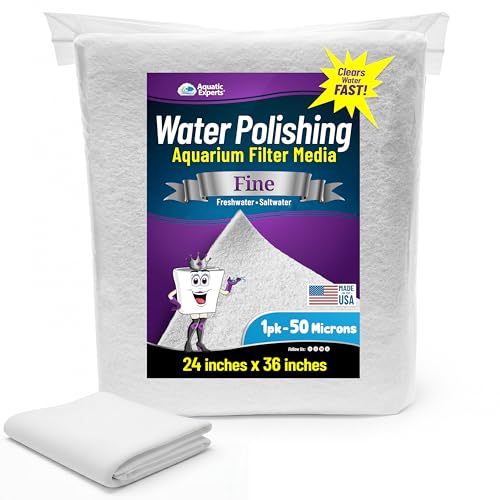
Best for: users who need very fine polishing in filtration paths, particularly where hard-to-capture particulates persist after initial filtration. The 50 micron pad is optimized for precision polishing and can be used alone or layered with other pads.
Why selected: This pad complements larger pore media to extend cleaning cycles and improve overall water clarity. Limitation: smaller pore size means potential for more rapid clogging, so monitoring debris is essential.
Fluval ClearMax Phosphate Remover
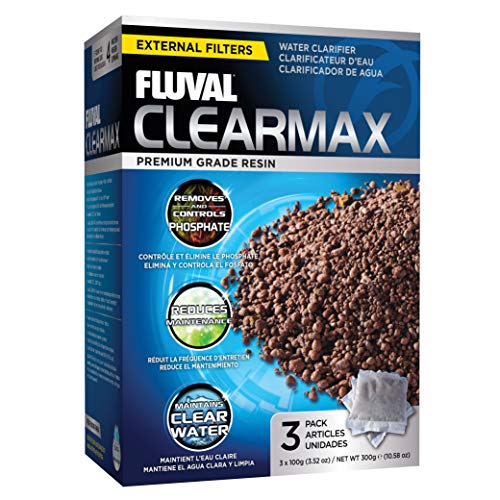
Best for: tanks where nutrient control and odor reduction are priorities. ClearMax chemical filter media absorbs phosphate, nitrite, and nitrate, helping maintain clearer water and a healthier tank environment for fish and plants.
Why selected: Fluval ClearMax provides a practical chemical filtration option compatible with various Fluval canister filters. A limitation: to maximize performance, it should be used as part of an overall filtration plan rather than as a standalone solution.
COODIA Internal Green Water Killer Aquarium Filter

Best for: quick remediation of green water in either saltwater or freshwater setups. This internal filter claims fast transformation of green water within 3 to 7 days, making it suitable for new tanks or when the water color is problematic.
Why selected: It offers a practical, fast-acting option for green water issues without requiring extensive media customization. Limitation: green-water solutions may require ongoing maintenance to sustain clarity, and results can vary with tank size and bio-load.
Buying Guide: Key Considerations for Diatom-Filter Oriented Filtration
- Filter type: Decide between internal canister filters with built-in polishing capabilities and standalone polishing media pads. Internal canisters provide mechanical, chemical, and biological filtration in one unit, whereas polishing pads are best for targeted fine-particulate removal or as supplementary media.
- Particle size target: For very fine particulates, high-density 100 micron or 50 micron pads excel at polishing water, especially in sumps or filter housings. Larger tanks may benefit from a combination approach.
- Tank size and bioload: Choose filtration that matches the tank volume and bioload. Heavier bioload benefits from filters with multiple media types and larger surface areas for bacteria growth.
- Maintenance frequency: Very fine pads clog faster. Plan for regular cleaning to maintain high flow and effective filtration, especially in high particulate systems.
- Chemical filtration needs: If phosphate, nitrite, or nitrate control is important, pair mechanical polishing with chemical media like phosphate removers to enhance water clarity.
- Compatibility and space: Ensure the chosen filter fits the aquarium dimensions and can be installed without obstructing lights, equipment, or access to maintenance areas.
FAQ
- What is diatom filtration in aquariums?
– Diatom filtration refers to using polishing media that traps very fine particles in the water, often used to achieve crystal-clear water and improve overall clarity. - Are polishing pads suitable for all filter types?
– They work well in many filter configurations, including wet/dry systems, sumps, and can be cut to fit existing spaces, but you should verify fit with your particular filter model. - How often should polishing pads be replaced or cleaned?
– Cleaning frequency depends on particle load; pads can trap many particles and should be cleaned or replaced when flow reduces noticeably or the pad is visibly clogged. - Can chemical media replace polishing pads?
– No; chemical media targets dissolved compounds and nutrients, while polishing pads remove suspended particulates. Using both provides complementary benefits. - Is green water treatment compatible with polishing media?
– Green-water solutions focus on algae control and may require combination approaches, including biological balance, UV treatment, and polishing media for best results. - What should I consider before buying a canister filter for polishing?
– Look for multi-media chambers, easy media access, and a design that supports both mechanical and chemical polishing to meet your tank needs.