If you need precise copper measurements for a freshwater or marine tank, copper test kits help prevent toxicity and protect sensitive inhabitants. This guide highlights five reliable options and explains who each is best for, plus practical purchasing tips. Ideal buyers include hobbyists managing copper-based treatments, reef tank keepers needing sensitive detection, and beginners seeking easy-to-read strips. The table below summarizes key choices to compare at a glance.
| Product | Best For | |
|---|---|---|
| Seachem MultiTest Copper Test Kit | Dedicated copper monitoring, all-in-one lab-style testing | Low detection less than 0.01 mg/L |
| API Copper Test Kit | Routine copper checks for fish safety and treatment monitoring | 0–4 ppm |
| Salifert COPT Copper Test Kit | High-sensitivity, precise copper measurement | Sensitive to dissolved/weakly chelated copper |
| SEAOURA 9-in-1 Aquarium Test Kit | All-in-one strip kit for quick copper and other parameters | Copper included among 9 tests |
| SJ WAVE 11 in 1 Aquarium Test Strips | Comprehensive home testing with quick results | Copper included among 11 tests |
Seachem MultiTest Copper Test Kit
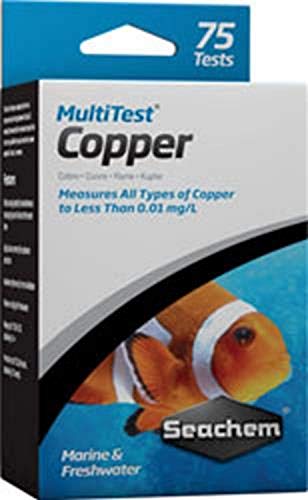
Best for aquarium hobbyists who want a compact, all-in-one copper testing solution. The kit measures all copper types to under 0.01 mg/L and uses a multi-cavity plate to run up to six tests concurrently. It includes a reference for test validation, aiding accuracy. Choose this if you prefer lab-style testing with built-in validation and the ability to run multiple samples quickly. A limitation is that it requires careful handling and timing like other colorimetric tests.
WLR Industries Hanna HI702 High Range Copper Colorimeter

Best for on-the-go testing and quick copper checks in the field or hobby setups. The Hanna HI702 is a compact, direct-measure meter designed for copper in aquarium contexts and marine biology applications. It is well-suited for aquarists who want a portable device over traditional test kits. Caution: digital meters require batteries and proper calibration to maintain accuracy.
API Copper Test Kit 90-Test

Best for routine monitoring and clear guidelines. The API Copper Test Kit includes a bottle of testing solution, a color card, and a test tube for straightforward copper level determination from 0 to 4 ppm. It helps prevent invisible water problems and ensures treatments work by verifying copper concentrations. It is suitable for both beginners and experienced hobbyists who prefer a traditional liquid-test format.
SEAOURA 9-in-1 Aquarium Test Kit

Best for beginners seeking an all-in-one strip solution. This kit tests nine parameters, including copper, across freshwater and saltwater tanks. It uses fiber-based strips designed for reliable color readings with minimal color bleed. A caution is that strips can be less precise than liquid tests if not read under proper lighting or if strips are past their shelf life.
SJ WAVE 11 in 1 Aquarium Test Strips

Best for quick, all-in-one monitoring of major water parameters, including copper. The kit provides 11 tests plus an included thermometer and an ebook, making it a practical option for hobbyists who want a single kit to cover multiple needs. Limitations include potential color interpretation challenges and needing good lighting to read the color chart accurately.
Buying Guide: Copper Testing For Aquariums
What copper test format should you choose? Liquid tests (like API and Salifert) typically offer higher sensitivity and precise readings, suited for reef tanks or copper-based treatments. Colorimeter devices (like Hanna HI702) provide quick readouts and mobility but require calibration and careful handling. Test strips (SEAOURA and SJ WAVE) deliver ease and speed, ideal for beginners, but can be less precise and affected by lighting or strip age. Match your tank type, sensitivity needs, and how often you test when selecting a kit.
How to interpret results effectively? Always compare to recommended copper ranges for your tank type. For marine tanks with copper treatments, validate that residual copper remains within safe levels for the chosen inhabitants. For freshwater setups, ensure copper does not accumulate to levels dangerous to invertebrates or beneficial bacteria. Use a consistent testing schedule to detect gradual changes.
Which kit offers the best long-term value? If you perform frequent tests, a kit with multi-sample testing (like Seachem MultiTest) or a high-test-count option (API 90 tests) can be more economical per measurement. For quick daily checks, strips or portable meters may save time, though you may trade off some accuracy.
Frequently Asked Questions
- How often should I test copper in my aquarium?
Test copper when starting a new copper-based treatment and periodically during treatment, then after completion to confirm levels return to safe ranges.
- What copper range is safe for most freshwater fish?
Typical safe ranges are lower than 0.5 mg/L, but consult species-specific guidelines and follow treatment instructions.
- Are test strips reliable for copper detection?
Strips offer quick results but can be less precise than liquid tests or colorimeters. Use strips for trend monitoring and confirm with a more accurate method if results differ from expectations.
- Can copper measurement indicate treatment efficacy?
Yes. Consistent copper readings help verify that therapeutic levels are maintained or cleared as intended.
- Should I use multiple test methods?
Using two methods (e.g., a strip kit for quick checks and a liquid test for confirmation) provides redundancy and greater confidence in copper management.