Yes—these CO2 regulator needle valves deliver precise, tunable control for planted tanks. This guide highlights five top options for different setups, from single-tank rigs to multi-tank systems. Best for hobbyists seeking reliable bubble control, fine-tuning, and easy installation, each pick fits common CO2 distribution needs without overcomplication.
Summary of selected products:
| Product | Best For | Key Benefit | Notes |
|---|---|---|---|
| FZONE All-in-One CO₂ Solenoid Valve | Single-tank setups seeking integrated control | Combined solenoid and bubble counter reduces leak points | Screw connection for wide compatibility |
| Clscea CO2 Splitter Regulator Valve | Multi-tank or multi-zone layouts | Splits CO2 to two tanks with built-in needle valves | Needs separate bubble counters or tubing |
| Yosoo Needle Valve for Aquarium System | High-precision single-tank control | Removable, durable stainless steel needle valve | High-precision metering with ergonomic design |
| Joyzan CO2 Needle Check Valve | Reliable anti-backflow for small to mid setups | Stainless steel, anti-leak, ergonomic | Includes bubble counter integration options |
| Zerodis CO2 Splitter 6-Way | Multiple tanks with individual controls | Five splitter configurations with independent needle valves | Aluminum alloy & stainless steel body |
FZONE All-in-One CO₂ Solenoid Valve with Bubble Counter
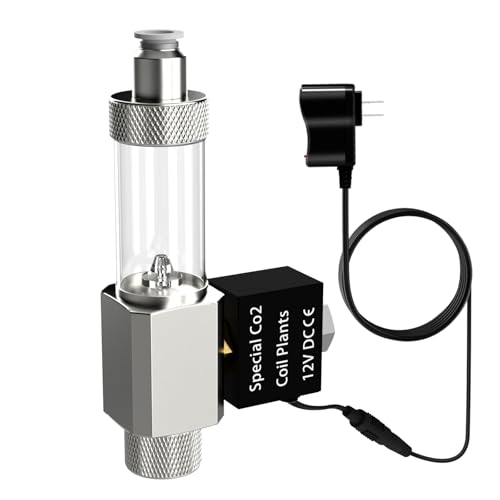
Best for: hobbyists with a compact, all-in-one workflow. The integrated CO₂ solenoid valve and bubble counter minimize leak points and simplify setup. The screw connection improves compatibility with FZONE systems and many other brands’ needle valves, while a quick-connect tube fitting speeds installation. Caution: verify tube size compatibility with your existing lines before purchase.
Clscea CO2 Splitter Regulator Valve

Best for: multi-tank setups needing distributed CO2 flow. Designed to split CO2 from a conventional regulator to two tanks, it requires separate bubble counters or tubing. Built-in stainless steel needle valves offer precise flow control on each branch. Limitation: you may need to purchase additional counters or tubing to complete the system.
Yosoo Needle Valve for Aquarium System CO2 Regulator

Best for: users seeking high-precision, single-head metering. This stainless steel valve is durable, corrosion resistant, and easy to install or remove. It offers fine control for CO2 release via adjustable needle positioning. Caution: verify that the model and head style match your regulator’s connection type for a proper seal.
Joyzan CO2 Needle Check Valve

Best for: preventing backflow and maintaining regulator life in compact setups. The stainless steel needle valve provides high-precision metering and anti-backflow features. It’s ergonomic for easy operation and supports integration with bubble counters. Limitation: ensure compatibility with your existing bubble counter arrangement before purchasing.
Create idea CO2 Dual-Head Needle Valve

Best for: compact dual-head control in small ecosystems. This dual-head design offers easy installation, with a compact 46x16mm footprint for tight spaces. The inline stainless steel construction provides durability and corrosion resistance. Caution: check that the dual-head configuration matches your regulator and tubing needs to avoid flow restrictions.
Zerodis CO2 Splitter 6-Way

Best for: large or multi-tank installations requiring independent flow control per outlet. This 6-way distributor offers five splitter configurations and individual needle valves on every outlet, with a pressure gauge connector for monitoring. It combines lightweight aluminum alloy and stainless steel for durability. Limitation: setup complexity increases with more outlets, so plan routing carefully.
Buying Guide
What should you consider when choosing a CO2 regulator needle valve?
- System size: Single-tank vs multi-tank configurations determine whether you need a compact unit or a multi-outlet splitter.
- Needle valve precision: Look for high-precision stainless steel needles for smooth, fine adjustments.
- Leak protection: Integrated bubble counters or check valves help prevent backflow and leaks.
- Connection type: Ensure compatibility with your regulator, tubing, and existing fittings (screw vs standard threads).
- Durability and materials: Stainless steel bodies resist corrosion in CO2 environments; consider aluminum for lighter, multi-outlet designs.
- Ease of installation: Removable heads and quick-connect fittings can simplify setup and maintenance.
Practical tips for installation and use
- Install outlet valves in the direction of flow to avoid backpressure that can affect accuracy.
- Label each outlet when using multiple tanks to avoid cross-contamination of CO2 dosing between tanks.
- Regularly inspect needle valves for wear; replace seals if you notice drift in bubble rate.
- When using splitters, calibrate each outlet with a bubble counter or test bubble rate in a controlled period.
FAQ
- What is the purpose of a needle valve on a CO2 regulator?
It provides precise control of CO2 flow, allowing fine adjustments for stable bubble rates in planted tanks. - Do I need a bubble counter with every regulator?
Not always, but bubble counters help verify flow and simplify monitoring, especially in multi-tank setups. - Can I use these valves with any CO2 regulator?
Most are designed for common regulator standards, but check thread types and tubing compatibility before buying. - What is a splitters’ main advantage?
They enable CO2 distribution to multiple tanks while maintaining individual flow control per outlet. - Are stainless steel valves better than plastic?
Stainless steel offers greater durability and corrosion resistance in CO2 environments, but material choice depends on budget and system requirements.