Looking for the best ceramic rock caves to enrich your aquarium with natural hiding spots, breeding sites, and interesting underwater landscapes? This guide highlights five top ceramic cave decorations that balance aesthetics, safety, and functionality. Each option is selected for specific fish-keeping needs—whether you breed Betta, manage cichlid aggression, or provide resting places for shrimp. Read on to compare what each cave offers, who it’s best for, and any practical limitations to consider before you buy.
| Product | Best For | Key Benefit |
|---|---|---|
| Plecoceramics Boulder Cave | Cichlids, Plecos, Bettas | Natural hideout with a realistic look |
| ALEGI Tree Stump Hole | Betta, small tank inhabitants | Natural trunk shape with multiple holes |
| JIH Rock Ceramic Shelter | Shrimp, Betta, small fish | Filtration-friendly, colorful detail |
| ALEGI Mountain Cave | Cichlids, Bettas | Large cave with easy viewing |
| SpringSmart Hideaway Stone | Betta, small community tanks | Non-toxic, promotes nitrifying bacteria |
Plecoceramics Boulder Cave for Medium and Large Tanks

The Plecoceramics Boulder Cave is designed to be a natural-looking rock hideout ideal for cichlids and plecos. With dimensions around 6.3 x 4.3 x 4.5 inches, it provides a substantial shelter in medium to large tanks. Best for fish that value secure resting spots and territory boundaries, this cave helps reduce aggression by offering a dedicated retreat. The natural design mimics real rock, contributing to a realistic aquarium landscape. A potential limitation is size; in smaller aquariums, the cave may take up a significant portion of vertical space.
Who it’s best for: Hobbyists with mid-to-large tanks housing cichlids or plecos who want a sturdy, natural-looking hideout to reduce aggression and provide a breeding retreat.
Why selected: Combines realistic aesthetics with functional shelter. Its size and shape offer ample hiding opportunities while blending into natural aquascapes.
Caution: Ensure adequate clearance around the cave for filtration intake and fish movement to prevent entrapment or restricted water flow.
ALEGI Tree Stump Hole for Betta and Small Fish
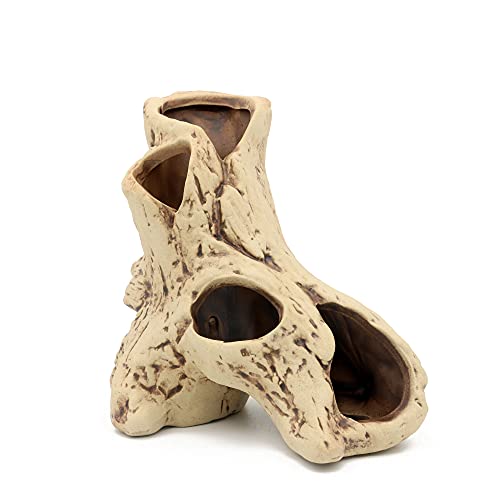
This ALEGI cave mimics a natural tree trunk with multiple holes, offering easy observation and multiple hideouts for small fish, shrimp, or fighting fish. Made from ceramic material designed to resist fading and minimize harm to water quality, it creates a natural atmosphere while providing spaces to rest, hide, or explore. Best used in nano to small-to-medium tanks where fish can easily navigate the holes. A potential limitation is that larger fish may attempt to outgrow the available hideouts.
Who it’s best for: Betta keepers and hobbyists with smaller tanks who want a visually natural centerpiece with multiple entry points for hiding and playing.
Why selected: Combines durability with an appealing trunk silhouette that complements most aquascapes.
Caution: Check hole sizes to ensure they accommodate the target species without causing entrapment or stress during feeding.”
JIH Ceramic Rock Shelter with Breeding Tube

The JIH rock shelter is specially designed for middle-bottom dwellers like plecos, shrimp, and Betta fish. Constructed from ceramic with safe, non-toxic materials, it also features a built-in feel of natural terrain and a simple, colorful look that can enhance vibrancy in the tank. Best for hobbyists seeking a compact, studio-friendly hiding cave that does not impede filtration. A limitation is that the design emphasizes shelter over intricate tunnels, which may suit some species better than others.
Who it’s best for: Small to mid-sized tanks housing shrimp or Betta that benefit from a secure, easy-to-clean hideout with gentle filtration integration.
Why selected: Combines practical shelter with a visually appealing, color-detailed finish that livens up a tank.
Caution: Verify tank dimensions to ensure the cave fits without crowding essential equipment or pathways for fish movement.
ALEGI Stackable Mountain Cave for Cichlids

This ALEGI mountain cave emphasizes stackability, allowing aquarists to craft varied layouts in both small and large tanks. The ceramic material resists fading and provides a safe, non-polluting hiding place for fish. The design is ideal for creating depth in aquascapes while offering a large interior for Betta or small cichlids. A potential limitation is that stacked configurations may create confined spaces that some fish find challenging to navigate.
Who it’s best for: Planners who like modular setups and want to rearrange hides as fish populations or tank shapes change.
Why selected: Flexible, multi-piece design supports creative layouts and varied hiding zones.
Caution: Avoid overcrowding by ensuring enough open water space and safe swim routes around stacked pieces.
ALEGI Stackable Ceramic Decorations Set

This set of three stackable ceramic stones offers a natural look with holes for small fish and shrimp. The stackable design supports adjustable caves to suit different aquarium shapes and fish behaviors. It’s best for hobbyists who want to experiment with different hiding configurations without committing to a single layout. A limitation is that some fish may prefer larger, single-chamber caves for breeding or resting.
Who it’s best for: Aquarists seeking versatility and an adjustable landscape to host multiple species and activities.
Why selected: The set provides easy modification of hiding spaces while maintaining a natural, stone-like appearance.
Caution: Ensure each cave remains accessible for feeding and does not obstruct filter flow or routine tank maintenance.
SpringSmart Hideaway Stone for Breeding and Play

SpringSmart’s hideaway stone is designed for breeding, playing, and resting in safe, non-toxic ceramic form. It is described as suitable for Betta, shrimp, guppy, snail, and similar inhabitants, with emphasis on nitrifying bacteria support and easy cleaning. Best for small to mid-sized tanks where water quality benefits from additional surface area. A potential limitation is that the single-piece cave may offer less variety in hiding routes compared with multi-piece sets.
Who it’s best for: Community tanks with small fish or Betta who benefit from a dedicated breeding or play cave that’s easy to clean and non-toxic.
Why selected: Provides a safe, practical hiding space that supports biological processes while remaining visually unobtrusive.
Caution: Regularly monitor for algae buildup and clean the interior to maintain water quality and flow.
Buying Guide: Ceramic Rock Caves for Freshwater Tanks
- Tank size compatibility: Check dimensions against your aquarium to ensure a comfortable fit without crowding essential equipment or limiting swimming space.
- Species considerations: Betta fish prefer less crowded hides with easy entry; cichlids may need larger, sturdier caves to reduce aggression.
- Material safety: Look for non-toxic ceramic that does not leach contaminants and resists fading in bright light.
- Hole design and accessibility: Holes should suit the fish size; too small restricts movement, too large may reduce protection from aggression.
- Stackability and layout: For modular caves, plan layouts that maximize swimming space and allow easy cleaning.
- Maintenance: Choose pieces that are easy to clean and do not trap debris; consider how you will rinse or scrub without damaging the surface.
- Aesthetic versus function: While looks matter, prioritize hiding spots, breeding areas, and water flow considerations to support healthy fish behavior.
FAQ
- Are ceramic caves safe for fish? Yes, when made from non-toxic ceramic and designed for aquarium use, they are generally safe and stable.
- Will caves affect water quality? They can provide surfaces for beneficial bacteria; however, ensure regular cleaning to avoid algae buildup and debris.
- What species benefit most from ceramic caves? Betta, cichlids, plecos, and shrimp commonly benefit from hiding spaces and breeding sites.
- How many caves should I add? Start with one or two, then add more if your fish exhibit signs of crowding or aggression that could be mitigated by additional shelters.
- Can I stack multiple caves? Yes, many designs are stackable, enabling varied layouts; ensure stable placement to avoid tipping and ensure filtration flow remains unobstructed.
- How should I clean ceramic caves? Rinse with water, avoid harsh chemicals, and scrub gently to preserve surface texture and color.