Finding the right canister filter for a saltwater aquarium depends on tank size, bioload, and maintenance preference. This guide highlights five reliable models well-suited for saltwater setups, focusing on clarity, stability, and ease of use. Each option targets a different buyer profile—from reef hobbyists needing heavy filtration to beginners seeking quiet operation and straightforward maintenance. The following selections balance performance, energy efficiency, and practical features to help you choose wisely for your aquatic ecosystem.
Comparison Snapshot Of Selected Canister Filters
| Product | Best For | Key Benefit | Approx. Flow |
|---|---|---|---|
| Fluval FX2 High Performance Canister Filter | Large saltwater tanks | Multi-stage filtration with Smart Pump | 475 GPH |
| Fluval 307 Perfomance Canister Filter | Up to 70 gallons | Ultra-quiet operation, reliable pump | ~Light to moderate flow |
| PONDFORSE Canister Filter (External) | Mid-size tanks, flexible setup | Adjustable flow, strong filtration media | Adjustable |
| fishkeeper 390GPH Canister Filter | Medium tanks up to 100 gallons | Ultra-quiet with 3-stage filtration | 390 GPH |
| VEVOR Aquarium Filter 317GPH | Medium to large tanks with UV | Quiet operation, UV protection, multiple layers | 317 GPH |
Fluval FX2 High Performance Canister Filter
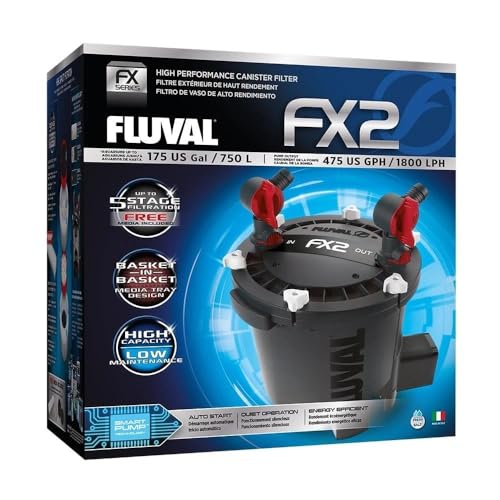
The Fluval FX2 is designed for heavy filtration demands in larger saltwater setups. It features multi-stage filtration, a built-in powered water change capability, and a basket-in-basket tray design that simplifies maintenance. Best for: hobbyists maintaining reef or mixed-species systems that require robust, continuous filtration and easy water changes. The self-starting Smart Pump technology enables automatic optimization of flow and pressure, enhancing stability for sensitive corals and fishes. A potential limitation is its price and size, requiring a larger cabinet footprint and careful placement in the stand.
Fluval 307 Perfomance Canister Filter

The Fluval 307 Perfomance canister filter suits tanks up to about 70 gallons with efficient eTEC technology for strong, quiet pumping. It provides reliable, ongoing filtration with relatively compact dimensions for mid-sized setups. Best for: aquarists who want a balance of strong filtration with lower noise and a more modest footprint. Consideration: the filter may require more precise maintenance intervals to maintain optimal flow in saltwater environments.
PONDFORSE Canister Filter, External (First Model)

This PondForse external canister filter uses multiple layers of filtration media to remove particles and impurities, promoting crystal-clear water. An adjustable flow rate makes it adaptable to various saltwater tanks and coral setups. Best for: aquarists who want flexible filtration with a straightforward setup and strong media options. Caution: ensure the filter is correctly primed to prevent air pockets that can reduce flow in certain configurations.
PONDFORSE Canister Filter, External (Second Model)

This second PondForse model shares the same filtration philosophy with robust media layers and adjustable flow. Best for: users who want consistent performance and similar filtration behavior across multiple tanks. Limitation: performance may vary with very high bioload without extra media or maintenance adjustments.
VEVOR Aquarium Filter 317GPH

The VEVOR 317GPH is a 4-stage canister filter with UV protection and a submersible pump design aimed at quiet operation. It includes multiple media layers with ceramic rings and bio-balls for biological filtration. Best for: hobbyists who value integrated UV protection and a silent profile. Caution: ensure compatibility with saltwater needs and confirm UV settings suit your coral or fish species since some UV options require regular lamp checks and replacements.
fishkeeper 390GPH Canister Filter
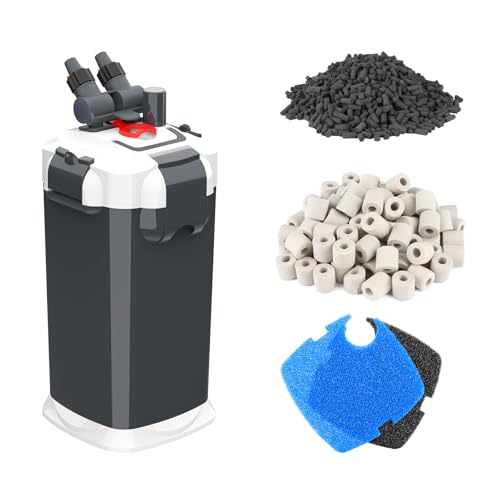
The fishkeeper 390GPH canister filter offers ultra-quiet operation with a 3-stage filtration system and a straightforward flow control valve. Best for: medium to larger coral or mixed-tank setups that require reliable filtration without noise disruption. Limitation: some users may find the initial setup slightly involved due to the controller and flow options, so follow the manual closely during first use.
Buying Guide: Key Purchase Considerations
- Tank size and recommended filter capacity: Match the canister’s flow rate and filtration stages to your tank size and bioload. Too little filtration leads to cloudy water and unstable chemistry, while too much flow can stress delicate inhabitants.
- Filtration stages and media compatibility: Look for multi-stage filters with media such as mechanical sponge, chemical media, and biological media (bio-balls, ceramic rings). This ensures both particle removal and biological filtration essential for saltwater systems.
- Noise and energy efficiency: If you want a peaceful living space or bedroom aquarium, prioritize ultra-quiet models with energy-efficient motors. Consider the trade-off between power consumption and filtration capacity.
- Maintenance and accessibility: Favor designs with easy disassembly, clear media access, and simple rinsing procedures. Quick-release valves and labeled media chambers save time during routine cleaning.
- UV integration and water-change features: Some units include UV sterilization or built-in water-change capabilities. Use UV only if you have a plan for bulb replacement and understand its role in controlling pathogens in reef or fish-only tanks.
- Saltwater compatibility and reef considerations: If keeping corals or sensitive invertebrates, ensure the filter’s flow, intake protection, and media options align with coral-friendly water movement and minimal chemical leaching.
Frequently Asked Questions
- What size canister filter do I need for a saltwater tank?
- Is UV treatment necessary in a saltwater canister filter?
- How often should canister filter media be replaced or cleaned?
- Can I use a canister filter for both saltwater and freshwater tanks?
- What maintenance schedule keeps saltwater canisters performing well?
Choose a filter with a flow rate appropriate for your tank volume and bioload. Larger tanks or reef setups typically benefit from higher GPH and multiple filtration stages.
UV can help reduce free-floating organisms and parasites in some systems, but it is not a substitute for proper water changes and protein skimming. Regular maintenance remains essential.
Rinse mechanical media weekly and replace chemical media as recommended by the manufacturer. Biological media normally lasts longer but should be checked for clogging and oxygen exposure.
Many canister filters are designed for both, but check the manufacturer’s guidance for compatibility with saltwater and reef environments, especially regarding media and seals.
Plan regular inspections every 2–4 weeks, media cleaning as needed, and a full service every 3–6 months to avoid buildup and maintain stable water parameters.