Bulk fish tank gravel improves aesthetics, supports plant health, and helps with substrate stability in tanks and decorative arrangements. This guide highlights five well-suited options for different needs—from small aquariums to decorative tabletop displays. It targets hobbyists building planted tanks, turtle habitats, or succulent plant displays who want durable, safe substrates. Each product is evaluated for suitability, best-use scenarios, and practical trade-offs to aid clear comparisons.
| Product | Best For | Approx. Size | Notes |
|---|---|---|---|
| FANTIAN 20 lbs Natural Fish Tank Gravel | Small to mid-size tanks, succulents and vase fillings | 1/4 inch | Natural color mix; dry packaging; good for drainage and moisture retention |
| Voulosimi 40 LBS River Rock Stones | Outdoor decor, large planters, aquarium accents | 0.32-0.48 inch | Varied colors; long-lasting; versatile for many uses |
| Spectrastone Blue Aquarium Gravel | Freshwater tanks needing stable pH | Not specified | Non-toxic coating; pH-safe |
| Aqua Natural Gold Pearl 20lb Gravel | Even sizing for cohesive aquascapes | 2-4 mm | Triple washed; no toxins; sustainable sourcing |
| Aqua Natural Diamond Black 10lb Gravel | High-contrast substrate for planted tanks | 1-2 mm | 100% natural; promotes beneficial bacteria |
FANTIAN 20 lbs Natural Fish Tank Gravel

The FANTIAN gravel features a 1/4 inch average size, making it suitable for small applications like nano or bowls, plus use in succulent pots and vase fillers. Best for hobbyists seeking a natural look with smooth texture and improved drainage. The mix of natural colors helps mimic riverside environments in aquariums and terrariums. It can be used to cover soil and enhance moisture retention in small planters. A potential limitation is that packaging is dry, so handling may require shaking to remove loose dust.
Voulosimi 40 LBS River Rock Stones
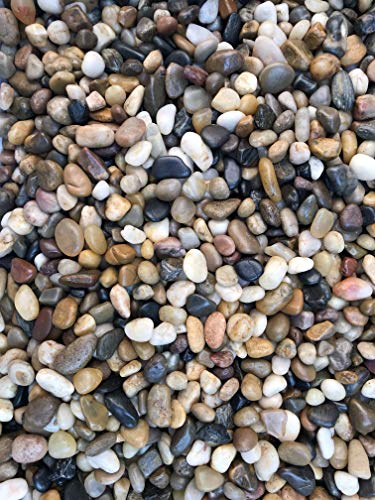
Voulosimi provides a larger pack with 0.32-0.48 inch pebbles and a natural color mix. This option is best for larger planters, decorative landscaping, and as accents in aquariums with bigger margins. Its varied browns, grays, whites, yellows, and blacks offer a rustic appearance that complements many aquatic plants and ornaments. The stones are durable and long-lasting, making them suitable for outdoor uses as well. A caution: color variety may affect overall tank color balance if used in freshwater displays where precise color coordination matters.
Spectrastone Special Blue Aquarium Gravel

Spectrastone Blue Aquarium Gravel is a 25-pound option marketed as safe for freshwater aquariums with a non-toxic coating that won’t alter pH. This makes it a stable base for tanks that require pH consistency. Best for hobbyists who want a subtle blue-tinished substrate that still reads as a natural stone. A limitation to note is that specific particle size is not stated, which may affect shorter or taller plant placements in dense aquascapes.
Aqua Natural Gold Pearl 20lb Gravel

Gold Pearl gravel features a 2-4 mm size, triple washed and kiln dried for cleanliness. It’s described as 100% natural and sustainably sourced in New Zealand. This makes it a strong pick for cohesive, evenly sized substrates ideal for planted tanks or terrariums. Best for buyers prioritizing clean substrate with consistent sizing. A potential limitation is availability of exact color uniformity due to natural stone variations.
Aqua Natural Diamond Black 10lb Gravel

Diamond Black gravel is a 1-2 mm substrate that offers a high-contrast base for planted tanks. It is described as 100% natural and promotes beneficial bacteria growth due to its large surface area. This is a good choice for tanks needing a sharp, modern look that makes greens and yellows pop. Choose this if you want a dark substrate that visually enhances plant colors. A limitation is the smaller particle size, which may compact more readily if not properly stirred during planting.
Buying Guide: Key Considerations For Bulk Aquarium Gravel
What particle size should you choose? Smaller sizes (1-2 mm) work well for densely planted or nano tanks, while 2-4 mm or larger options suit larger tanks or decorative uses. How does color affect plant growth and aesthetics? Neutral or dark colors tend to highlight plant colors; lighter colors reflect light and brighten the tank. Is the substrate safe for inhabitants? Look for non-toxic coatings and pH-stability; washed and kiln-dried substrates reduce dust and impurities. What about durability and cleanup? Durable natural stones resist wear and don’t degrade like mulch. Do you need multi-use gravel? Some options work well in aquariums, plant pots, vases, or landscaping. Consider packaging size to match tank capacity and display needs.
Choosing by Use Case
- Small tanks or desktop displays: 1/4 inch or smaller gravels for neat, low-profile substrates.
- Terrariums and succulents: natural pebbles that improve drainage and moisture retention.
- Decorative arrangements: larger river rocks or mixed color gravels to create focal points.
- Freshwater tanks requiring stable pH: gravels with non-toxic coatings and pH-neutral performance.
Quick Comparison
- Best for compact aquariums: FANTIAN 20 lbs Natural Fish Tank Gravel — small size, natural look, inexpensive.
- Best for varied outdoor decor: Voulosimi River Rock Stones — large pack, wide color range, versatile.
- Best for pH-stable tanks: Spectrastone Blue Aquarium Gravel — non-toxic coating, consistent color.
- Best for clean, even aquascapes: Aqua Natural Gold Pearl 20lb Gravel — triple washed, 2-4 mm size.
- Best for high-contrast planted tanks: Aqua Natural Diamond Black 10lb Gravel — 1-2 mm, dark substrate.
Maintenance And Safety Notes
- Rinse gravel before use to minimize dust and clouding in the tank.
- Avoid sharp-edged gravels for delicate fish or invertebrates to reduce injury risk.
- Ensure compatibility with any live plants and décor in your setup.
FAQ
- Q: Will these gravels affect my tank’s pH? A: Some gravels are specifically non-reactive and designed to avoid pH changes; always check product specs.
- Q: Are these gravels safe for turtles? A: Many are described as safe for turtle habitats when used with appropriate tank conditions; verify size and substrate suitability for your species.
- Q: Should I rinse gravel before adding to an aquarium? A: Yes, rinsing reduces dust and helps prevent cloudy water during initial setup.
- Q: Which gravel is best for planted tanks? A: Substrates advertised as clean, evenly sized, and non-reactive are preferable for stable planting environments.
- Q: Can I use these gravels outdoors? A: Some options are suitable for outdoor landscaping or vase accents; confirm durability and colorfastness for outdoor exposure.