Answering the need for reliable aeration, this guide highlights five top bubble stones that suit a range of tanks from nano to large reservoirs. Each option is best for different buyers—hobbyists with small betta tanks, plant lovers using hydroponics in a reservoir, or larger community tanks needing steady oxygen diffusion. The picks balance density of bubbles, tubing compatibility, and durability, helping you choose the right diffuser for your aquarium. Below, compare features, best uses, and practical cautions to inform a confident purchase.
| Product | Best For | Key Benefit |
|---|---|---|
| Pawfly Aquarium Air Stone 1 Inch (10 Pack) | Small tanks, nano setups | Dense yet compact bubbles; versatile for nano pumps |
| AQUANEAT Aquarium Air Stones 1 Inch (12 Pack) | Small tanks and hydroponics | Dense bubbles with wide compatibility |
| hygger Aquarium Bubble Strip (13.8 Inch) | Long tanks, decorative bubble walls | Ultra-fine, mist-like bubbles for high oxygen transfer |
| Pawfly Aquarium Air Stone Disc 1.5 Inch (4 Pack) | Medium tanks, DWC systems | Steady, dense bubbles with robust diffusion |
| Pawfly Aquarium Air Stone Bar Bubbler 8 Inch (4 Pack) | Medium to large tanks, bar-style diffusion | Rectangular bubble wall for strong aeration |
Pawfly Aquarium Air Stone 1 Inch, 10 Pack
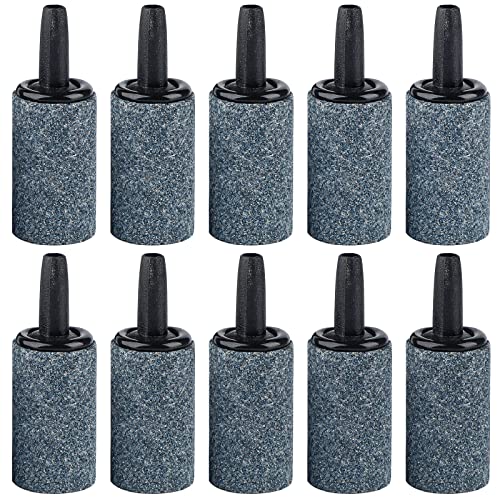
Best for compact aquariums and nano pumps, this 1-inch air stone set offers tiny but enduring bubbles. Each piece weighs 0.3 oz and measures 0.6″ D x 1″ H, designed for continual bubbling in small tanks. The jetting volume is 0.8 L/min, and it uses 3/16″ standard tubing. Ideal for small fish tanks or aquariums and is easy to replace in tight spaces.
Who it’s best for: hobbyists with nano or Betta tanks needing reliable, steady bubbles without crowding the water surface. This set is also suitable for small buckets and quarantine setups. Caution: check compatibility with your nano pump’s power to avoid excessive bubbles in very small volumes.
AQUANEAT Aquarium Air Stones 1 Inch, 12 Pack

Widely applicable for small tanks and hydroponics, these 1-inch cylinders produce dense, steady bubbles. Each unit is compact at 0.55″ D x 1.00″ H and fits 3/16” standard airline tubing. Recommended for extending nutrient solution life in hydroponic setups and for enhancing oxygen in small aquariums.
Best for: aquarists and hydroponics enthusiasts needing reliable oxygen diffusion in multiple small setups. Caution: ensure the tubing matches your pump’s output to avoid under- or over-aeration in ultra-small volumes.
hygger Aquarium Bubble Strip (13.8 Inch)

The hygger bubble strip delivers evenly distributed, anti-clogging micro-bubbles with low noise. Its micro-pressure technology creates ultra-fine bubbles that stay suspended longer, increasing dissolved oxygen in both freshwater and saltwater tanks. It’s self-sinking, constructed from durable PVC and ABS, and designed to stay submerged at the tank bottom.
Best for: larger or long tanks where a continuous, quiet bubble curtain improves oxygenation. Caution: heavier strips may require a stronger pump to maintain a consistent bubble wall without risk of suction line issues.
Pawfly Aquarium Air Stone Disc 1.5 Inch, 4 Pack

This 1.5-inch disc diffuser provides steady, dense bubbles for medium tanks and DWC systems. Each disc weighs 1 oz and jets 2 L/min with 3/16″ tubing. Suitable for fish tanks, small ponds, or hydroponics, it supports constant aeration without overwhelming smaller ecosystems.
Best for: aquarists upgrading from tiny stones in medium tanks or integrating into a simple DWC setup. Caution: verify your pump’s capacity to prevent excess turbulence in delicate plant or fry environments.
Pawfly Aquarium Air Stone Bar Bubbler 8 Inch, 4 Pack

This 8-inch bar diffuser creates a substantial rectangle bubble wall with 2 L/min jetting volume. It’s compatible with tubing sizes of 3/16″ to 3/8″ and is recommended for tanks sized roughly 10-60 gallons. The bar design distributes bubbles across a wider area, improving oxygenation across larger water volumes.
Best for: mid-to-large tanks seeking a uniform diffusion pattern and strong aeration. Caution: ensure your filtration and circulation support the higher output to avoid surface foaming in smaller setups.
Buying Guide: Key Considerations For Bubble Stones
What tank size and shape matter?
Smaller tanks benefit from compact stones (1 inch or smaller) to avoid overwhelming the water column. Larger tanks benefit from longer bars or multiple stones to create a broad bubble curtain and even oxygen distribution.
How dense should the bubbles be?
Denser bubbles increase dissolved oxygen more quickly but can create surface agitation in sensitive setups. For planted tanks or reef-like environments, micro-bubbles that stay suspended longer are preferred.
What tubing sizes and pumps work best?
Most stones use standard 3/16″ tubing. Check your pump’s wattage: nano or low-power pumps suit single small stones, while higher-watt pumps support larger discs or bars for continuous diffusion.
Material and durability considerations
Air stones are typically ceramic or mineral-based materials fused for durability. Durable stones resist clogging and can sustain long-term use, important for continuous aeration in tanks, hydroponics, or DWC systems.
Placement strategies
Place stones near filter outlets or low in the tank to maximize dissolved oxygen distribution. For bar diffusers, position them along the tank width to create a broad bubble wall that covers more water volume.
Maintenance and replacements
Regular inspection for clogging helps maintain airflow. Replace stones showing wear or reduced bubble density. Clean with gentle methods to preserve pore structure and performance.
Safety and compatibility
Ensure compatibility with your aquarium inhabitants. Ultra-fine bubbles are gentle on fry and delicate plants, while high-output diffusers may be unsuitable for small fry environments or heavily planted tanks with sensitive roots.
FAQ
- Are bubble stones safe for fish? Yes. Bubble stones are designed to diffuse air into water and typically do not contact fish directly. Choose appropriate bubble density for your species and tank size.
- How often should I clean a bubble stone? Clean whenever you notice reduced bubble output or visible buildup. Light scrubbing with water (no soap) restores flow.
- Can I use any air pump with a bubble stone? Most stones use standard tubing (3/16″). Check jetting volume and pump wattage to ensure balanced aeration for your tank.
- What’s the difference between a disc and a bar diffuser? Discs provide localized diffusion with compact size; bars create broader bubble walls ideal for larger tanks. Choose based on tank dimensions and desired diffusion pattern.
- Will bubble stones increase algae growth? Aeration itself doesn’t cause algae; it can influence nutrient cycling. Maintain balanced lighting and nutrients to manage algae growth.
- Do bubble stones affect water temperature? Diffusers slightly increase surface agitation but have minimal impact on typical home aquariums. In very small volumes, monitor for temperature changes.