Choosing the right bubble stone can significantly impact oxygenation, water circulation, and overall tank health. This guide highlights five high-performing options that balance quiet operation, durability, and effective bubble production for both freshwater and saltwater tanks. Each product showcases different sizes and materials to fit various aquarium dimensions and aeration needs. Read on to compare features, installation notes, and practical buying considerations to help you pick the best bubble stone for your fish, plants, and hydroponic uses.
Summary of chosen products:
| Product | Brand | Key Benefit | Size |
|---|---|---|---|
| Hygger Nano Bubble Strip | hygger | Ultra-fine bubbles, low noise, self-sinking | 13.8 inch |
| Pawfly Air Stone 1 Inch | Pawfly | Compact, durable, dense bubbles | 1 inch |
| Hygger Air Stone Disc | hygger | High dissolved oxygen, corrosion-resistant | 2 x 2 inch discs |
| Upettools 1.4 Inch Bubble Stone | UPETTOOLS | Dense micro-bubbles, quiet operation | 1.4 inch |
| Pawfly 4 Inch Air Stone | Pawfly | Large-bubble diffusion for bigger setups | 4 inch |
Hygger Aquarium Bubble Strip Nano Air Bubble Curtain

The Hygger Nano Bubble Strip delivers evenly distributed bubbles through a curtain-style outlet, reducing clogging and noise while producing mist-like micro-bubbles. Designed for both freshwater and saltwater tanks, it uses micro-pressure technology to keep fine bubbles suspended longer, increasing dissolved oxygen. The unit is constructed from durable PVC and ABS, and it is designed to self-sink to the bottom of the tank, ensuring stable submersion without floating.
Pawfly Aquarium Air Stone 1 Inch
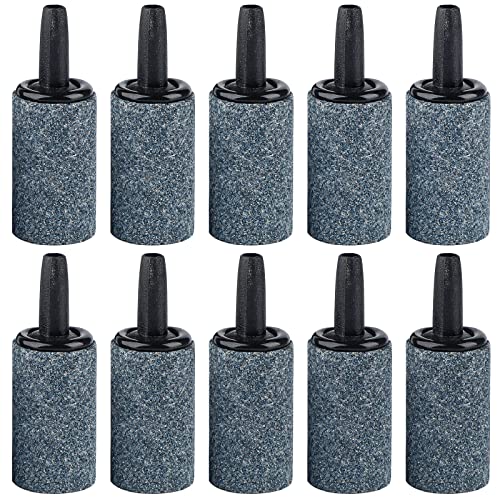
Compact and durable, this 0.6″ diameter by 1″ height air stone is ideal for small tanks or nano setups. It produces dense, medium-sized bubbles that increase oxygen solubility and vitality of aquatic life. Model ASC-025 with a jetting volume of 0.8 L/min fits standard airline tubing (3/16″). It is powered by 2–4 W nano air pumps and is built for long-time service in tight spaces.
Hygger Air Stone Disc 2×2 Inch

This disk-shaped air stone uses high-density corundum sand to create numerous fine bubbles quietly. The copper-chrome plated anti-rust interface provides durability, while the PVC base ensures automatic sinking to the tank bottom. It suits all aquarium types, including freshwater, saltwater, and hydroponic systems, and can be used for broader aeration tasks beyond fish tanks.
Upettools 1.4 Inch Aquarium Air Stone

The 1.4-inch Upettools bubble stone emphasizes a dense cloud of tiny bubbles for a striking curtain effect. It claims a double oxygen-dissolving rate and works well with hydroponics and aquariums alike. Two suction cups aid stable installation on tank walls, making it suitable for quiet operation in homes or offices while improving water quality and fish health.
Pawfly 4 Inch Air Stone
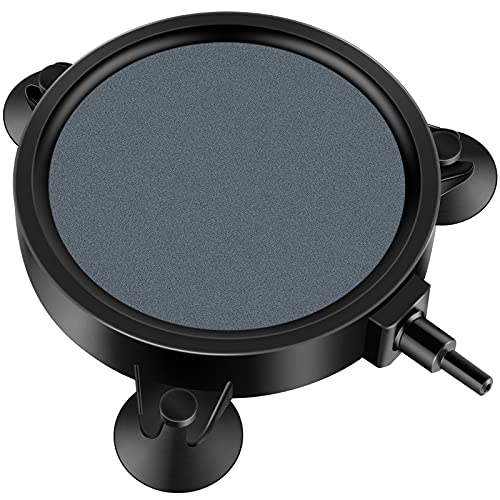
This larger Pawfly air stone supports bigger tanks and reservoirs with abundant dense bubbles. It is made from mineral materials sintered at high temperatures to avoid harming aquatic life. Suitable for aquariums, DWC systems, ponds, and other large-scale setups, it delivers robust diffusion and reliable long-term performance.
Buying Guide: Key Purchase Considerations And Comparisons
- Bubble size and density: Fine or ultra-fine bubbles improve gas exchange and oxygenation but may require compatible air pumps. For smaller tanks, compact stones (1 inch) typically suffice; larger tanks benefit from bigger stones (4 inches).
- Material and durability: Look for corrosion resistance and long-term stability, especially in saltwater or hydroponic environments. PVC, ABS, and mineral or corundum-based stones are common choices.
- Submersion and mounting: Self-sinking designs prevent constant adjustment and reduce visible equipment clutter. Some stones use suction cups for wall mounting; others sink automatically to the bottom.
- Noise level: Quiet operation is important in living spaces. Micro-porous or nano bubble stones often run more quietly than larger air stones, particularly when paired with low-noise pumps.
- Tank size and setup compatibility: For nano or dwarf setups, smaller stones with modest airflow suffice. For larger display tanks or rooms with higher oxygen demands, multi-stone configurations or larger discs deliver better circulation.
- Maintenance and clog resistance: Anti-clog designs and materials that resist mineral buildup extend life and maintain consistent bubble output over time.
- Beyond aquariums: Some stones are suitable for hydroponics, ponds, or DWC systems, offering flexible oxygenation options beyond standard fish tanks.
Consider pairing a bubble stone with an appropriate air pump that matches the stone’s recommended airflow range. Regular maintenance, including cleaning the stone surface and tubing, will help sustain bubble quality and tank health. When selecting a stone, balance size, output, noise, and durability to align with your specific aquarium dimensions, fish species, and plant life. The listed products provide a range of options to fit most home aquariums and small-scale hydroponic setups.