If you’re looking to raise fry safely while keeping adults separated, a dedicated breeding box can dramatically increase survival rates. This guide highlights five dependable options, explaining who each is best for, how they work, and potential limitations. It’s written for hobbyists, first-time breeders, and anyone managing delicate fry in community tanks. Below is a quick, practical buying table to compare key points at a glance.
| Product | Best For | Key Benefit | Limitations |
|---|---|---|---|
| Pawfly Medium Hatchery Box | Small fry and Betta/Guppy setups | Three-room design with two removable separators; floats securely | May be too large for very tiny tanks |
| Pawfly Small Hatchery Box | Tiny fry and shrimp rearing | Compact, prevents escapes with slotted bottom | Smaller capacity limits fry numbers |
| Fluval Large Multi-Chamber Box | Active breeders needing multiple separate spaces | Up to three compartments; flexible for acclimation | Requires separate air pump and tubing |
| Pawfly Large Hatchery Box | Guppy, Betta, Platy with bigger fry | Largest internal footprint among Pawfly options | Creature-friendly may still need frequent monitoring |
| AQUANEAT Large Mesh Net Breeder | Community-tank breeders and beginners | Soft mesh with suction cups for easy mounting | Mesh quality and sizing may affect tiny fry |
Pawfly Medium Hatchery Box Acrylic Hatchery Tank
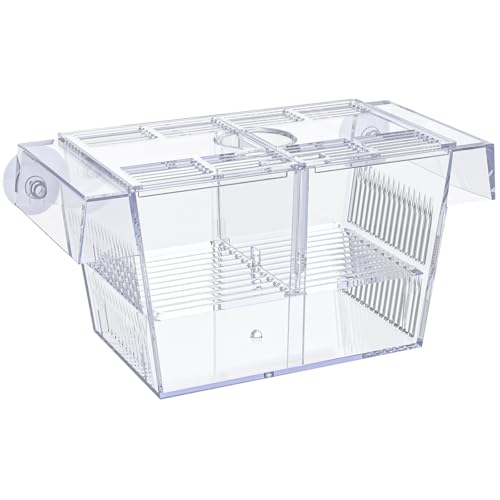
The Pawfly Medium Hatchery Box uses an inner chamber measuring 5.3″ L x 3.5″ W x 3.9″ H to protect newborn fry from being eaten or attacked. The three-room design—achieved with two removable separators—lets the hatchery serve as a dedicated fry nursery while the other spaces isolate aggressive or sick fish. Floating design with a balancing panel and two handles helps the unit stay buoyant, and two suction cups secure it inside the tank. Best for: small-scale setups with Betta, guppy, or shrimp fry that need a dedicated hatchery. Caution: in busy tanks, bulky presence may obstruct feeding or water flow in some configurations.
Pawfly Small Hatchery Box for Tiny Fry

The Small Hatchery Box is an even more compact option with an inner size of 4.2″ L x 2.7″ W x 2.8″ H. It’s designed to protect newborn fry from being eaten by larger tank mates and is suitable for feeding very tiny fry or shrimp. The box features a slotted bottom panel to reduce debris buildup and prevent fry escape. Floating design remains standard with two handles and suction cups. Best for: tiny fry in nanos or densely populated setups where space is at a premium. Caution: the compact design may limit the number of fry you can rear at once.
Fluval Large Multi-Chamber Breeding Box

The Fluval Large Multi-Chamber Box offers up to three separate housing compartments, ideal for protecting fry, isolating weak or injured fish, and acclimating new arrivals. While it attaches to most aquariums up to 1″ thick, it requires an air pump and airline tubing (sold separately) to maintain water circulation. This setup helps prevent fry predation and provides a safe hatchery environment during early development. Best for: breeders needing multiple, independent spaces within one tank. Caution: requires additional accessories, which adds setup complexity and cost.
Pawfly Large Hatchery Box for Bigger Fry

The Large Hatchery Box provides a larger interior footprint at 6.8″ L x 4″ W x 3.9″ H. It expands the same three-room concept, enabling a bottom hatchery space plus two isolating compartments for aggressive or sick fish. Floating design with two handles and suction cups keeps the unit stable in most community tanks. Best for: growing fry populations or larger species like guppies and platies. Caution: size may be excessive for very small or densely stocked tanks.
AQUANEAT Large Mesh Net Breeder

This AQUANEAT Large Mesh Net Breeder uses a soft polyester net with a plastic frame and includes suction cup mounting for easy placement in any tank. Nylon mesh isolates pregnant females and protects newborn fry while allowing continuous water flow. It’s particularly versatile for community tanks where temporary isolation is needed without a full hatchery setup. Best for: hobbyists seeking a simple, non-wooden option that works with a variety of small to mid-sized fry. Caution: mesh size and net durability should be checked to ensure it suits your fry size and tank weight.
Buying Guide: Key Considerations And Comparisons
What should you look for when choosing a breeding box? Consider size versus tank space, the number of compartments, ease of cleaning, and how it affects water flow and feeding. Larger boxes provide more room for fry and multiple separation zones but occupy more space. Systems with 2 separators creating three rooms are versatile for isolating breeding pairs from fry, while compact options suit nano-tank setups.
- Sizing: Match the hatchery box interior to the expected fry size and number. Tiny fry require smaller, slotted designs to prevent escapes; larger fry benefit from bigger bays.
- Floats and stability: Floating designs help maintain position; suction cups reduce movement in active tanks. Ensure your tank walls aren’t too curved for proper suction.
- Materials and cleaning: Acrylic and plastic are common. Look for smooth interiors to ease cleaning and minimize algae buildup that could trap fry.
- Air circulation: Some multi-chamber systems require an air pump for circulation. If you don’t have pump access, choose a model designed for passive circulation or mesh nets.
- Maintenance: Easier-to-remove separators and removable components speed up cleaning between batches.
Frequently Asked Questions
- What’s the main purpose of a breeding box?
- Do all breeding boxes need an air pump?
- Can breeding boxes be used in community tanks?
- Which size is best for a first-time breeder?
- Are mesh breeders reliable for tiny fry?
- What is a key limitation to watch for?
It isolates fry from adult fish, reduces predation, and provides a controlled space for early development.
No. Some models rely on tank water movement and suction-based circulation, but many multi-chamber systems benefit from a small air pump for proper aeration.
Yes, especially models with multiple compartments that allow safer isolation of fry while the rest of the tank remains active.
Start with a compact, easily mountable option that fits your tank and allows you to observe fry growth without crowding.
Mesh breeders are effective for tiny fry and shrimp when the mesh size fits the species; ensure the fry cannot escape through the openings.
Compatibility with tank dimensions and the need for extra accessories (air pump, tubing) can affect setup complexity and ongoing maintenance.