If you’re building a vibrant freshwater setup, blue parrot fish offer striking color, distinctive beaklike mouths, and engaging personalities. This guide highlights five well-suited blue parrot and related blue-tinned cichlid options from Amazon, each chosen for beginner-friendly care, community tank compatibility, and eye-catching color. The buyer personas: hobbyists seeking vivid focal fish for smaller tanks, mid-range aquarists expanding color variety, and those prioritizing peaceful, social species in mixed galleries.
The following table provides a quick snapshot of the selected products, including their best-use scenario and any notable considerations. Use it to compare at a glance before diving into each product section.
| Product | Best For | Key Consideration |
|---|---|---|
| 2-Pack Blue Tiger Parrot Cichlid 1” – Santboz | Peaceful community tanks, beginner to intermediate | Hybrid color, small size, grows with care |
| Swimming Creatures Rainbowfish (Blue Eyes) | Active schools, color + movement | Needs group and stable water parameters |
| Live Fish – 2-Pack Blue Tiger Parrot Cichlid 1” – Generic | Introductory use, varied tank mates | Broad selection, easy acclimation |
| Quinn’s Fins Blue Tiger Parrotfish | Medium to large tanks, semi-aggressive community | Display-friendly, territorial nuances |
| German Blue Ram Cichlid (3 Fish Pack) | Colorful, compact centerpieces in peaceful tanks | Delicate pairing, careful tank mate choice |
2-Pack Blue Tiger Parrot Cichlid 1” – Santboz

Best for: beginners and community tanks needing color and calm temperament. These blue tiger parrots blend a rounded parrot body with blue-gray hues and subtle orange highlights, offering a peaceful, social presence in planted or community setups. Shipped young at about 1 inch, they develop vibrant color as they mature, making them a dynamic focal point over time.
Why selected: their unique hybrid look and gentle demeanor make them a reliable centerpiece or accent fish for hobbyists seeking color without demanding high aggression compatibility. A potential limitation is their need for stable water quality as they grow—regular maintenance supports best display.
Care notes: suited for community tanks with compatible tankmates; monitor compatibility with more aggressive species to preserve their peaceful temperament.
Swimming Creatures Freshwater Rainbowfish (Blue Eyes)

Best for: aquarists who want lively movement and color in a school. The Rainbowfish features delicate featherlike fins, iridescent bodies, and bright blue eyes, which create a graceful display when kept in groups in a stable community tank.
Why selected: this species thrives in groups, adding visual depth and motion to the aquarium. They pair well with other peaceful community species and gentle bottom dwellers. Caution: provide adequate swimming space and maintain water parameters within the species’ preferred range (pH roughly 6.5–7.5, 72–78°F) to keep colors vivid and behavior calm.
Live Fish – 2-Pack Blue Tiger Parrot Cichlid 1” – Generic

Best for: beginners seeking dependable, colorful parrots for community tanks. This option emphasizes easy acclimation and broad availability among common tank setups.
Why selected: the product line emphasizes beginner-friendly handling and active, vibrant fish suitable for first-time keepers. Limitation: choose tank mates carefully to avoid stressing outgoing parrot cichlids, and ensure compatible filtration for stable water quality.
Quinn’s Fins Blue Tiger Parrotfish

Best for: mid-to-large tanks with semi-aggressive company. The Blue Tiger Parrotfish stands out with a bright body and beaklike mouth, offering a striking centerpiece alongside other larger, similarly temperamental species.
Why selected: its growth potential (up to 8–10 inches) favors aquarists planning bigger displays. Best used with caves and open swimming space so the fish can explore. Limitation: territorial tendencies require careful tank-mate selection to avoid small fin-nipping species.
German Blue Ram Cichlid (3 Fish Pack) – Aquaticheavens
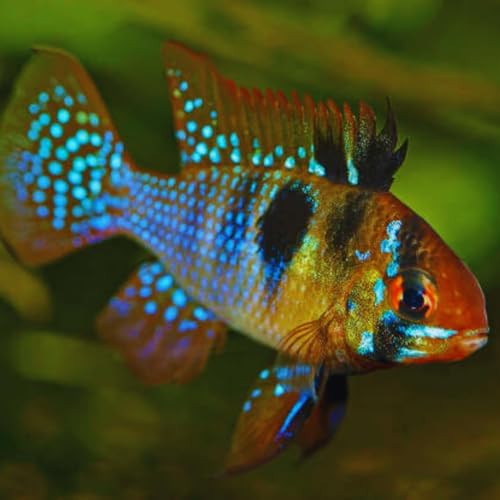
Best for: aquarists desiring compact, vividly colored centerpieces in peaceful tanks. The German Blue Ram, Mikrogeophagus ramirezi, is prized for its bright blue coloration and delicate patterns, with a golden or yellow tone on its body in many individuals.
Why selected: compact size and a striking palette make it ideal for smaller tanks or as a contrast to color-rich parrots. Caution: these fish can be sensitive to water conditions, and careful monitoring of tank mates is recommended to avoid stress or aggression in mixed species setups.
Buying Guide
What to look for when shopping for blue parrot and blue-toned cichlids:
- Tank size and layout: Parrot cichlids can vary in size; plan for enough space and hiding spots to reduce stress and aggression.
- Social behavior: Most blue parrots are compatible with peaceful or semi-aggressive tank mates; avoid small, slow, or fin-nipping species in mixed tanks.
- Water parameters: Many cichlids prefer stable pH around neutral to mildly alkaline and warm tropical temperatures; maintain consistent filtration and water changes.
- Color development: Some individuals reveal richer coloration as they mature; plan for a few weeks to observe peak display.
- Schooling vs. solitary display: Rainbowfish need groups to show best color; parrots are often more visually engaging when given appropriate space and companions.
- Feeding: Most of these species are omnivores; offer high-quality flakes, pellets, and occasional live or frozen foods to enhance color and health.
Frequently Asked Questions
- Are blue parrot cichlids good for beginners?
Yes, particularly the smaller, peaceful hybrids and beginner-friendly packs, provided water quality is maintained and tank mates are chosen carefully.
- What tank size do blue parrot cichlids need?
Smaller hybrids can thrive in 20–29 gallon setups if kept in peaceful community tanks; larger species or pairs may require bigger tanks with ample swimming space.
- Do rainbowfish mix well with parrots?
Rainbowfish can mix well with peaceful parrots in a stable tank, but ensure the group size is sufficient to showcase their color and that water parameters suit all species.
- What should I feed blue parrot fish?
Offer a varied diet including high-quality flakes or pellets, plus occasional live or frozen foods to promote color and health.
- Are German Blue Rams compatible with blue parrots?
They can be kept together in larger, well-managed tanks, but RAMs can be sensitive; monitor behavior and provide ample hiding spaces.
- What is a key caution when buying these fish online?
Look for reputable sellers, ensure proper shipping conditions, and quarantine new fish to prevent disease spread in your aquarium.