Answering the question “which biofilter is best for my fish tank?” this guide highlights five reliable options that support clear water and stable cycles. Each product is suitable for different tank sizes and fish populations, helping you choose based on filtration type, maintenance needs, and space. The buyer is typically looking for reliable biological filtration, debris removal, and easy integration with existing canister or sponge systems. The table below summarizes the five recommended products and their ideal use cases to help you compare at a glance.
| Product | Best For | Fit / Size | Notes |
|---|---|---|---|
| Tetra Whisper Bio-Bag Medium Filter Cartridges | Small tanks up to 10 gallons | PF-10, IQ 10 | Convenient replacement cartridges |
| Fluval BioMax Biological Material | Crystal clear water, large tanks | Compatible with multiple Fluval models | Biological media for ammonia/nitrate control |
| Pawfly Aquarium Corner Sponge Filter | Betta and small community tanks | Up to 50 gallons | Multi-layer sponge with gravels and ceramic rings |
| ALEGI Aquarium Sponge Filter Pad | Customizable filtration for mid-sized tanks | 20″x20″x1″ (20PPI) | Cut-to-size foam for flexibility |
| Sukh Ceramic Bio Balls | Open filtration areas in sumps and canisters | 15 oz | Quartz-based bio-media for stable filtration |
Tetra Whisper Bio-Bag Medium Filter Cartridges for Aquariums
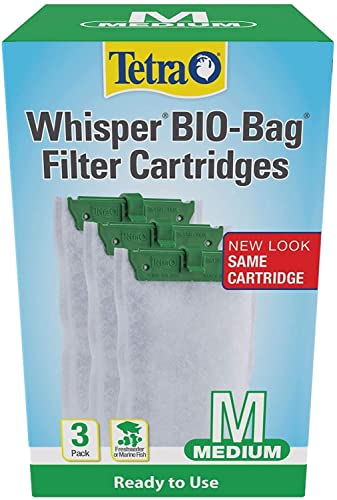
Best for small tanks that require simple, ready-to-use replacement cartridges. These medium cartridges are designed to fit Tetra Whisper water filters for 5-10 gallon setups, making them a straightforward option for beginners or quick-titers. Features include replacement carbon for odor and discoloration removal and a dense mesh to catch debris and fish waste. This option simplifies maintenance because the color-coded sizing helps ensure you buy the correct cartridge for your filter. Use this when you prioritize ease of use and consistent performance in compact aquariums.
Who it’s for: hobbyists managing small tanks or set-and-forget maintenance routines. Why selected: reliable brand compatibility and straightforward replacement process. Caution: only suitable for PF-10 and IQ 10 Whisper filters; mixing with non-compatible units may reduce filtration efficiency.
Tetra Whisper Bio-Bag Large Filter Cartridges for Aquariums

Best for larger community tanks or those upgrading from small setups, these large cartridges are designed to fit Tetra Whisper filters for 10-30 gallon (and larger 20-40 gallon through broad IQ and PF series) configurations. They come as unassembled carbon filters with dual-sided mesh to trap debris and odors effectively. The color coding helps distinguish sizes, aiding quick reorder decisions. Choose this if you’re expanding or maintaining a mid-to-large aquarium with a Whisper filter system.
Who it’s for: mid-sized to larger tanks that need robust, ongoing carbon-based filtration. Why selected: versatility across several Whisper filter models; ready-to-use replacement cartridges save time. Caution: ensure you have a compatible large Whisper filter model before purchasing, to avoid fit issues.
Pawfly Aquarium Corner Sponge Filter

Best for small to mid-sized tanks, particularly those using corner placement to maximize space. This filter combines mechanical and biological filtration through a multi-layer sponge that traps debris without pulling in fish. Gravels and ceramic rings inside absorb and release trace elements, fostering beneficial bacteria growth. It is sized for tanks from roughly 20 to 50 gallons, with customizable sponge sequences to adapt to stocking density. Choose this for flexible filtration that supports crystal-clear water without aggressive water flow.
Who it’s for: aquarists needing customizable, space-efficient filtration. Why selected: layered approach supports both mechanical and biological processes. Caution: requires an air pump (not included) to operate, and placement must be considered to avoid dead zones in corners.
Sukh Ceramic Bio Balls

Best for open filtration areas in sumps, canisters, or external hang-on systems. Ceramic bio balls provide a stable, inert surface for beneficial bacteria to colonize, which supports ammonia and nitrate control over time. Their porous surface enhances water contact and oxygen exchange, contributing to clearer water. They are suitable for both freshwater and saltwater setups and can be used in various canister or sump configurations. Choose this if you want durable, low-maintenance biological media that won’t alter water chemistry.
Who it’s for: aquarists expanding biological filtration with dependable media. Why selected: robust, long-lasting bio-media that supports steady nitrogen cycling. Caution: media alone does not filter debris; pair with mechanical filtration to manage particulates.
Buying Guide
What type of filtration does your tank need? Biological media like ceramic rings and bio balls promote beneficial bacteria, while sponge filters provide mechanical and biological filtration with gentle flow—great for delicate fish. Consider tank size and stocking level to determine whether you need cartridge-style replacements, plug-in canister media, or customizable sponge systems.
What should I consider before buying?
- Tank compatibility: Check that the filter media fits your filter model and tank size.
- Filtration balance: Combine mechanical and biological media to manage debris and nitrogen compounds.
- Maintenance cadence: Some cartridges are ready-to-use; others require assembly or periodic rinsing.
- Flow rate and oxygenation: Ensure the chosen media does not create excessive current for your fish, particularly for bettas or slow-swimming species.
- Space and placement: Corner or internal filters save space; canisters offer greater filtration capacity for larger tanks.
How to optimize a biofilter setup?
- Layer media so water passes first through mechanical debris removal, then through biological surfaces.
- Rinse media in tank water (not tap water) during maintenance to preserve beneficial bacteria.
- Match media to your filtration goals: rapid ammonia reduction, nitrate control, or water clarity.
Common questions about biofilters
- Q: Do I need a biological filter if I have a gravel substrate? A: Yes, biological media provides surface area for bacteria beyond what gravel alone offers.
- Q: How often should I replace filter cartridges? A: Replacement frequency depends on usage, but follow manufacturer guidance and monitor water quality.
- Q: Can I mix different media in one system? A: Yes, but maintain a logical flow sequence to maximize filtration efficiency.
- Q: What’s the best setup for a beginner? A: A simple sponge filter or a ready-to-use cartridge system paired with a routine water test.
- Q: Will ceramic bio balls change pH? A: They are inert and generally do not alter pH significantly.
FAQ
- What media should I start with for a new tank? – Start with a combination of mechanical (sponges) and biological (ceramic, bio balls) media to establish quick and stable filtration.
- Are cartridges better than sponge filters? – Cartridges are convenient for replacement; sponge filters offer flexible customization and gentle flow for some species.
- Can biofilters harm my fish? – If flow is too strong or media are dirty, water movement and contaminants can stress fish; maintain appropriate flow and clean media.
- How do I know if my biofilter is working? – Regular ammonia, nitrite, and nitrate testing helps assess filtration effectiveness and bio-load balance.
- Should I upgrade for a larger tank? – Yes; larger tanks often require additional biological media or more robust filtration to maintain water quality.
- Is it necessary to use all five media types in one system? – Not always; design based on tank size, bioload, and maintenance preference.