The best automatic fish feeder picks deliver reliable, scheduled feeding for different tank sizes and fish types. This guide highlights five well-rounded options and explains who should choose each one. Ideal buyers include busy professionals, frequent travelers, families with kids learning responsibility, and hobbyists seeking precise portion control. Below, compare capacities, feeding modes, and setup simplicity to find the right fit for your aquarium needs.
| Product | Capacity | Best For |
|---|---|---|
| Aoyar Automatic Fish Feeder (200ml) | 200 ml | Small to mid-size tanks; holiday feeding |
| FISHNOSH Automatic Fish Feeder (New Gen 2026) | Multiple feedings per day | Busy households; flexible daily schedule |
| Petbank Automatic Fish Feeder | 16-grid, 15 meals adjustable | Varied diets; moisture-resistant design |
| FISHNOSH Model-ML | 3 feedings per day | Betta and small tanks; simple operation |
| Freesea Automatic Fish Feeder | 7–14 day capacity | Vacation feeding; versatile tank types |
Aoyar Automatic Fish Feeder: 200ml, 3 Feeding Modes

Best for: Small to mid-size freshwater setups and travelers seeking a simple, timed feeding solution. This model offers three fixed intervals (8, 12, or 24 hours) and a manual mode for on-demand feeding. The 200 ml capacity supports extended gaps between refills, reducing daily maintenance while away from home. The moisture-proof lid helps keep flakes and pellets dry, minimizing clumping. Caution: The feeder is designed for small fish feed portions; larger or fast-moving feeds may require more frequent refills.
FISHNOSH Automatic Fish Feeder New Gen 2026

Best for: Households needing up to nine feedings daily with a compact form factor. This model emphasizes programmable precision to support routine schedules for multiple fish species and larger setups, including ponds and bigger tanks. It accommodates diverse foods and is designed for straightforward operation, helping kids or beginners manage feeding times. Caution: Ensure the food type stays compatible with the feeder’s dispensing mechanism to prevent jams.
Petbank Automatic Fish Feeder: Moisture-Proof Precision

Best for: Hobbyists who want high-precision portion control and flexible installation. Petbank features 16 feeding grids, allowing up to 15 separate meals with 2 g per grid, which helps tailor portions and avoid overfeeding. It offers two mounting options—clamp base or suction cup—so it fits a wide range of tanks. The fully sealed interior minimizes moisture exposure, reducing clumping. Limitation: It’s not recommended for shrimp or flakes, so verify your food type before purchase.
FISHNOSH Model-ML Automatic Feeder

Best for: Bettas and small tanks requiring a simple, reliable schedule. This model supports up to three feedings per day with one round per feeding and offers easy refill and manual feed options. It is designed for straightforward operation without a display screen, which can appeal to users who want a quick setup. Caution: Some users may prefer a display for precise timing; consider a model with a screen if you require advanced scheduling clarity.
Freesea Automatic Fish Feeder: 3 Timers, 200ML
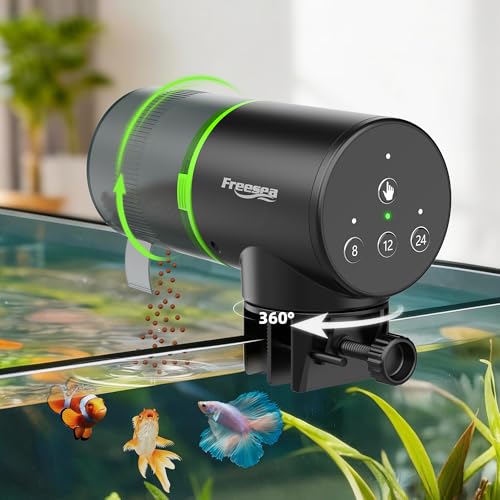
Best for: Aquarists seeking a versatile vacation feeding solution that supports multiple tank types. Freesea advertises three timers and a moisture-resistant lid, assisting in maintaining dry food during longer trips. The 200 ml capacity supports a moderate refilling interval, and the one-touch setup makes it accessible for beginners. Caution: Ensure the feeder is compatible with your food form (powder, pellets, or flakes) and size; some batch types may require smaller portions to prevent clogging.
Buying Guide: Key Purchase Considerations
- Feeding schedule needs: Do you need 3 daily feedings, up to 9 feedings, or longer-term vacation coverage?
- Capacity requirements: Larger tanks and fish with higher metabolism may demand bigger reservoirs.
- Food compatibility: Confirm support for flakes, pellets, granules, and strips.
- Moisture control: Moisture-proof lids help prevent clumping in humid environments.
- Mounting options: Clamp or suction cup attachments affect compatibility with rimless and framed tanks.
- Ease of use: Look for one-button settings or simple, manual feeding when needed.
- Power source: Battery, USB rechargeable, or plug-in options influence placement and maintenance.
- Usage scenario: Vacation, daily care, or busy schedules—match features to your routine.
Practical tips for installation and use
- Test the feeder with your tank water and food type before leaving for an extended period.
- Begin with small portions; adjust to avoid overfeeding and water quality issues.
- Keep a backup plan, such as a neighbor checking in, when relying on automatic feeders for long trips.
FAQ
- How many meals can these feeders handle per day?
– Most models support 3 to 9 feedings per day, depending on the unit. - Are these feeders suitable for all fish and food types?
– They support many common foods, but always verify food compatibility for flakes, pellets, and strips per model. - Do these feeders require batteries or can they be USB charged?
– Some models use batteries, others are USB rechargeable; check the product page for specifics. - Is moisture protection important?
– Yes, moisture-resistant designs help maintain dry food and reduce clumping in humid environments. - Can I install them on any aquarium?
– Most offer multiple mounting options, but compatibility depends on tank type and cover style.