Answering what to buy: choose an automatic fish feeder timer that matches your tank size, feeding schedule needs, and how often you’re away. This guide highlights five reliable options, with clarity on who each is best for and why it fits. Ideal buyers include busy professionals, travelers, small-tank keepers, and hobbyists seeking precise portions. Use the quick comparison table below to start.
| Product | Best For | ||
|---|---|---|---|
| FISHNOSH New Generation 2026 | Busy pet owners with small to large tanks | Up to 9 feedings per day; simple refill after setup | Some users prefer LCD feedback |
| Petbank Moisture-Proof Feeder | Tap-friendly, moisture-prone setups | Moisture-sealed design; two mounting methods | Not for shrimp or flakes |
| DXOPHIEX Automatic Feeder | Flexible power options and hooded tanks | Batteries or USB; dual mounting options | Basic display without screen |
| FREESEA 3-Timer Feeder | Vacation travelers and multi-tank setups | Three programmable timers; 7–14 day capacity | Setup simplicity varies by user |
| Papettly LCD Feeder | Wide food types and diverse schedules | 15 compartments; multiple portions per session | Not suitable for flakes or shrimp |
FISHNOSH New Generation 2026 Automatic Fish Feeder

The FISHNOSH New Generation 2026 feeder provides automatic dispensing for small to large tanks and ponds. It supports up to 9 feedings per day, with a straightforward setup that helps busy owners maintain a regular routine. Best for households with varied schedules where several daily feedings are beneficial for fish health. A clear instruction set makes refilling simple without removing the device.
Who it’s best for: aquarium owners who need a flexible, timer-based solution for multiple daily feedings and easy maintenance. Why selected: high feeding frequency capability combined with simple operation makes it suitable for fish that benefit from structured feeding schedules. Caution: ensure the device is properly sealed in humid environments to prevent moisture ingress.
Petbank Automatic Fish Feeder With Moisture-Proof Design

The Petbank feeder emphasizes moisture resistance and precision. It houses 16 feeding grids, enabling up to 15 meals and accurate portions of up to 2 g per meal. It offers two installation methods: clamp base for open-tank setups and suction cup for covered tanks. Best for tanks prone to humidity and owners who value dry, consistent portions. Not ideal for shrimp or flakes, per its design notes.
Who it’s best for: owners with varied food types and moisture concerns, needing reliable dry portions. Why selected: the dual mounting options and sealed design address common moisture problems that affect older feeders. Caution: not designed for shrimp or flake foods, which may require alternative feeders.
DXOPHIEX Automatic Fish Feeder for Aquarium

The DXOPHIEX feeder offers flexible power options, including two AA batteries or USB power, with automatic feeding every 8, 12, or 24 hours and a manual feed mode. It supports two mounting methods to fit tanks with or without hoods. Best for users who need a versatile power setup and a straightforward, durable device. Caution: some users may miss a display screen for quick status checks.
Who it’s best for: those who travel or experience power outages, thanks to battery and USB redundancy. Why selected: dual power options and simple operation make it dependable in variable conditions. Avoid if you rely on a fancy display for monitoring feed times.
FREESEA Automatic Fish Feeder
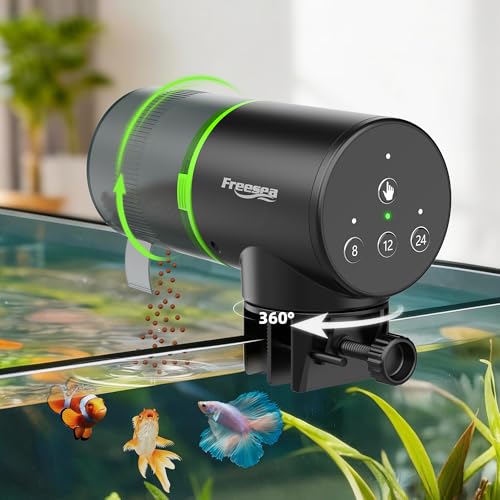
FREESEA presents three programmable timers with a 200 ml dispenser and adjustable portions. It supports a 7-14 day feeding window, making it suitable for longer trips. It’s designed for both freshwater and saltwater tanks and works with betta, goldfish, koi, and turtles. Best for vacation keepers who need hands-free feeding across multiple days. Caution: some users may find the initial setup more involved than simpler models.
Who it’s best for: travelers and busy tank owners needing extended vacation coverage. Why selected: three timers and a generous hopper support longer time away from home. Choose this if you want a balance of capacity and reliability; avoid if you require ultra-simple setup.
Papettly Automatic Fish Feeder With LCD Display

Papettly’s feeder is designed for versatility, featuring 15 compartments and the ability to dispense up to 2 g per session. It supports up to three daily feedings with flexible frequencies and alternating day feedings through an LCD display. Best for owners using varied foods and demanding precise portioning. Note: not suitable for flakes or shrimp foods, which limits some dietary options.
Who it’s best for: aquarists requiring diverse feeding options and detailed timing. Why selected: the large compartment array and adjustable portions provide robust control for a range of fish diets. Caution: the device is not compatible with all food types, particularly flakes or shrimp foods.
Buying Guide: Key Considerations for Automatic Fish Feeders
- Feeding frequency and portions: Decide how many daily feedings you need and whether you require tiny or larger portions to prevent overfeeding.
- Power options: Consider models with battery backup, USB power, or both to avoid gaps during outages or travel.
- Moisture protection: Moisture-proof designs help prevent clumping and jams, especially in humid rooms or open-tank setups.
- Tank compatibility: Check mounting methods (clamp vs suction) and hopper capacity to fit your tank size and lid type.
- Food type compatibility: Ensure the feeder supports the types you use (pellets, small pellets, powders) and note any restrictions on flakes or shrimp foods.
- Programmability: Determine whether you need simple 3-time schedules or more complex multi-day patterns with alternating days.
- User interface: LCD displays and straightforward operation reduce setup complexity and mistakes during travel.
Frequently Asked Questions
- How many feedings per day should I schedule? – Most hobbyists set 1–3 feedings per day; larger or more active species may require more frequent small feedings.
- What hopper capacity is best for vacations? – A larger hopper (200–500 ml) reduces refills during longer trips, though 7–14 day options exist.
- Can these feeders work with all tank types? – Most work with open-top and hooded tanks, but always verify mounting options for your aquarium lid.
- Are moisture-proof designs worth it? – Yes, especially in humid rooms or tanks near humidifiers, as they minimize clogging and wasted food.
- Is a display screen necessary? – Not strictly; basic models without displays can be adequate but may require more manual checks.
- Can I use them for turtles or other aquatic pets? – Some models support mixed diets and larger portions suitable for turtles, but confirm capacity and compatibility first.