Looking for an automatic fish feeder for small tanks? This guide highlights five reliable options that keep bettas, guppies, and other small-finned residents fed on schedule, even when you’re away. Each product is suited to different needs—from simple 2-3 daily feedings to more precise portion control for multiple fish. The top picks favor compact designs, moisture resistance, and easy setup to help you pick the right feeder for your tank size and feeding routine.
Buyer summary table:
- FISHNOSH ML — Best overall simple programmable feeder for small tanks; easy refill; up to 3 feedings per day.
- Petbank USB Rechargeable — Best for moisture resistance and precision control with multiple feedings; LCD display for quick setup.
- Aoyar 200ml — Best for larger small tanks; three fixed intervals and moisture-proof lid; flexible mounting options.
- FISHNOSH Blue 2026 — Best for multiple daily feedings (up to 9) and kid-friendly operation; clear setup guidance.
- FREESEA 3-Timer — Best for users who need a simple 3-timer vacation solution with long-lasting capacity.
FISHNOSH Automatic Fish Feeder ML – Small Tank Compatibility

Best for straightforward scheduling. The ML model lets you set up to three feedings per day with one round per feeding, making it ideal for small tanks and busy owners who want reliable daily routines. It’s designed for stress-free operation and easy refilling, with a simple window and spare part included. The main limitation is the absence of a display, which means setup relies on a basic control system rather than a screen-guided interface. Best for: owners who want a low-friction, timer-based feeder for predictable meals in small tanks.
Petbank Automatic Fish Feeder – Moisture-Proof Precision

Best for moisture resistance and precise portions. This feeder includes 16 grids, enabling up to 15 individual meals with accurate 2g portions. It supports two installation methods (adjustable clamp base or suction cup), and its fully sealed design reduces moisture intrusion, helping prevent clumping. Not ideal for shrimp or flakes. Best for: owners who need consistent portions and a flexible mounting solution for varied aquariums.
Aoyar Automatic Fish Feeder – Large Capacity 200ml

Best for flexible daily routines in small tanks. This feeder offers three fixed intervals and a manual feeding option. The 200ml capacity supports longer trips, and a moisture-proof lid reduces humidity-related clumping. It’s suitable for small fish like tetras or bettas, but larger pellets may need careful portioning. Best for: households needing a mid-size automatic feeder with reliable interval control and a simple interface.
FISHNOSH Blue 2026 Automatic Fish Feeder – Up To 9 Feedings

Best for complex schedules in small to medium tanks. This newer generation feeder can be programmed for up to nine feedings per day and three rounds per feeding, offering a flexible routine for more demanding schedules. It emphasizes simple setup and refill, with kid-friendly operation. A potential limitation is the absence of a display, which may slow setup for users who prefer screen guidance. Best for: busy multi-pet households needing a robust daily feeding plan with easy maintenance.
Freesea Automatic Fish Feeder – 3 Timers With 200ml
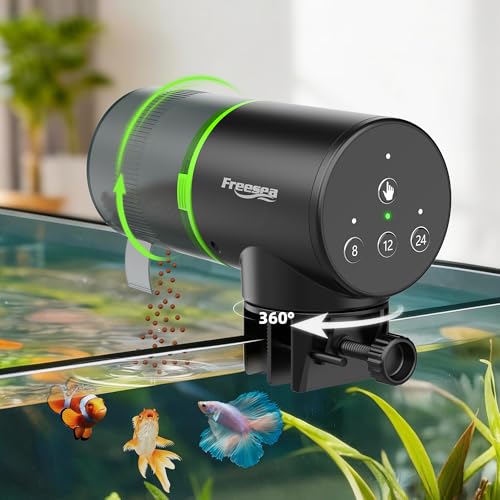
Best for simple vacation feeding. Freesea offers three timers, a 200ml dispenser, and a moisture-resistant design, focusing on straightforward setup and dependable daily feeding for bettas, goldfish, turtles, and similar small tanks. It aims to minimize missed feedings during travel. Best for: users seeking a plain, reliable 3-timer solution with moisture resistance and quick setup. Limitations may include fewer advanced customization options than multi-week timers.
Buying Guide: Key Considerations For Choosing The Right Automatic Fish Feeder
- Ensure the feeder’s hopper capacity matches your tank’s needs. Larger tanks and multiple small fish may benefit from higher capacity or multiple feeding grids.
- Consider how many feedings per day you want and whether precise portions are necessary to prevent overfeeding.
- Moisture-proof lids or sealed chutes help prevent food clumping, especially in humid environments or with powder-based foods.
- Look for clamp bases, suction cups, or lid-maintenance compatibility with your tank setup to ensure stable positioning.
- Simple setup and refill processes reduce the risk of human error during busy schedules or vacations.
- USB rechargeable vs. battery power can affect long-term convenience and reliability for extended trips.
- Check whether the feeder supports pellets, flakes, powders, or mixed diets to fit your fish’s needs.
- Consider products with accessible customer support and straightforward replacement parts if needed.
Frequently Asked Questions
- How often should I feed small fish with an automatic feeder? For small, active fish, multiple smaller meals per day are often better than one large portion. Choose a feeder with adjustable portions and several feeding times per day.
- Can I use flakes in all automatic feeders? Some feeders support flakes; others are designed for pellets only. Check the product notes for compatibility with your food type.
- Will moisture ruin the food in the hopper? Moisture-resistant lids and sealed compartments help prevent clumping. Always ensure proper storage and avoid placing the feeder in direct humidity exposure when possible.
- Is a display screen necessary for setup? Not always. Several models use simple buttons and indicators. A screen can help with precise programming, but many models are straightforward to configure.
- How long can a feeder last on a single charge? USB-powered feeders vary; some promise months of operation on one charge depending on usage. Check the manufacturer’s stated battery life for your model.
- What’s the best feeder for travel or vacations? Look for a model with multiple timers, a large hopper, and a moisture-proof lid, ensuring consistency even during extended trips.