Instant answer: An automatic fish feeder for an aquarium keeps your fish fed on a schedule while you’re away, with clear portion control and simple setup. This guide highlights top options designed for durability, simplicity, and versatility for homes with bettas, goldfish, turtles, and small to large tanks. The following selections emphasize practical features like moisture-proof design, programmable feeding times, and USB charging for uninterrupted use during trips. The buyer’s best picks include feeders that fit various tank sizes and food types, plus easy refilling and reliable operation.
Summary of top picks:
| Product | Best For | Key Benefit | Capacity |
|---|---|---|---|
| Freesea Automatic Fish Feeder | Medium to large tanks and travel weekends | 1-second setup, moisture-proof lid | 200 ml |
| FISHNOSH Automatic Feeder (ML) | Small to medium tanks | 3 feed times, simple operation | 3x per day |
| Petbank USB Rechargeable Feeder | Busy households, multiple feeding days | USB powered, precise 0.1–2 g portions | 230/510 ml |
| Petbank Automatic Feeder (Other Model) | Moisture-sensitive environments | Moisture-proof design, 16-grid system | Up to 15 meals |
| AquaMiracle Automatic Feeder | Versatile tank setups | 360° rotatable mounting, easy volume control | 200 ml |
Freesea Automatic Fish Feeder For Aquarium
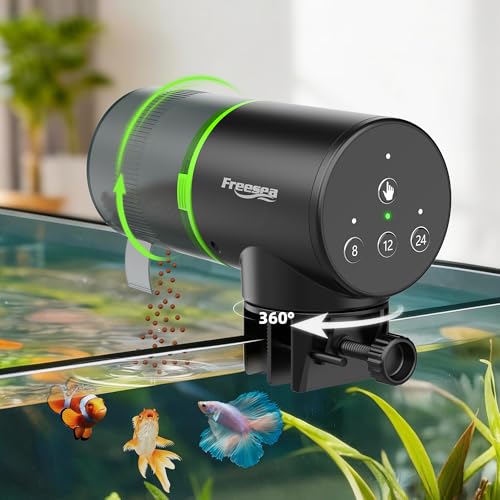
Best For: Aquarium hobbyists seeking quick setup and reliable, long-running vacation feeding. This model uses 3 programmable timers and a 200 ml food dispenser, making it suitable for bettas, goldfish, and even some turtles. The 1-second setup and moisture-proof lid reduce common failures in humid environments.
Why selected: The Freesea feeder emphasizes precision feeding with a simple 1-step setup to avoid mis-timed feedings. Its moisture-proof lid helps maintain dry food, which matters for powder and pellet diets. This model is well-suited for travelers who want predictable schedules without fiddling with settings daily.
Limitations: The 200 ml capacity may require more frequent refills for large tanks or heavy feeders during extended trips. Best used with consistent pellet or small flake foods.
FISHNOSH Automatic Feeder For Aquarium – New Generation 2026 (Blue)

Best For: Small to medium tanks needing up to 3 feed times daily with straightforward setup. This model supports three daily feedings, ensuring regular meals during busy days or short trips, and is designed for bettas and similar-sized fish.
Why selected: It offers a modern, user-friendly approach with clear directions and a simple timer system. The ability to program up to three feedings per day helps maintain stable routines without overfeeding. It also includes a straightforward refill process, which reduces downtime between uses.
Limitations: It may lack some advanced features like large-capacity hoppers or moisture-control mechanisms found in higher-end models. Not ideal for very large fish or heavy feeders over long vacations.
FISHNOSH Automatic Feeder For Aquarium – New Generation ML (Model-ML)

Best For: Small to medium tanks where a simple three-times-a-day schedule keeps fish on a steady routine. The unit emphasizes uncomplicated operation with a clear refill process and no screens, suitable for households preferring tactile controls.
Why selected: The Model-ML focuses on dependable scheduling with minimal setup, making it a straightforward option for busy owners and beginners. Its 3 daily feedings align well with routine feeders needing predictable portions without constant adjustments.
Limitations: The lack of a display may deter users who want a digital log of feeding times. Ideal for users comfortable with manual checks rather than on-screen confirmations.
Petbank Automatic Feeder For Aquarium – Moisture-Proof, USB Rechargeable

Best For: Households needing precise portion control and a moisture-resistant design to avoid clumping in humid environments. The unit supports long runs with USB charging and can store multiple meals across a broad capacity.
Why selected: This feeder’s 16-grid system allows 15 individual meals, enabling varied diets and longer trips. The dual mounting options provide flexibility for different aquarium setups. The moisture-proof design helps prevent food moisture issues that commonly plague feeders in damp rooms.
Limitations: The complexity of multiple grids can be less intuitive for first-time users; ensure correct grid loading to maintain portion accuracy.
Automatic Fish Feeder – Rechargeable USB Timer

Best For: Tank owners seeking a long-lasting, battery-free option with USB charging and up to four feedings per day. This model is suitable where external power is available and easy manual feeding is valued.
Why selected: USB-powered operation eliminates battery maintenance, with a conservative 8–48 hour feeding cycle range and adjustable daily feeds. It supports both single and multi-portion sessions, enhancing control over feeding schedules during vacations or busy days.
Limitations: It requires periodic USB charging; users should plan charging intervals to avoid unexpected feeding gaps during longer trips.
Petbank Automatic Feeder – 230/510 ml with Precision Feeding

Best For: Fish keepers who want tight portion control and a reliable reminder system when food runs low. The optional 230 ml and 510 ml hopper sizes suit both small setups and larger installations, with a clear low-food indicator.
Why selected: Precision portion control (0.1–2 g per feeding) helps reduce overfeeding and supports varied fish diets. The detachable hopper and low-food reminder improve daily operation and trip planning. It also includes a manual feeding option without disrupting the programmed cycle.
Limitations: The advanced features may require more setup attention; verify correct calibration before extended absences.
AquaMiracle Automatic Feeder For Aquarium

Best For: Aquariums with diverse mounting preferences and those needing a rotatable setup. This feeder is ideal for rimless, framed, or hooded tanks, offering flexibility in installation.
Why selected: The 360° rotatable mounting ensures optimal placement in different tank configurations, while volume adjustment is straightforward via a sliding lid. It’s a practical option for users who rotate feeders to avoid shadowing or tank clutter.
Limitations: Some users may prefer digital displays for timer precision; this model relies on simple button timing rather than a screen.
Buying Guide: How To Choose The Right Auto Fish Feeder
What tank size and fish type matter? Choose a feeder with a capacity that matches your typical trip length and fish load. For larger tanks, pick models with bigger hoppers or multiple feeding grids. Bettas and small tropical fish do well with smaller portions and predictable schedules.
What feeding frequency do you need? If you travel often, look for devices offering 3–5 feedings per day with adjustable portion sizes. Some feeders support up to 9 feedings a day, but simpler is often more reliable in practice.
How important is moisture protection? Moisture-resistant designs prevent mold and clumping in humid rooms. Consider lids that seal tightly and materials that resist moisture exposure, especially if your room lacks climate control.
What mounting options help your setup? Two-way installation (bracket vs. suction cup) and 360° rotatable heads give flexibility for rimless, framed, or hooded tanks. Ensure the mounting method works with your tank’s lid or cover.
Is a digital display a must? If you prefer to log feeding times and intervals, look for models with screens or app connectivity. For basic setups, button-tasting and manual overrides are sufficient.
Power source considerations: USB rechargeables eliminate battery changes, while some models rely on replaceable batteries. Confirm available power sources at your location and plan for backup options when traveling.
FAQ
- How many times should I feed my fish with an automatic feeder? Most fish do well with 1–3 feedings per day, depending on species. Adjust portions to minimize waste and maintain a consistent schedule.
- Can I use any type of fish food in these feeders? Most feeders support pellets, flakes, and some powders. Check each model’s food compatibility and ensure the food size matches the feed cavity.
- Will moisture ruin the food in an auto feeder? Moisture-resistant lids and properly sealed hoppers reduce clumping. Do not store open bags inside the hopper; use fresh, dry food.
- What if I forget to refill the hopper before a trip? Choose models with larger capacities or multiple daily feedings to bridge short gaps. Some feeders alert you when levels are low.
- Is a USB rechargeable feeder better than battery-powered? USB charging reduces battery maintenance and can offer longer overall use per charge, but ensure access to a power source during trips.
- Are these feeders suitable for turtles or koi? Some models are compatible with larger tanks and stronger feeders, but always verify portion size, duration, and tank humidity considerations before use.