Answering the search intent for reliable, hands-off pond feeding, these auto feeders are designed to keep pond fish fed on a schedule, even when you’re away. They’re suitable for hobbyists with small backyard ponds up to larger, multi-fish setups. The top picks favor models with clear programming, moisture protection, and ample storage. This guide highlights five strong options and explains who each is best for, plus practical buying considerations.
| Product | Capacity | Best For | Key Advantage |
|---|---|---|---|
| Hygger Large Programmable Auto Pond Feeder | 5.5 L | Pond owners seeking multi-day schedules | 6 daily feed times; 8-second portions |
| Dehyteco Solar Automatic Fish Feeder | 23 L | Large ponds; long trips | Solar + AC power; very large storage |
| Hygger LCD Control Automatic Pond Feeder | 5.5 L | Ponds with multiple daily feeds | LCD control; 6 feed times; memory after power loss |
| Fish Mate P7000 Automatic Pond Feeder | 6.5 lb (≈7 L) | Medium to large ponds needing reliable daily feeding | LCD timer; adjustable portions |
| Pawfly Automatic Fish Feeder (10 L capacity) | 10 L | Vacation feeding; multiple portions per day | Moisture-proof, multiple portion presets |
Hygger Large Programmable Auto Pond Feeder

This feeder offers scheduled, weatherproof feeding suitable for outdoor ponds with multiple fish. It displays a built-in clock and can program up to six feed times per day, with portions adjustable from 0 to 9, each lasting about eight seconds. A full 5.5-liter storage bin supports several weeks of feeding for mid-sized ponds. It’s best for pond keepers who travel or have busy schedules and want consistent feeding without daily manual input. A potential limitation is that it’s not ideal for flake foods, which may require pellets or sticks for proper dispensing.
Dehyteco Solar Automatic Fish Feeder
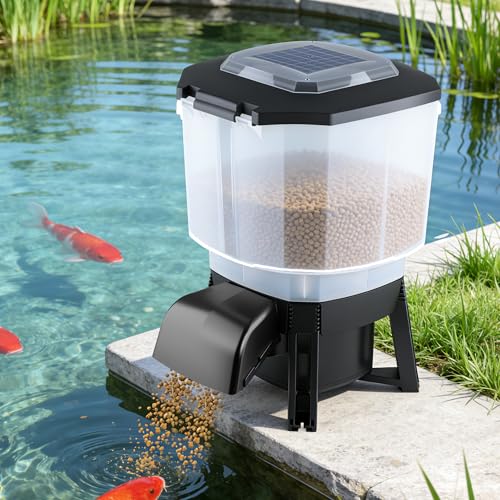
This model combines solar power with an internal battery to ensure uninterrupted feeding, even on cloudy days or during power outages. Its 23-liter capacity supports 3–10 mm pellets for weeks or months, making it a strong choice for large ponds or busy keepers. It supports multiple daily feeding sessions and guard rails against overfeeding by allowing precise portion control. Installation is versatile, with options to place on a flat surface, mount on a board, or secure to a lawn. It’s best for large ponds and long vacations, though setup may be more involved than smaller units.
Hygger LCD Control Automatic Pond Feeder

This feeder emphasizes a large, easily visible capacity (5.5 L) and reliable scheduling. You can set up to six feedings per day with adjustable portion sizes, and the memory feature helps preserve your program if power is interrupted. A translucent container allows quick monitoring of food levels. It’s well-suited for pond owners who want predictable daily feeding and a simple setup, though it’s best with standard pellets or sticks rather than flakes.
Fish Mate P7000 Automatic Pond Feeder

The Fish Mate P7000 uses a programmable LCD timer with a large 6.5 lb (about 7 L) capacity, ideal for larger ponds or longer trips. It supports adjustable portions to help minimize overfeeding and maintain cleaner water. The design emphasizes reliability and ease of use, making it a logical choice for ponds with sizable fish populations. A limitation to consider is that some users prefer more granular portion controls for very small or very specific feeding needs.
Pawfly Automatic Fish Feeder (10 L)

The Pawfly 10 L model is designed for vacation-style feeding with up to nine days of scheduling and up to six feedings per day, with adjustable portions starting at larger base increments (e.g., 30 g per serving) and smaller reductions via included plugs. Its moisture-proof construction, retractable dispensing port, and desiccant bag help keep dry food ready for weeks. It’s best for long absences and larger pellets; it may be less ideal for very small pellet sizes or flaky foods that require gentler handling.
Buying Guide: Key Considerations For Auto Pond Feeders
- Capacity vs. pond size: Larger ponds and more fish demand bigger storage. If you refuel rarely, prioritize 10 L or more and check how many days you’ll be away before needing a refill.
- Feeding schedule and portions: Decide how many feed times per day you want (three to six is common) and whether you need fixed portions or adjustable doses per feeding.
- Power options: Solar with battery backup works well for outdoor ponds with variable sun. Look for models with memory or quick reset functions if power outages occur.
- Food type compatibility: Most units handle pellets or sticks; a few warn against flakes. Confirm compatibility with your pond diet to avoid clogging or misdispensing.
- Weather and wildlife protection: Outdoor feeders should resist rain, sun, and curious animals. Consider designs with moisture seals and tamper-resistant lids.
- Monitoring practicality: Transparent or translucent containers help you gauge when a refill is needed. LCD displays simplify setup and daily adjustments.
- Installation and maintenance: Check whether the feeder can be mounted on a surface, a board, or a lawn. Simple cleaning and routine checks help maintain reliability.
Frequently Asked Questions
- How do auto pond feeders prevent overfeeding? The devices allow adjustable portion sizes and timing, which helps tailor portions to fish size and avoid excess waste.
- Can I use these feeders for flakes or only pellets? Most are designed for pellets or sticks; some models warn against flakes due to dispensing mechanics.
- Will a solar-powered feeder work in cloudy climates? Yes, with a built-in battery, but you may need occasional solar charging or an AC option for reliability during extended cloud cover.
- Are these feeders weatherproof? Many are built to resist sun and rain, but you should avoid submerging them and follow the manufacturer’s outdoor-use guidance.
- What size pond is best for each feeder? Smaller units suit residential ponds with limited fish, while large-capacity models fit bigger ponds or multiple fish groups.
- Is memory loss a concern after power outages? Some models include memory features to preserve feeding schedules after power resumes.