Answering the needs of hobbyists seeking reliable wet/dry sump filtration, this guide highlights top Amazon picks designed to improve mechanical, biological, and chemical filtration in freshwater and saltwater setups. Each product is chosen for compatibility with standard sump configurations and ease of use. Ideal buyers include beginners building a DIY sump, hobbyists upgrading filtration capacity, and reef tank keepers needing reliable media containment. The table below offers a quick glance at the selected products and their best-use scenarios.
| Product | Best For |
|---|---|
| Reefing Art Aquarium Media Basket | Top-media containment for 12″ sump tops in 20/29/55 gal tanks |
| Aquarium Sump Refugium DIY Kit (10 Gal) | Customizable skimmer chamber dividers for small to mid tanks |
| Bubblefin Refugium DIY Kit (20 Gal Long) | Expanded refugium and skimmer space for larger to mid tanks |
| Adjustable Sump Baffle Kit (20 Gal Long) | Flexible space planning for refugium, media reactors, skimmers |
| AQUANEAT 8-Layer Filter Pad | High-efficiency pre-filter for versatile sump setups |
Reefing Art Aquarium Media Basket for 12″ Wide Tank

The Reefing Art media basket is designed to fit standard 12″ sump tops and a range of 20Long, 20High, 29, and 55-gallon aquariums. It holds filter pads and other pre-filter media, helping block waste before it enters the main tank or sump. A 2.5″ overflow drain helps reduce clog risk and potential overflow. Best for hobbyists who want a sturdy, simple-upgrade basket to enhance mechanical filtration and media organization.
Why choose this: Its broad fit helps users quickly retrofit existing sumps without custom fabrication. It’s ideal for those who want a reliable pre-filter stage and easier media access. Consideration: verify compatibility with your exact tank dimensions before purchase to ensure a snug fit. Best suited for: beginner to intermediate aquarists focusing on improved pre-filter performance.
Aquarium Sump Refugium DIY Kit for Protein Skimmer Sump

This kit provides acrylic dividers to create dedicated refugium or protein skimmer chambers for 10-gallon systems. The dividers measure roughly 9.92 inches wide, and the setup is intended for tanks with a 10.5″ width. It helps organize filtration media and skimmer space, guiding a more efficient flow through macroalgae or nutrient-removal chambers. Best for: small tanks where space is at a premium and a DIY approach is preferred.
Limitation: confirm inner width of your display tank before ordering, as slight variances can affect fit. Choose this if you want clear separation of filtration stages without swapping your entire sump. Best for: aquarists who enjoy customizing a compact filtration footprint.
Bubblefin Refugium DIY Kit for Protein Skimmer Sump

The Bubblefin kit targets the 40-breeder category by offering chamber dividers suitable for bigger refugium or protein skimmer arrangements. This option emphasizes modularity, allowing hobbyists to customize flow paths and media zones. Best for: mid to larger systems where separate refugium or skimmer compartments are beneficial. Caution: ensure your sump width accommodates the dividers before purchasing to avoid tight fits.
Why this stands out: it supports scalable filtration layout and can help isolate nutrient-removal regions. Choose this if you want room to grow filtration capacity without reworking the entire sump.
Adjustable Sump Baffle Kit for 20 Gallon Long

This kit provides adjustable baffles for 20-gallon-long tanks, supporting customization for refugium, media reactor, and skimmer space. It’s designed for saltwater filtration systems and offers flexibility to tailor water volume and equipment clearance. Best for: hobbyists who want a configurable sump layout that can evolve with equipment changes. Limitation: verify tank internal width (11.8″–12.1″) and allow space for glue and fitment. Choose this if you anticipate shifting equipment over time.
AQUANEAT 8-Layer Filter Pad

The AQUANEAT 8-layer filter pad stacks multiple media types in one pad, including 3D honeycomb mesh, hydrophobic cotton, carbon, and nano-bio plus biochemical sponges. This design supports high filtration efficiency and strong water permeability, aiding a stable nitrification process. Best for: users needing a versatile, pre-filter solution that can be cut to fit various sump or canister configurations. Caution: cut-to-size fit may require careful trimming to fit precise dimensions. Best for: multi-stage filtration in wet/dry or sump setups.
AQUANEAT Open Cell Foam Bio Sponge HMF (11″ x 10.25″ x 2″)
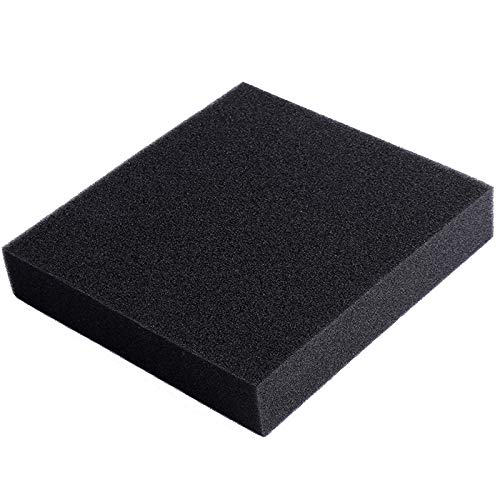
This open-cell bio sponge is designed for high surface area filtration and can be cut to fit various sump or HMF projects. Its dimensions fit many 11″ by 10.25″ opening configurations, with a 2″ thickness. Best for: those implementing high-flow bio-filtration in canister or sump systems. Limitation: ensure the foam thickness matches available space to prevent flow restrictions.
Aquatic Experts 1″ Small Bio Balls

These small 1″ bio balls are designed for small- to mid-sized filtration systems, providing ample surface area for beneficial bacteria. The recommended stocking rate is 100 bio balls per 25 gallons freshwater or 150 per 25 gallons saltwater. Best for: increasing biological filtration in compact sumps or canisters. Caution: density matters—avoid overloading small sumps with too many bio balls, which can impede flow.
HDWGGD Foam Filter Pads (3 Pack)

This set includes coarse, medium, and fine densities (20, 30, and 40 PPI) to capture a wide range of debris. The pads are cut-to-fit and compatible with various sump, wet/dry, or canister filters. Best for: households needing staged filtration to reduce clogging and maintain consistent water flow. Limitation: ensure the thickness and length match your specific filter housing before cutting.
Buying Guide: Key Considerations For Wet/Dry Sump Filtration
- Tank compatibility: Measure sump width, height, and top clearance to ensure the media basket, baffle, or refugium kit fits without interfering with equipment.
- Filtration goals: Decide whether your priority is mechanical debris removal, biological bio-media expansion, or chemical media integration. This guides media choice and layering order.
- Modularity: Flexible systems permit swapping media, adjusting water levels, and adding refugia or skimmers as the tank matures. Consider kits that offer adjustable geometry and multiple chambers.
- Ease of maintenance: Choose media that’s easy to clean or replace. Clear labeling and modular design help avoid misplacing components during maintenance.
- Water flow and compatibility: Ensure media density and sponge porosity align with your sump pump capacity to avoid micro-voids or high backpressure that slows circulation.
FAQ
- What is a wet/dry sump and why use media baskets? A wet/dry sump provides staged filtration, increasing biological filtration and flow stability. Media baskets help organize filter pads, bio balls, and refugia components for easier maintenance.
- Which media offers the best biological filtration? Bio balls and live-safe bio media offer high surface area for beneficial bacteria, supporting ammonia and nitrite processing in sumps.
- Can I mix different filter pads in one sump? Yes, layering different densities and materials can improve mechanical and chemical filtration, provided flow is not restricted.
- How do I know if a kit fits my tank? Check exact tank width, internal dimensions, and overlapping components like overflows and return plumbing to ensure compatibility.
- Are DIY kits reliable for reef tanks? DIY kits can be reliable when properly planned, allowing tailored filtration. Verify compatibility with your reef’s flow and nutrient requirements.
- What maintenance is typical for sump media? Regular inspection, cleaning of debris from pads, and occasional replacement of worn foams or media are standard practices to maintain filtration efficiency.