For aquarists focusing on root-fed growth, fertilizer tablets placed directly into the substrate support robust root systems and vivid foliage. This guide highlights five reliable options designed to deliver nutrients where plants need them most: at the root. Each product below is aimed at freshwater setups and emphasizes slow-release or steady nutrient delivery to minimize water quality shifts while maximizing plant health. Use this overview to compare nutrient composition, release mechanisms, and compatibility with fish and invertebrates.
| Product | Key Benefit | Approximate Release | Best For |
|---|---|---|---|
| API ROOT TABS Freshwater Aquarium Plant Fertilizer 0.4-Ounce 10-Count | Strong root development; essential nutrients | Slow-release | New plantings; dense root systems |
| FZONE Root Tabs Freshwater Aquarium Plant Fertilizer 50-Count | Balanced NPK with compact design | Up to 2 months | Multiple lush species; tidy substrate |
| FZONE Root Tabs, 80 Count, 0.8g/Tab | Low-NPK with high potassium; safe for fish | Up to 2-3 months | Stable water; vibrant stems and carpeting plants |
| ThriveCaps Root Fertilizer Tabs, 60 Count | All essential nutrients including micro-nutrients | Long-lasting | Thriving planted tanks with diverse species |
| Aquarium Plant Root Fertilizer Tabs, 40 Count | Balanced slow-release blend | Extended release | Gravel beds and substrate-rich tanks |
Below are five carefully chosen options that align with common planted-tank setups, from modest 5–10 gallon shelves to larger community tanks. Each entry includes a quick image reference and a concise feature snapshot to help you compare at a glance.
API Root Tabs Freshwater Fertilizer – 10 Tabs

API Root Tabs are designed to deliver essential nutrients directly to plant roots in freshwater aquariums. Each box contains ten 0.4-ounce tabs that promote strong root development, helping established plants establish a robust network beneath the substrate. The formula includes iron, potassium, and other key elements important for lush growth. Suitable for tanks with a mix of fast-growing species and slower crypts, these tabs work well when inserted below the substrate surface near the base of target plants.
FZONE Root Tabs – 50 Count

FZONE’s 50-count root tabs emphasize essential nutrients with a compact design. They deliver nitrogen, phosphorus, and potassium to support crypts, sword plants, and carpeting species. The smaller tab size makes handling easier and helps keep the substrate tidy. The tablets use slow-release technology to provide steady nourishment for up to two months, which helps stabilize nutrient levels and supports consistent growth in active tanks with multiple plant types.
FZONE Root Tabs – 80 Count, Safe for Fish & Shrimp
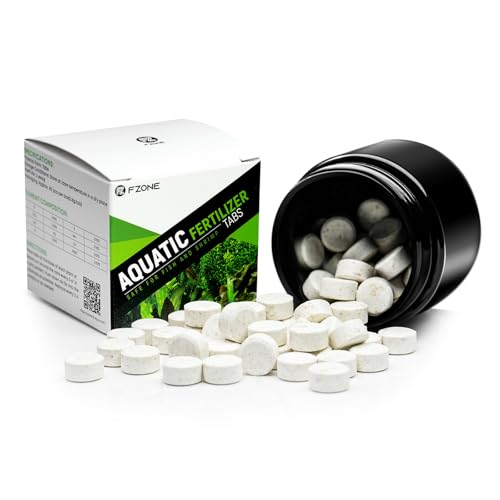
These FZONE root tabs feature a carefully balanced NPK ratio (low nitrogen and phosphorus, high potassium) to support robust growth while helping maintain stable water quality. They’re designed for direct-to-root application, delivering nutrients where plants need them most. The slow-release profile extends effectiveness to about two to three months, helping to minimize fluctuations in the tank’s chemistry while promoting strong root systems and healthy foliage across diverse plant types.
ThriveCaps Root Fertilizer Tabs 60 Count

ThriveCaps are nutrient-rich root tabs designed for substrate placement in planted freshwater tanks. They are marketed as a comprehensive root source containing macro and micronutrients necessary for plant health. The manufacturer emphasizes that ThriveCaps provide a long-lasting supply of nutrients to support thriving plant growth, addressing both fast-growing species and slower-rooting plants. The slow-release mechanism aims to stabilize nutrient delivery and prevent sudden spikes in water parameters.
Aquarium Plant Root Fertilizer Tabs – 40 Count
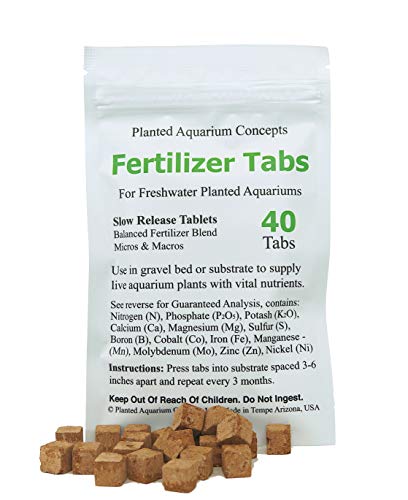
The 40-count set from Planted Aquarium Concepts provides a balanced slow-release mix suitable for a variety of rooted foreground, mid-ground, and background plants. These tabs are designed to be placed in gravel beds or substrate to feed live aquarium plants directly at the root zone. The balanced formula aims to supply nutrients when and where they’re most needed, supporting a stable, healthy planted aquarium environment with steady growth.
Buying Guide: Key Considerations For Root-Tab Fertilizers
- Target plant needs: Fast-growing species (like Hygrophila and Ludwigia) benefit from higher potassium and phosphorus, while crypts and slow growers may prefer a gentler mix. Choose tabs that align with your plant mix and tank size.
- Release profile: Slow-release tabs reduce nutrient spikes and keep water parameters steadier. Most products offer a window of 1–3 months of coverage; confirm the expected duration for your tank’s load and water change schedule.
- Substrate compatibility: Root tabs work best when placed in gravel or sand near plant roots. If you have heavily populated substrates or a bare-bottom tank, ensure the product’s delivery method matches your setup.
- Fish and invertebrate safety: While most root tabs are designed to be safe when used as directed, it’s prudent to monitor any signs of stress after adding a new tab and adhere to recommended quantities for your tank’s bioload.
- Package size and maintenance: Larger packs offer cost efficiency and coverage for bigger tanks. For smaller tanks, starting with a smaller count helps gauge plant response before scaling up.
- All-in-one versus targeted feeding: Some products emphasize micro-nutrients beyond NPK, which may benefit plant color and resilience in species with higher light or CO2 supplementation. Consider whether your tank’s nutrient strategy is solely root-based or supports multiple feeding approaches.
In practice, selecting a fertilizer tablet kit depends on your planted-tank goals. If you are adding new plants or expanding a carpet of foreground species, a larger count with a steady release can provide ongoing support. For tanks housing a blend of crypts and stem plants, a balanced NPK ratio with safe levels for fish and invertebrates is advantageous. Always follow product-specific instructions for placement depth and schedule, and observe plant response over several weeks to adjust as needed.