Answering the needs of planted-tank hobbyists, these lights provide full-spectrum illumination, adjustable timing, and color options to support plant color, growth, and fish welfare. Ideal buyers include beginners building their first planted tank, hobbyists expanding a lush foreground, and hobbyists seeking reliable, adjustable lighting for mid-size freshwater setups.
Summary Table
| Product | Best For | Key Benefit | Approx. Light Type |
|---|---|---|---|
| hygger Clip On 24/7 Lighting 14W | Small tanks up to 20 inches | Seamless 24/7 cycle with DIY mode | Full spectrum, adjustable colors |
| hygger 42W 24/7 Lighting | Medium tanks, hands-off automation | Extendable bracket, memory function | Full spectrum, DIY mode |
| SEAOURA 18-24 Inch LED | Mid-size planted tanks | Simple DIY mode with full spectrum | 6500K white plus RGB options |
| AQUANEAT LED 18-24 Inch | Longer tanks with 18–24 inch spans | Two extendable brackets for stability | Multiple LEDs for broad spectrum |
| AQQA 18-24 Inch LED | Experienced hobbyists needing 24/7 plus DIY | Memory, color cycle, and wide color set | 9 colors, 10 brightness levels |
hygger Clip On 24/7 Lighting Aquarium LED Light
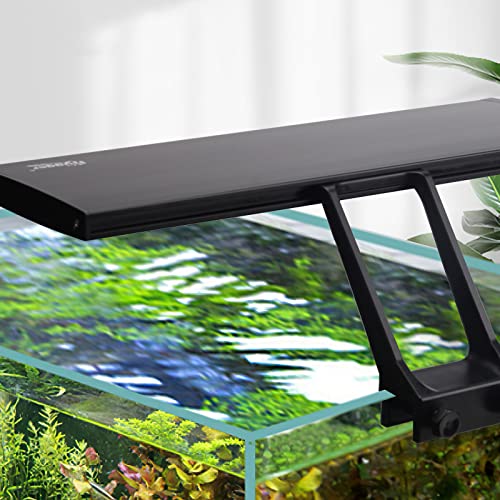
Best for small planted tanks, this 14-watt clip-on model offers a 24/7 natural cycle with a sunrise, daylight, and moonlight sequence. The DIY mode lets you customize time, brightness, and color. It includes a clip bracket designed for tanks under 0.9 inches thick and a separable adapter for easy replacement. This option is suitable for beginners and hobbyists who want a simple, all-in-one light that mimics natural day-night cycles.
Who it’s best for: small tanks (12–20 inches) with low to moderate plant load and a preference for automated day-night progression. Caution: the default schedule is fixed to a routine and may require manual adjustment for unique setups.
hygger 42W 24/7 Lighting Aquarium LED Light

Best for mid-sized tanks needing a robust, adjustable light with memory functions. This 42W fixture supports 24/7 modes and a DIY setting where you can tune time, brightness, and color. It features an extendable bracket and a heat-dissipating aluminum body. It’s a good choice for users who want richer lighting and more customization options than entry-level models.
Who it’s best for: hobbyists with 18–30 inch tanks seeking more output and reliable, memory-backed operation. Caution: higher power draw means consider energy use in long-term planning.
SEAOURA Led Aquarium Light for Plants

Best for those wanting a straightforward DIY mode with full-spectrum output. The SEAOURA unit offers a 12-18 inch (and compatible 18-24 inch) range with adjustable brightness, timer, and color selection. It emphasizes a simple controller and high-CRI lighting that can support plant growth while keeping visual appeal for observers.
Who it’s best for: new to mid-level planted tanks, wanting an easy setup that still delivers versatile spectrum. Caution: color options use a set of modes without full personalization of brightness per color.
AQUANEAT LED Aquarium Light Full Spectrum
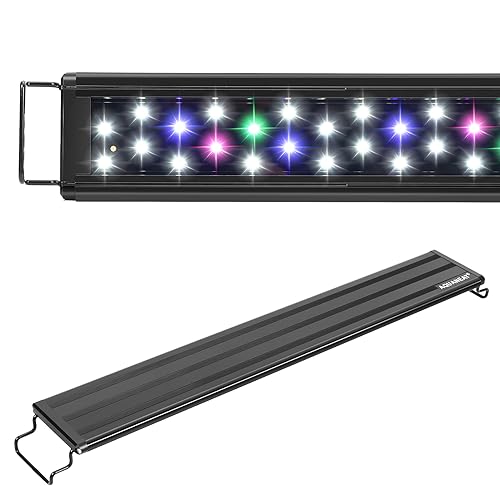
Best for longer tanks (18–24 inches) needing broad coverage and stable mounting. The AQUANEAT light includes two extendable brackets to fit tanks from 18 to 24 inches. It features a varying LED array (6500K white, blue, pink, and green) to support plant photosynthesis and provide pleasing color balance for viewers.
Who it’s best for: medium-to-large planted tanks with even light distribution. Caution: may require additional mounting depth considerations on very thick rims or unusual tank shapes.
AQQA LED Aquarium Light

Best for committed plantkeepers seeking extensive customization. The AQQA 24/7 default mode simulates sunrise, daylight, and sunset, with a DIY mode offering color, brightness, and timer adjustments. It provides 9 color options and 10 brightness levels plus memory, making it a flexible option for diverse plant species and scapes.
Who it’s best for: experienced hobbyists who want precise control over daily light cycles and color dynamics. Caution: the more complex interface may require a learning curve for newcomers.
Buying Guide: Key Considerations
What tank size and shape are supported?
Choose a light that covers your tank length without creating shading edges. Look for extendable brackets or adjustable mounts to fit tanks from 12 to 24 inches or more. For longer tanks, ensure the light spans the full length for even growth.
How important is 24/7 vs. traditional on/off cycling?
24/7 modes simulate a natural day-night rhythm, which some aquatic plants prefer for steady growth. DIY modes allow precise control of timing, brightness, and color to tailor to your plant species and algae management goals.
What spectrum and color options are available?
Full-spectrum lights that include white, red, blue, and green wavelengths support photosynthesis across a range of aquatic plants. Some models add purple, cyan, or pink for aesthetic appeal. Higher CRI improves color fidelity for your viewing experience.
Is heat dissipation or power usage a concern?
Look for aluminum housings and good heat sinks. Heavier power models will consume more energy and may require more robust mounting, but they often offer better growth for dense plant setups.
Ease of use and maintenance
Consider whether the light is easy to install, whether adapters are replaceable, and if the timer and brightness controls are intuitive. A detachable adapter can reduce waste and simplify maintenance if a part fails.
Best practices for planted tanks with these lights
- Pair lighting with appropriate CO2 levels and substrate nutrition for robust plant growth.
- Avoid excessive brightness at night to prevent algal blooms; use the moonlight or dimmer settings if available.
- Gradually ramp up light intensity to prevent plant shock, especially after maintenance or re-stacking.
Frequently Asked Questions
- What is the typical recommended duration for planted tank lights?
Many hobbyists aim for 8–10 hours per day, with some opting for extended periods using 24/7 modes for certain plant types. Balance is key to prevent algae growth.
- Do all lights work with all tank sizes?
No. Always verify the length coverage, bracket compatibility, and tank thickness the mount supports before purchase.
- Is higher wattage always better for plant growth?
Not necessarily. Spectrum, intensity distribution, and photoperiod are often more influential than wattage alone, especially for smaller tanks.
- What should I do if I see algae growth increasing after installing a light?
Consider reducing light duration, lowering intensity, or adjusting the spectrum toward plant-friendly wavelengths while ensuring plants receive enough energy for photosynthesis.
- Are DIY or 24/7 modes necessary for all planted tanks?
They’re beneficial for many setups, but simpler tanks can succeed with straightforward timing and adjustable brightness without complex configurations.
- Can these lights prevent plant hair algae or blue-green algae?
Light is a factor in algae growth; managing nutrients, CO2, and water quality is also essential to minimize algae issues in a planted tank.