Whether you maintain a freshwater or saltwater tank, a reliable aquarium heater with an accurate thermostat is essential to keep your aquatic life thriving. This guide highlights five top options that balance safety, precision, and ease of use for common home setups. The featured products cover a range of tank sizes and wattages, so you can choose based on your tank volume and preferred protections. Below is a quick buying table to compare basics at a glance.
| Product | Wattage Range | Best For |
|---|---|---|
| HiTauing Aquarium Heater (First) | 50-500W variants | Medium to large tanks; reliable temp control |
| hygger Small Aquarium Betta Heater | 10-100W | Small tanks; simplicity and compact design |
| HiTauing Upgraded 300W/500W | 300-500W | Moderate to large tanks; intelligent protections |
| hygger 300W/500W/800W/1000W | 300-1000W | Wide range of tank sizes; digital control |
| Orlushy 500W Submersible Heater | 500W | 40–75 gallon tanks; solid all-around protection |
HiTauing Aquarium Heater, 50W/100W/200W/300W/500W Submersible
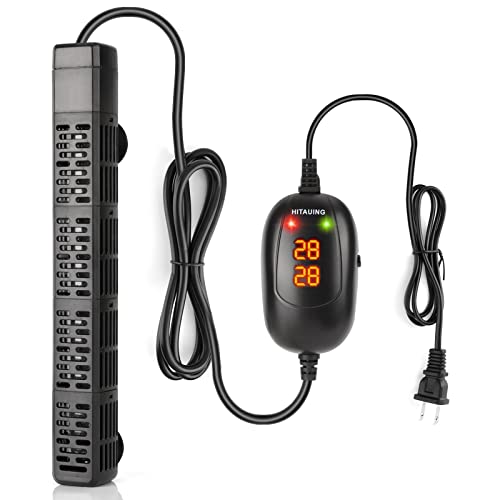
Best for medium to large tanks that require robust heat control. This model line offers multiple wattages, enabling you to select the exact power needed for your volume. It includes an intelligent water sensor for over-temperature protection and auto-off when water is leaving the tank, reducing fish risk. The explosion-proof quartz glass and ABS shell protect users and aquatic life from heat hazards. Use this when you need reliable, programmable heating in both freshwater and saltwater setups.
Who it’s best for: hobbyists with mixed-water tanks or growing setups that need precise temperature management. Cautions: ensure the heater is fully submerged during operation to avoid misreadings; verify the correct wattage for your tank size.
hygger Small Aquarium Betta Heater

Best for very small tanks or betta bowls, this compact heater provides a simple, reliable temperature range and a digital display. It’s designed for 1–5 gallon tanks and supports both fresh and marine water. The quartz glass construction helps resist damage and corrosion, while built-in dry-run and overheat protections reduce risk of overheating. Choose this if you want a straightforward heater without extra features for very small setups.
Who it’s best for: users with tiny tanks who prioritize compact design and basic protection. Cautions: not ideal for larger or heavily stocked tanks where higher wattage is needed for stable temperatures.
HiTauing Aquarium Heater, Upgraded 300W/500W

Best for medium to large tanks that need fast, consistent heating. This model emphasizes rapid heating and intelligent temperature control with a sensor that prevents heating when out of water or above the set point. The quartz glass and durable ABS shell offer solid protection for both fish and hobbyists. It’s a solid choice when you want reliable performance and clear temperature readouts on a digital display.
Who it’s best for: aquarists seeking strong heat delivery with safety protections and an easy-to-read control interface. Cautions: ensure proper calibration to avoid minor temperature overshoot in very sensitive species.
hygger Aquarium Heater 300W/500W/800W/1000W

Best for larger tanks that require robust heating and advanced protections. With a digital LED controller, this heater covers a broad wattage range and includes auto shut-off when water is low or temperature is too high. It also displays current temperature and warns for low/high temps. Choose this if you manage sizable tanks and want a single heater that can scale from moderate to very large volumes.
Who it’s best for: aquarists with 40–80 gallon systems seeking precise control and audible alarms for abnormal conditions. Cautions: installation height and water level should be monitored to maintain automatic protections consistently.
Orlushy 500W Submersible Heater
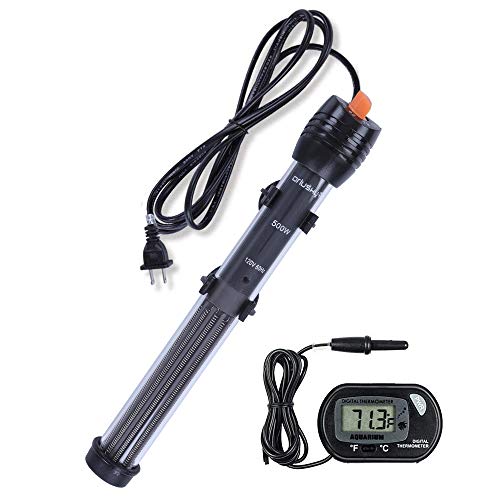
Best for mid-to-large tanks that need a strong, reliable heater with straightforward protection. The 500W unit is suitable for 40–75 gallon aquariums and includes an adjustable thermostat, a robust nickel-chromium heating element, and a quartz glass tube. It’s designed to be discreet in the tank while delivering consistent warmth. The included thermometer helps with real-time monitoring. Consider this if you want a high-wire heater with proven protection features.
Who it’s best for: hobbyists seeking a single-wot unit for larger tanks who value stability and simple operation. Cautions: ensure the heater is fully submerged during operation to maintain accurate readings and prevent overheating.
Buying Guide
Key purchase considerations for an aquarium heater with thermostat:
- Tank size compatibility: match wattage to your aquarium volume using a watt-per-gallon guideline and the product’s recommended range.
- Temperature control: look for a thermostat with a precise set range and a clear display to maintain stable water temperatures.
- Safety features: automatic shut-off when out of water, overheat protection, and explosion-proof or tempered glass construction reduce risk to fish and equipment.
- Durability and materials: quartz glass, nickel-chromium heating elements, and protective shells help resist corrosion and heat damage in freshwater and saltwater tanks.
- Submersion and placement: ensure full submersion is possible and follow installation guidelines to avoid hot spots or inaccurate readings.
- Display and usability: digital LED displays and accessible controls are easier to monitor and adjust without disturbing the tank.
- Installation considerations: some models include mounting brackets or suction cups for edge mounting; verify compatibility with your tank’s dimensions.
FAQ
- What size heater do I need for a 20 gallon tank? Answer: A heater in the 75–100W range is typically suitable, but verify with the product’s wattage chart and required temperature range.
- Should I choose a heater with auto shut-off in water? Answer: Yes, this feature helps prevent overheating and reduces risk if the water level drops.
- Are all these heaters safe for saltwater tanks? Answer: Most models are designed for both freshwater and saltwater, but verify the product description for suitability.
- Is a digital display necessary? Answer: A digital display simplifies monitoring and precise temperature adjustments compared to analog dials.
- What maintenance is needed for an aquarium heater? Answer: Regularly check for corrosion on the heating element, ensure the thermometer is accurate, and clean any mineral buildup as needed.
- Can I use a heater for a turtle tank? Answer: Most heaters listed are suitable for fish tanks and similar habitats; ensure the wattage matches the required heat for your setup and consult product guidelines for turtles where applicable.